Designing Collaboration: Carolyn Berg’s Secret to Transforming Community Initiatives
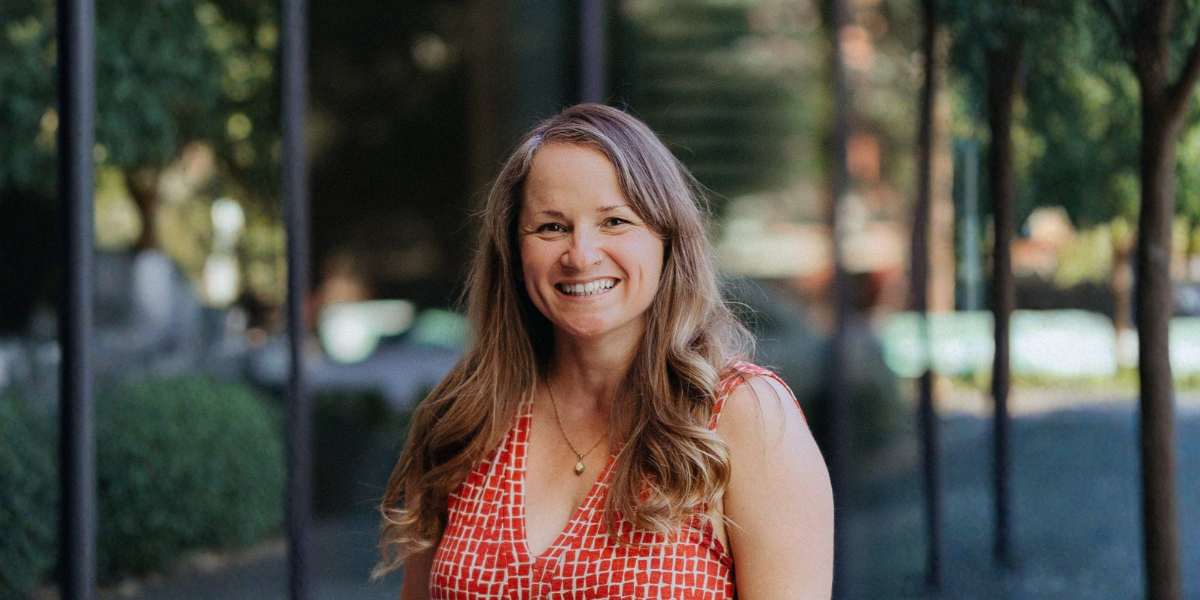
Carolyn Berg’s journey from civil engineer to founder of Koble Collaborative is a story of alignment and intention. In this Wantrepreneur to Entrepreneur Spotlight, Carolyn reveals how burnout and a period of reflection inspired her to create a business that empowers communities to solve complex challenges through collaboration. By focusing on strategic partnerships and stakeholder engagement, Carolyn transformed her vision into a reality, moving from technical roles to becoming a catalyst for regional development. Her story is a testament to the power of intentional design in building trust, purpose, and community resilience.
Hi, Carolyn! Thanks for joining us today. Tell us about your business. Who do you serve, how do you serve them, and what's the impact that your business and work makes?
Koble Collaborative helps communities tackle complex challenges by bringing the right people together to align around shared solutions.
We work with public agencies and nonprofit leaders on issues like water resources, conservation and trail planning, housing, climate resilience, and public health. Through facilitation, strategic planning, and stakeholder engagement, we help groups move from big ideas to coordinated action.
For example, we’ve helped align multi-agency partnerships and cross-community collaboration across regions to advance a Regional Housing and Infrastructure Framework, build a regional Affordable Housing Task Force, and support development of a regional desalination feasibility study, and more.
At the core of our work is a simple belief: communities are strongest when they share vision, trust, and purpose—and when collaboration is intentionally designed.
Tell us about the moment you finally felt like you went from wantrepreneur to entrepreneur.
My background is as a civil engineer, and I spent about 16 years working in the public sector on regional, multi-agency initiatives.
Over time, I noticed that the hardest part of solving these challenges wasn’t technical—we often had strong data, expertise, and ideas. The real barrier was alignment. Getting organizations, leaders, and communities working toward the same goals was where things stalled.
I found myself increasingly drawn to the work of building partnerships, facilitating conversations, and helping groups navigate complexity. Eventually, I realized that if I created my own company focused specifically on collaboration and facilitation, I could do work I love and help more communities tackle these challenges. That’s when I made the shift from thinking about doing something different to actually building it—and I founded Koble Collaborative.
Describe the moment or period in your life/career that motivated you to make the entrepreneurial leap.
I stepped away from a stable and impactful government role for a number of reasons—burnout, health, and a readiness for change. I took time to reflect on where I wanted to go next.
I had agreed to take on a freelance consulting project, but only after completing a month-long yoga teacher training. Before that experience, I wasn’t sure consulting was the right fit. I had imposter syndrome and a lot of uncertainty about whether I could meet expectations on my own.
But during that period of deep reflection and daily meditation, I became more grounded in my values—connection, community, and balance. That’s when I made the decision to start my own company, not join someone else’s.
From there, I began the work of building a consulting business from scratch. It wasn’t an easy choice, but it’s been a deeply fulfilling path ever since.
Describe a tool, service, or software that has been a game-changer for your business. How does it contribute to your success?
We rely on a mix of tools that support both collaboration and creativity. Google Workspace allows our team to work seamlessly together, while Canva helps us create clear, engaging visuals for clients.
For engagement, tools like Zoom, Mentimeter, and SurveyMonkey allow us to connect with participants and gather real-time insights, even in complex or large-scale processes.
Beyond software, our outside, professional support services—such as our lawyer, CPA, etc.—has been essential. Having strong legal and financial foundations has allowed us to focus on delivering great work while building a sustainable business.
We know that success is very often a non-linear path. Tell us about a failure, pivot point, or lesson that changed your course or direction and helped to get you where you are today.
When the COVID-19 Shelter-in-Place orders took effect, I was working for the County Administrative Office and was immediately transitioned into emergency response work. The pace was intense—14-hour days, 7 days a week—fulfilling, necessary, and meaningful, while also exhausting and nonstop.
It became a major pivot point in my career. The scope of my work expanded far beyond water, infrastructure, and housing into anything that required coordination and collaboration: childcare for essential workers, economic reopening, safe parking for unhoused individuals, supporting public health efforts, scaling contact tracing teams, and more.
That experience gave me a much wider lens and helped me build a deep network of trusted relationships—both of which continue to shape our work at Koble Collaborative today. It also reminded me of how adaptable we are as people, and how capable we are of stepping into new roles when it matters most.
Most importantly, it reshaped how I saw my role—not just as a technical contributor, but as someone who could bring people together across systems. That realization ultimately reinforced the path that led me to start Koble Collaborative.
What unconventional strategy did you employ that significantly impacted your business?
Our company is built around a simple but often underdeveloped idea: collaboration isn’t something that just happens—it has to be intentionally designed.
We apply this not only in our client work, but in how we operate internally and with partners. We co-design engagement strategies with clients, collaborate deeply as a team, and create space for stakeholders and communities to shape outcomes.
While many organizations talk about collaboration, fewer invest in the structure and process needed to make it effective. That intentional approach has been a key differentiator for us and a major reason clients return to work with us.
What’s something you wish you knew sooner that you’d give as advice for aspiring or newer entrepreneurs?
Remember that everyone starts at the beginning—so don’t get too caught up comparing yourself to more established businesses.
Trust yourself. Follow your curiosity and your strengths.
Build meaningful relationships—with peers, clients, and your community. Also, invest in the right support early. Hiring professionals like a CPA or lawyer can save you time, stress, and costly mistakes.
When you're ready, hire a great in-house team! Working collaboratively can level up your company's work, expose you to new perspectives, expand the expertise your company has available, and just makes work more fun!
And most importantly, be patient. Building a business and creating a sustainable livelihood takes time—but it’s worth it.
Want to dive deeper into Carolyn's work? Check out the links below!
- Visit Koble Collaborative's website: koblecollaborative.com/
- Connect with Carolyn Berg on LinkedIn: Carolyn Berg
- Follow Koble Collaborative on LinkedIn: Koble Collaborative, Inc.

Jeffrey Katzenberg: Fired by Disney, Built DreamWorks, and Rewrote the Rules of Storytelling