Amjad Masad’s Radical Bet: A $1B Company Built by One Person Is Closer Than You Think
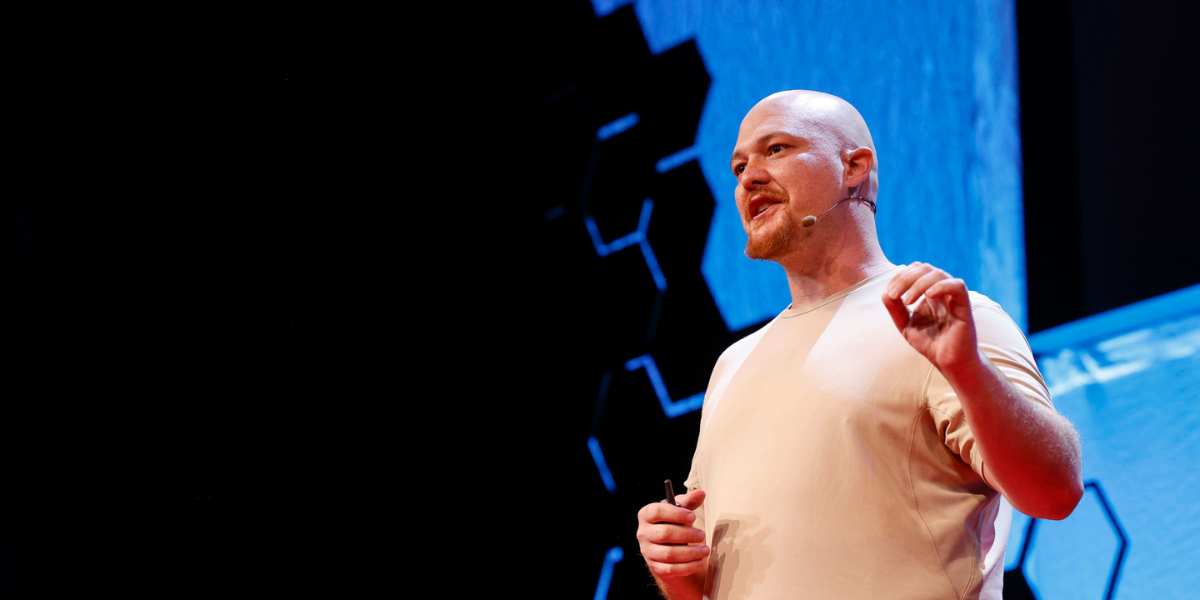
In an interview on Silicon Valley Girl, Replit founder and CEO Amjad Masad made a prediction that would have sounded absurd just five years ago:
“In the next few years.”
That’s his answer to when a solopreneur could build a billion-dollar company.
Not a billion-dollar startup with a 200-person engineering team. Not a venture-backed rocket ship burning cash.
One person.
But if you think this is a story about AI replacing humans, you’re missing the deeper thesis. This is a story about resourcefulness, grit, and domain knowledge—and how AI simply removes the bottleneck.
The Bottleneck Was Never Ideas. It Was Code.
Masad’s core belief is simple:
Everyone has ideas.
Very few can build them.
For decades, technical ability was the gatekeeper. If you couldn’t code—or couldn’t afford engineers—your idea died in a Notes app.
Now, AI-powered tools like Replit are removing that barrier.
Masad shared the story of a CFO at a VC firm who spent years wishing for better fund management software. He wasn’t technical. He couldn’t find engineers. So he used Replit.
Within three months, he built his product.
He quit his job.
He’s on track for $5 million in revenue.
No engineering team.
This is the shift: AI doesn’t eliminate entrepreneurship. It expands it.
But Building Isn’t “Push Button Easy”
There’s a dangerous narrative floating around: type one prompt, get a unicorn.
Masad pushes back on that fantasy.
When the interviewer struggled with deployment errors, he compared AI to:
“A powerful but easily distractible intern.”
AI can generate code. But you still need to:
- Communicate clearly
- Debug intelligently
- Iterate relentlessly
Prompting, Masad argues, is just programming without syntax. Precision still matters.
The skill hasn’t disappeared.
It has shifted.
And that shift rewards founders who can think clearly and communicate sharply.
The Real Competitive Advantage: Tacit Knowledge
One of the most powerful ideas from the conversation was Masad’s take on human originality.
He’s skeptical of AGI hype. Why?
Because large language models are trained on the past.
But entrepreneurship happens in the present.
Your lived experiences.
Your intuition about your niche.
Your tacit understanding of customers.
That’s not fully captured in training data.
The CFO built a $5M tool because he knew something about venture capital workflows that wasn’t written in blog posts.
AI amplifies domain knowledge.
It doesn’t replace it.
For early-stage founders, this is everything.
If everyone can build, the edge becomes:
- Insight
- Taste
- Positioning
- Speed of iteration
The Darkest Moment Before the Breakthrough
Replit didn’t hockey-stick overnight.
Before launching AI agents, the company was in what Masad described as an “awkward middle.”
Not powerful enough for senior engineers.
Not simple enough for non-technical founders.
They had 130 employees. Burn rate was high. Growth stalled.
Then came layoffs—30–40% of the team.
The office felt empty. Gloomy. Uncertain.
Most founders, he admits, would have tried to sell.
Instead, they doubled down.
The small team working on AI agents went all in—12 to 14-hour days.
“If this doesn’t work,” they told themselves, “there is no future.”
It worked.
Replit exploded to $160M ARR, growing 25% month-over-month, with 350,000 live paid apps running on the platform .
The lesson?
Not brilliance.
Not luck.
Endurance.
“Just show up every day. Most people don’t.”
Proving Doubters Wrong as Fuel
Masad shared a brutal moment pitching Peter Thiel.
He tried to explain how AI would transform coding. Thiel dismissed it as hype. Refused to even look at the demo.
Months later, ChatGPT exploded.
Masad didn’t quit. He didn’t pivot away from AI.
He kept building.
He reframed doubt as fuel:
“There’s nothing better than having doubters and proving them wrong.”
For wantrepreneurs sitting on ideas, this is a gut check.
Are you waiting for validation?
Or are you willing to build before applause?
If AI Makes Building Easy… What’s Left?
If product development becomes dramatically cheaper and faster, what’s the bottleneck?
Marketing.
Masad’s advice is refreshingly tactical:
- Launch.
- Launch again.
- Change the title.
- Change the positioning.
- Post on Reddit.
- Get on podcasts.
- Iterate messaging relentlessly.
Replit itself launched multiple times before hitting traction. One Hacker News post only worked after a headline tweak listing supported languages.
Small changes. Massive impact.
The future belongs to founders who:
- Ship fast
- Iterate publicly
- Refine positioning
- Stay in the game longer than others
Should You Still Learn to Code?
Short answer: it depends.
If you’re building life-or-death systems, aerospace software, or infrastructure at Google scale—yes.
If you’re building products for users?
Start building.
Learn what you need along the way.
The mission isn’t “become a great programmer.”
The mission is ship something people want.
The Bigger Bet: A Polymath Future
Masad believes we’re moving away from industrial-era specialization toward polymath creators.
AI reduces mechanical tasks.
It increases leverage for thinkers.
The winners won’t be narrow specialists executing tasks.
They’ll be:
- Resourceful
- Cross-disciplinary
- Entrepreneurial
- Adaptable
He’s teaching his kids resourcefulness—not safety.
Because safety is no longer guaranteed.
Adaptability is.
So… When Will a Solopreneur Build a $1B Company?
Masad’s answer wasn’t theoretical.
He believes a founder with deep domain knowledge could build a $50M revenue business—enough for a billion-dollar valuation—within a few years .
But only if they combine:
- AI leverage
- Deep niche expertise
- Relentless grit
- Iterative marketing
AI lowers the floor.
It doesn’t remove the climb.
The Real Takeaway for Wantrepreneurs
This isn’t a story about AI magic.
It’s a story about agency.
AI eliminates excuses:
- “I don’t know how to code.”
- “I need a technical co-founder.”
- “I can’t afford a dev team.”
But it does not eliminate:
- Discipline
- Focus
- Courage
- Persistence
The solopreneur billion-dollar company isn’t inevitable.
It’s possible.
And in Masad’s worldview, possibility is enough.
Because most people quit at hour six.
The next decade will belong to the ones who stay until hour six thousand.

Discovering Hidden Assets: The TurboTax-Inspired Tool Simplifying Estate Settlements