AriZona Iced Tea Founder Don Vultaggio’s Warning to Entrepreneurs: Know Your Costs Before You Raise Capital
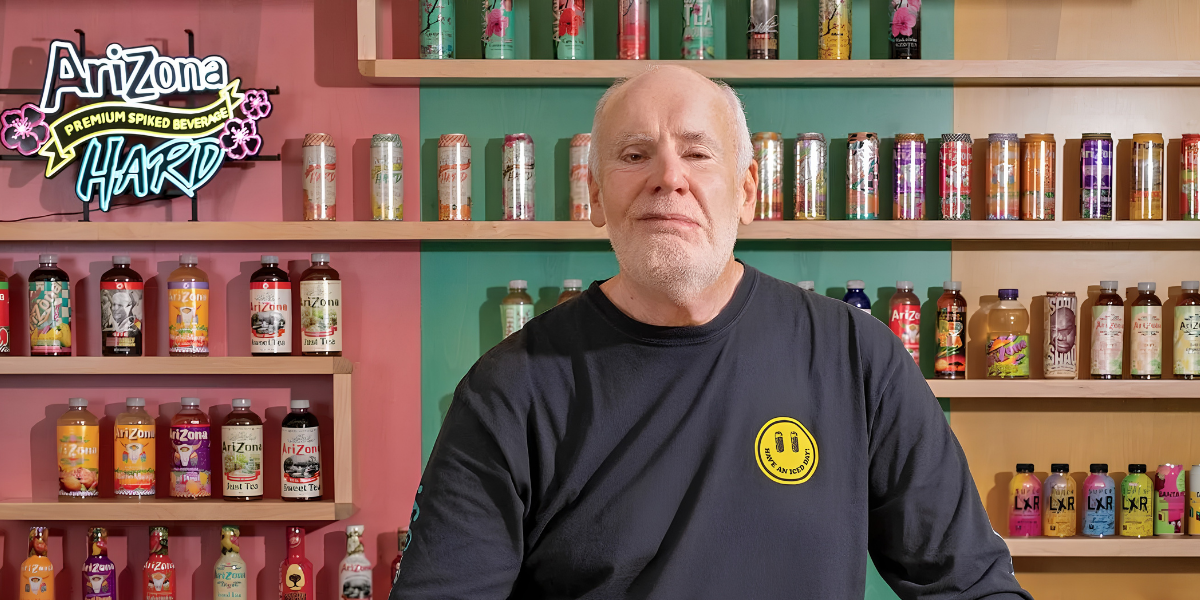
There is a sentence from AriZona Beverage Company founder Don Vultaggio that cuts against much of modern startup culture:
“The first can of Arizona I sold in 1992, I made a profit on.”
And he didn’t stop there.
“The last can I’m going to sell tonight, I’m going to make a profit on it,” Vultaggio explained during an appearance on Build Different.
For entrepreneurs accustomed to hearing about fundraising rounds, customer acquisition costs, blitzscaling, and sacrificing profitability in pursuit of market share, Vultaggio’s philosophy can almost sound old-fashioned.
That may be precisely why it’s worth paying attention to.
The story behind AriZona Iced Tea isn’t simply about keeping an iconic can at 99 cents. It’s about what happens when a founder builds around a few stubborn principles: understand your costs, give customers unmistakable value, protect your independence, and never forget the people buying your product.
AriZona Started With an Observation, Not a Pitch Deck
Vultaggio didn’t discover his opportunity through a market research report.
He saw a Snapple truck.
It was February, and the truck was delivering iced tea. Vultaggio had assumed iced tea was a seasonal business. Seeing it sell during winter changed his thinking.
“I went home that night,” he recalled, “I told my wife I’m going into tea business.”
But spotting an opportunity wasn’t enough.
His initial plan was to package the product in a glass bottle similar to competitors like Snapple. Then he stopped at a 7-Eleven and stared at the products already on the shelf.
Why would someone choose an unknown drink packaged like the established brand and sold at the same price?
His conclusion was ruthless:
“If I can't figure out how I'm going to get a consumer to buy me over Snapple, I don't deserve to be in the business.”
That is a powerful question for any early-stage entrepreneur.
Why should someone choose you?
Not because you worked hard. Not because you raised money. Not because your idea sounds compelling in a presentation.
What will customers actually see, experience, or receive that makes the decision easier?
For AriZona, the eventual answer was size, price, packaging, and visibility. Vultaggio noticed a larger 24-ounce can and realized that a bigger format could give his product an immediate value advantage while physically standing out against competitors.
The famous tall can became part product innovation, part marketing strategy.
The First Test Was Simple: Did Customers Buy It?
There was no elaborate launch campaign in the story Vultaggio tells.
His sales manager placed AriZona in 10 different accounts on a Friday in May 1992. They returned on Monday.
Nine had sold out.
The tenth hadn’t put the product out.
“We got something here,” Vultaggio remembered thinking.
It’s an important contrast to the temptation many wantrepreneurs face: spending months polishing an idea before getting enough real customers involved.
Vultaggio learned by watching shelves.
He had done it since working in a grocery store as a young man. Consumers, he observed, make purchasing decisions based on what is in front of them: the display, the price, the appearance.
“Consumers decide with their eyes.”
AriZona’s early experiment therefore answered something more meaningful than whether people said they liked the concept.
They bought it.
His Warning About Raising Money Comes Down to One Thing: Discipline
Perhaps the sharpest lesson from Vultaggio’s interview concerns startup capital.
Entrepreneurs regularly approach him looking for investment, he said. When he asks how their businesses are performing, some tell him they are losing money.
“That’s always a turn off.”
His concern isn’t simply that outside funding is inherently bad. His argument is that capital can allow founders to postpone understanding the fundamental economics of their businesses.
His father gave him a simpler formula:
Know your cost and sell above it.
Vultaggio worries that founders can instead fall into a cycle: raise capital, spend heavily—including on advertising—and then look for another funding round.
His own experience shaped a different philosophy.
A bank actually rejected his request for a roughly $500,000 loan when he was preparing to launch AriZona, despite the fact that he already operated a substantial beverage distribution business.
Decades later, AriZona’s approach remains dramatically conservative by startup standards. Vultaggio said the company owns everything and carries zero debt.
He wants to go to sleep knowing what he owns—and knowing nobody can come knocking on the door for it.
The 99-Cent AriZona Can Is Really a Customer-Loyalty Strategy
Why fight so hard to maintain the 99-cent price?
Vultaggio traces part of the philosophy all the way back to earning a dollar an hour as a teenager.
“I respect the dollar.”
He believes customers remember companies that give them genuine value.
And that loyalty creates another advantage: AriZona doesn’t have to spend the way some competitors do to continually attract attention.
During a conversation with a manufacturer in Italy, Vultaggio said the other businessman told him he spent 13% of gross revenue on advertising.
Vultaggio’s answer when asked how much AriZona spent?
“Zero.”
Instead, his philosophy is to earn loyal customers individually and keep giving them reasons to stay.
That makes the 99-cent can more than a pricing gimmick.
The price itself became marketing.
When AriZona’s large-can sales weakened in the 1990s as retailers pushed prices higher and consumers gravitated toward its glass bottles, Vultaggio proposed printing the price directly on the can.
One sales manager told him it was the “dumbest idea” he’d ever heard.
Vultaggio did it anyway.
According to Vultaggio, the company went from selling fewer than 50 million big cans that year to expecting to sell more than a billion in the current year discussed in the interview.
Independence Lets AriZona Make Decisions Differently
Vultaggio’s commitment to ownership isn’t purely financial.
It’s operational.
Asked what independence gives AriZona, his answer was remarkably simple:
“We can make a decision and act on it tomorrow.”
There isn’t a sprawling board to satisfy. Vultaggio described the board as himself and his sons, with regular conversations involving company leadership.
That independence also shapes how he thinks about employees.
Vultaggio described buying an Anaheim facility after its previous private-equity owner shut it down. He saw a neglected workplace and set about changing the environment—cleaning and repainting the facility, installing a gym, and trying to make it somewhere employees could feel good about working.
His principle is straightforward:
Respect employees, and they are more likely to respect you.
The same relationship-first philosophy reaches back to Vultaggio’s teenage grocery-store job. Its owner became his mentor and remained his friend for more than 50 years.
For Vultaggio, business has always been personal.
The Bigger Lesson for Entrepreneurs
You don’t need to copy AriZona’s business model.
You probably shouldn’t.
But there is something worth copying in the questions behind it.
Do you know exactly why customers choose you?
Have real customers validated the idea with their wallets?
Do you understand what it costs to deliver what you sell?
Is outside capital solving a real constraint—or allowing you to avoid one?
Are you creating enough value that customers actually want to remain loyal?
And perhaps most importantly:
What decisions would you make differently if you intended to own this company for decades?
Vultaggio’s entrepreneurial philosophy wasn’t created in a venture-capital conference room. It was built in grocery stores, delivery routes, 7-Elevens, factories, and conversations with customers.
His story is a reminder that sophisticated entrepreneurship doesn’t always require sophisticated language.
Sometimes it comes down to something much simpler:
Know your customer. Know your costs. Make a profit. Treat people well. And build something worth holding onto.
Luca Ferrari’s Bending Spoons Playbook: How to Build a High-Performance Company With Less