Ben Affleck on AI, Hollywood Economics, and Why Better Incentives Build Better Businesses
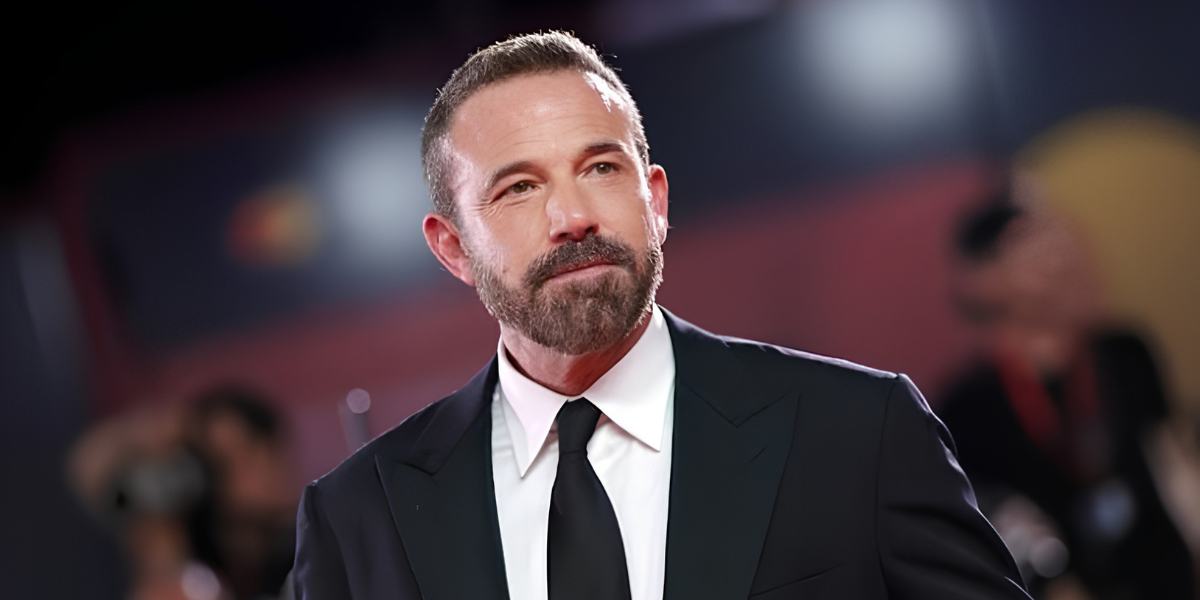
Ben Affleck’s path into artificial intelligence did not begin with a pitch deck.
It began with panic.
During a wide-ranging conversation with Bloomberg reporter Lucas Shaw at Bloomberg Screentime, Affleck opened up about the origins of his AI company InterPositive, Netflix’s acquisition of the business, the economics behind Artists Equity, and why he believes Hollywood’s future depends less on replacing people with technology and more on designing better tools—and better incentives—for the people doing the work.
After getting an early look at advances in generative AI, Affleck called longtime collaborator Matt Damon with an alarming conclusion: they needed to make as many movies as possible because, as he remembers thinking at the time, “we’re finished.”
Then he kept looking.
And the more closely he examined the technology, the less inevitable that conclusion seemed.
What he saw instead was something entrepreneurs encounter constantly: a powerful technology looking for a useful business model.
That distinction shaped Affleck’s next move. Rather than treating AI as either an existential threat or a magic button capable of replacing filmmaking, he began asking a more practical question:
Where can this technology create measurable value inside an existing workflow?
That question eventually became the foundation for an AI company focused on filmmaking tools—and offers a surprisingly useful entrepreneurial case study in product development, incentives, and technological change.
The Opportunity Wasn’t “AI.” It Was the Gap Between AI and the Customer
Affleck had been experimenting with technology long before generative AI became a boardroom obsession.
In the 1990s, he tried unsuccessfully to build a nonlinear editing system using PCs. The technology was not ready. Drives were too slow. Frames dropped. The business failed.
Years later, he co-founded LivePlanet with Matt Damon and Sean Bailey, experimenting with the intersection of traditional entertainment and emerging digital media.
Those experiences mattered because by the time generative AI arrived, Affleck had already learned one of entrepreneurship’s less glamorous lessons:
Being early is not the same thing as being right.
When he began spending time around AI researchers, he noticed something interesting. The researchers were extraordinarily sophisticated technically, but they did not necessarily understand how professional video production worked.
There was the opening.
The opportunity was not to build a general-purpose AI model that could theoretically create anything. It was to help AI understand the specific requirements of filmmaking.
That is a critical distinction for founders.
The biggest opportunity around a breakthrough technology is often not the technology itself. It is the gap between what the technology can theoretically do and what a real customer actually needs.
Build for the Workflow, Not the Demo
Affleck became skeptical of the flashy demonstrations surrounding generative video.
A model might produce something visually impressive. But “look what it can do” is different from building something reliable enough to fit into a professional workflow.
So his team focused on discrete tasks.
They created their own filmmaking data set and used it as a later-stage training layer on top of existing open models. The goal was not novelty. The goal was to teach those models specific cinematic standards and make them useful inside actual production.
That approach carries a powerful lesson for early-stage founders:
A demo proves possibility. A workflow proves value.
Customers rarely pay because your technology is impressive.
They pay because it solves a painful problem repeatedly, predictably, and within the constraints of how they already work.
Affleck’s framing of AI is therefore much narrower—and arguably much more commercially useful—than the idea of typing a prompt and generating an entire movie.
He sees AI as another layer of computing: something that can accelerate parts of post-production, manipulate certain visual elements, and help filmmakers accomplish things that might otherwise be too slow or expensive.
Ethics Can Be a Product Decision, Not Just a Policy Statement
Affleck also confronted one of generative AI’s most controversial issues: training data.
He was uncomfortable with the idea that models could be trained extensively on work created by filmmakers he knew without those creators meaningfully participating in the economics.
His response was operational.
Instead of merely criticizing existing training practices, his team built its own data set and designed a system where filmmakers could train models around their own productions while preserving the proprietary nature of their work.
That is a useful entrepreneurial principle.
When an industry is wrestling with an ethical problem, the strongest business response is not always another statement of values.
Sometimes it is a product architecture that creates different incentives.
Affleck’s philosophy is that creators should be able to benefit from AI rather than simply endure its arrival.
For founders entering disrupted industries, that is worth remembering:
Trust can become part of the product.
The Bigger Idea: Align Everybody Around the Same Outcome
Affleck applies the same thinking to Artists Equity, the production company he co-founded with Damon.
His frustration with traditional Hollywood economics comes down to incentives.
Actors get paid one way. Directors get paid another. Crews have their own economic incentives. Financiers are trying to recover capital. Studios want successful distribution.
Everyone may be making the same movie, but financially, they are not necessarily playing the same game.
Affleck wants to change that.
His preferred model asks participants to accept somewhat less guaranteed compensation in exchange for greater participation in the upside if a project performs.
The underlying idea is simple:
People behave differently when they participate in the outcome.
That principle extends far beyond entertainment.
A salesperson compensated only on short-term revenue may behave differently from one rewarded for retention.
A product team measured entirely on shipping velocity may make different decisions from one accountable for customer adoption.
A founder who gives employees ownership is making a bet that alignment can produce behaviors a salary alone cannot.
Affleck describes his goal as putting the shareholders, actors, directors, producers, and crews on the same side.
If the project succeeds, everyone participates.
If it fails, one group has not already extracted most of its economics while someone else absorbs the loss.
Entrepreneurship Is Often Incentive Design
One of the more revealing themes running through Affleck’s comments is that he does not treat technology and economics as separate problems.
His AI company asks:
How do we introduce new technology without making creators its casualties?
Artists Equity asks:
How do we structure compensation so the people making a project care about the same outcome as the people financing it?
Both questions are really about incentive design.
And that is one of the least appreciated skills in entrepreneurship.
Founders spend enormous amounts of time thinking about product features, marketing channels, pricing, fundraising, and hiring.
But every company is also a collection of incentives.
What do customers gain by adopting your product?
What do employees gain by going the extra mile?
Who benefits when the business performs well?
Who absorbs the downside?
And are all of those people moving in roughly the same direction?
You Don’t Have to Choose Between Humans and Technology
Affleck rejects the binary framing that often surrounds AI: either resist the technology entirely or accept a future in which it replaces people.
His alternative is much more pragmatic.
Incorporate the technology. Understand where it fails. Make it useful. Keep humans inside the system. Share the economic value it creates.
That may turn out to be one of the most important entrepreneurial opportunities of the AI era.
The winners may not be the companies promising to eliminate people from every process.
They may be the companies that figure out how to make skilled people dramatically more capable.
For wantrepreneurs watching AI disrupt industry after industry, Affleck’s experience offers a useful place to start.
Don’t ask only what the technology can replace.
Ask what it can improve.
Don’t stop at the demo.
Build the workflow.
And when you design the business around it, make sure the people responsible for creating the value have a reason to care about the outcome.
Because sometimes the most powerful innovation is not a new model.
It is a better alignment between the people, the product, and the upside.

How Curtis Boortz Redefined Entrepreneurship with Real-World AI Solutions