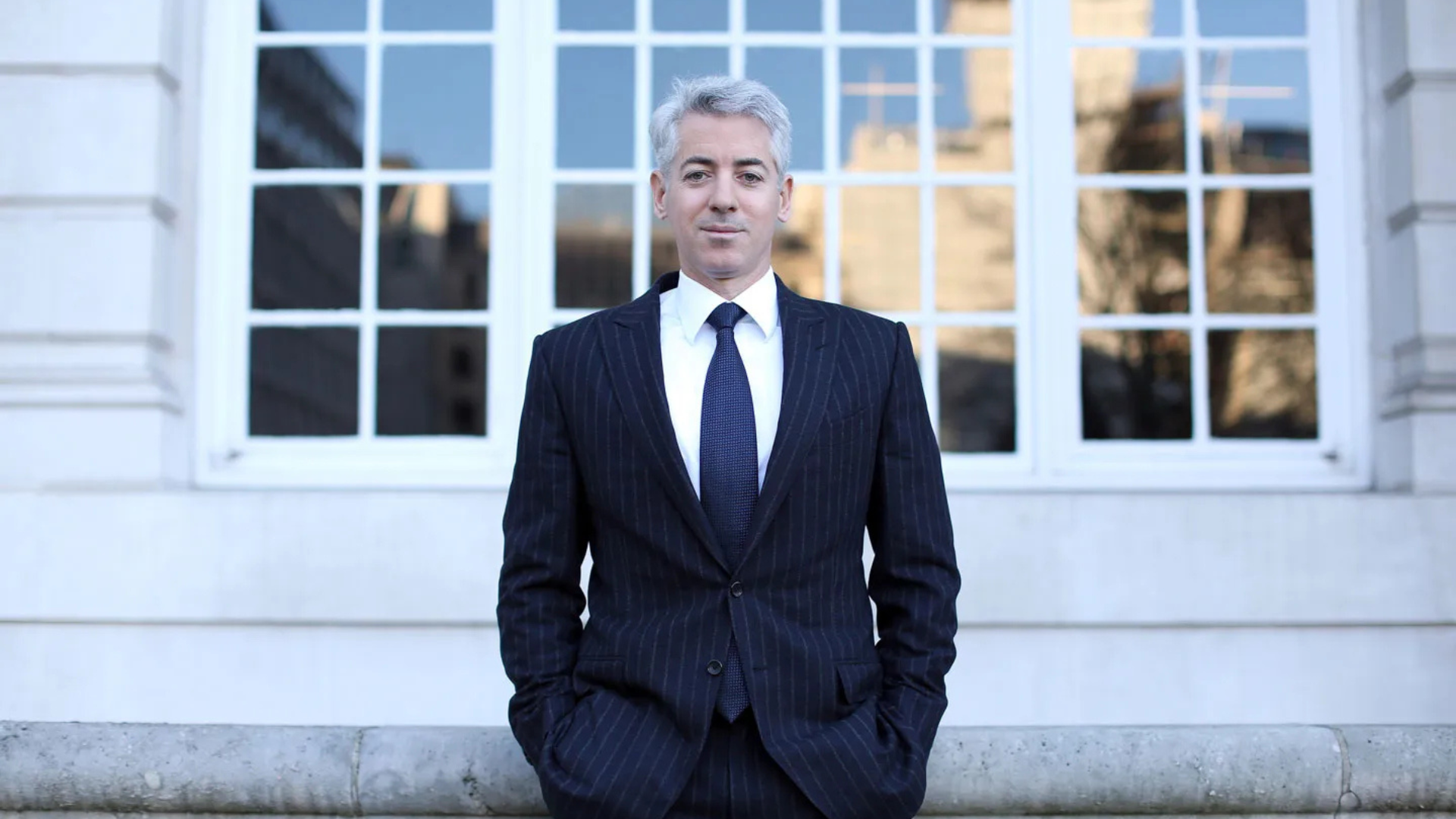
Bill Ackman on What the Market Is Missing in the AI Era
Every investing cycle creates its own obsession.
In a recent appearance on The All-In Podcast, Pershing Square founder Bill Ackman shared his perspective on artificial intelligence, market valuations, founder-led companies, and what investors may be overlooking amid today's AI frenzy. While much of the investing world is focused on the next breakthrough technology, Ackman argued that some of the highest-quality businesses in the world are being left behind by the market's relentless pursuit of what's new.
His argument isn't anti-AI.
It's something more nuanced—and potentially more valuable.
While everyone is searching for the next breakthrough, Ackman believes many investors are forgetting a timeless principle: durable businesses compound wealth over decades.
For entrepreneurs, founders, and aspiring business builders, that distinction matters.
The Evolution of an Activist Investor
Bill Ackman built his reputation as one of Wall Street's most visible activist investors.
In Pershing Square's early days, activism wasn't a choice—it was a necessity.
He recalled how, after acquiring a significant stake in Wendy's, management wouldn't even return his calls. To unlock value, Ackman publicly pushed for the spin-off of Tim Hortons, a move that eventually happened and dramatically increased shareholder value.
Today, the situation is very different.
Rather than fighting to get a seat at the table, Pershing Square is often welcomed by management teams from the start. The firm's reputation gives it influence before any public campaign begins.
But the bigger evolution isn't tactical.
It's philosophical.
Ackman says his growing appreciation for business quality has become the defining change in his investing approach. Specifically, he looks for businesses with:
- Durable growth
- Strong competitive protections
- Resistance to disruption
- Long-term relevance
The lesson for entrepreneurs is clear:
Building a company that survives decades is often more valuable than building one that grows quickly for a few years.
The Hardest Question in Business Today
When asked about AI, Ackman's answer wasn't focused on which model will win or which chipmaker will dominate.
Instead, he highlighted what he believes is the central challenge facing every investor and CEO:
Will this business be disrupted?
According to Ackman, AI has dramatically increased the probability that new competitors can emerge quickly. Capital is abundant. Computing power is increasingly accessible. Talent can assemble globally.
For founders, this changes the game.
The barrier to entry for creating software, products, and services continues to fall. What once required massive resources can now be built by small teams armed with AI tools.
That's exciting if you're building.
It's terrifying if you're already established.
The companies that thrive won't necessarily be the ones with the best current product.
They'll be the ones capable of continuously adapting.
Why the Market May Be Looking in the Wrong Direction
One of Ackman's most interesting observations is that investors often become so fascinated by the future that they stop appreciating exceptional businesses that already exist.
He compares today's AI excitement to elements of the dot-com era.
Back then, investors rushed toward internet stocks while Berkshire Hathaway traded at historically low valuations because many viewed its businesses as "old economy."
Ackman believes something similar may be happening today.
While investors obsess over emerging AI companies, firms like:
- Microsoft
- Amazon
- Meta
may actually be undervalued relative to their long-term earnings power.
Why?
Because they're no longer viewed as exciting.
Yet these companies possess enormous distribution, customer relationships, infrastructure, and cash flow advantages.
For entrepreneurs, there's a powerful takeaway:
Innovation matters.
But distribution, trust, and scale often matter just as much.
Many founders spend years perfecting a product while underestimating the value of building a durable ecosystem around it.
Founder-Led Companies Have an Advantage
One of the most compelling moments in the conversation centered on founder-led businesses.
Ackman argued that founders often possess structural advantages that professional managers simply can't replicate.
A typical public-company CEO may have a tenure measured in years.
A founder often thinks in decades.
A hired executive worries about avoiding mistakes.
A founder worries about ensuring the company's survival.
That's a dramatically different mindset.
Ackman pointed to leaders like Mark Zuckerberg, who made bold acquisitions that appeared questionable at the time but ultimately proved transformative.
For aspiring entrepreneurs, this reinforces an important idea:
Your greatest competitive advantage may not be intelligence, funding, or technology.
It may simply be your willingness to make difficult long-term decisions that others won't.
The AI Adoption Reality Check
Despite the hype surrounding AI, Ackman offered a surprisingly grounded assessment of where large enterprises stand today.
According to him, most CEOs recognize AI as both their greatest opportunity and greatest threat. It's often the first topic discussed in boardrooms.
Yet actual implementation remains early.
Even within Pershing Square, some of the most practical AI use cases today involve legal, compliance, and operational workflows rather than dramatic business transformations.
That's an important reminder.
The narrative around AI often focuses on revolutionary outcomes.
The reality is that many of the biggest gains may come from incremental improvements applied consistently across organizations.
For founders, this creates opportunity.
You don't need to reinvent an industry overnight.
You may only need to solve a painful workflow better than everyone else.
The Bigger Lesson: Think Like a Builder, Not a Trader
Perhaps the most revealing part of Ackman's discussion had nothing to do with stock picking.
It was his admiration for Warren Buffett's long-term approach to compounding.
Ackman described his vision for Howard Hughes Holdings as building a multi-decade compounding machine rather than pursuing short-term gains.
That mindset mirrors the way great entrepreneurs create enduring value.
The best founders aren't optimizing for the next quarter.
They're building systems that can compound for decades.
In a world obsessed with the next AI breakthrough, that's a perspective worth remembering.
Because while markets chase excitement, lasting wealth is often created by something much less glamorous:
Finding exceptional businesses, nurturing them patiently, and letting time do the heavy lifting.
And if Bill Ackman is right, that may be exactly what the market is missing today.
Key Entrepreneur Takeaways
- Durability beats hype over the long run.
- AI increases disruption risk, making adaptability essential.
- Founder-led companies often have structural advantages.
- Many established tech giants may be more undervalued than investors realize.
- The biggest AI opportunities today are often practical, not revolutionary.
- Think in decades, not quarters.
Jonathan Anderson on Leadership, Creativity, and Building the Next Era of Dior