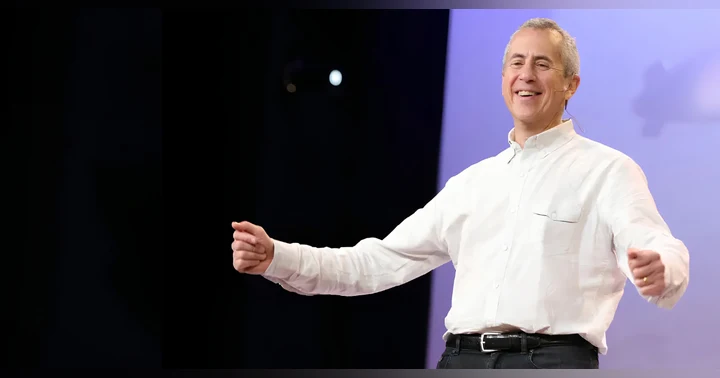
Bob Iger on Leadership, Reinvention, and the Responsibility of Power

When Bob Iger became CEO of Disney, one of the company's most important businesses was already sending warning signs.
Disney Animation — the creative engine that had helped define the company for generations — was struggling.
The problem wasn't invisible.
People inside Disney knew something was wrong. What they lacked was a convincing path forward.
In a recent episode of the Harvard Business Review podcast, “Bob Iger: Power, Succession, and Leading Disney Through Upheaval,”** Iger sat down with former Harvard Business School dean Nitin Nohria to reflect on the decisions, leadership philosophies, and hard-earned lessons that shaped his years at Disney. Their conversation ranged from the Pixar acquisition and Disney’s creative revival to CEO time management, succession planning, crisis leadership, and the dangers that come with power.
For Iger, that distinction mattered.
“The signs were all there that Disney Animation was faltering,” he explained in a recent leadership conversation. The company wasn't necessarily in denial. It was simply “stuck in neutral,” aware of the problem but unsure how to solve it.
That moment captures one of the most useful leadership lessons in Iger's career:
Recognizing a problem is not the same as confronting it.
Entrepreneurs experience this constantly.
You know the product isn't working. You know the team structure is wrong. You know the customer acquisition strategy has stalled. You know something fundamental has to change.
But knowing creates no value until someone decides what happens next.
For Iger, the answer was Pixar.
Fix the Part of the Business That Shapes Everything Else
Iger believed Disney Animation mattered for reasons far beyond its immediate financial contribution.
It influenced how people perceived Disney itself.
That made the problem strategically urgent.
His solution was bold: acquire Pixar and bring Pixar's leadership into Disney Animation.
John Lasseter and Ed Catmull would help reshape Disney's creative culture, and the revitalization that followed contributed to films including Frozen, Moana, Tangled, and Zootopia.
The entrepreneurial lesson isn't simply “make acquisitions.”
It's to identify the part of your business that has disproportionate influence.
Every company has one.
It might be:
- the product customers encounter first,
- the employee who defines the team's culture,
- the channel responsible for most new customers,
- the customer experience that determines referrals,
- or the technology everything else depends upon.
Revenue alone won't always reveal it.
The better question is:
If this part of the company fails, what else begins to weaken with it?
That is often where leadership attention belongs first.
Respect the Past. Don't Become Trapped by It.
Disney faced another problem common to successful organizations: its history had become so powerful that changing it could feel almost disrespectful.
Iger drew an important distinction between respecting tradition and revering it.
Walt Disney, he argued, had been an innovator. He challenged conventions, experimented, and repeatedly moved the company forward.
Yet later generations could sometimes treat the things Walt created as untouchable.
Iger believed that missed the point.
Disney should respect what came before without turning its past into a museum.
The irony was obvious: preserving every old decision in the name of Walt Disney could become the opposite of how Walt Disney actually operated.
It's a useful warning for founders.
As a business grows, yesterday's innovation can quietly become tomorrow's constraint.
The sales process that helped you reach your first $1 million might not work at $10 million.
The product feature customers once loved may eventually become technical baggage.
The employee responsibilities that made sense with five people may become dysfunctional with fifty.
Traditions deserve context, not automatic obedience.
The entrepreneurial question should be:
What are we preserving because it still creates value — and what are we preserving merely because it once did?
Collaboration Doesn't Mean Avoiding Decisions
Iger also describes leadership as a deliberate tension between openness and authority.
He wanted Disney to be collaborative.
People should contribute ideas. Decisions shouldn't automatically flow from the top. Employees should feel heard.
But everyone also needed to understand that the CEO ultimately had to decide.
Iger described the balance as somewhere between being an autocrat and a democrat. Debate matters, but eventually debate has to end.
This becomes especially important for first-time founders.
Some leaders overcorrect in one direction.
They make every decision themselves and gradually train employees to stop thinking independently.
Others overcorrect toward consensus, creating organizations where everyone can debate but nobody can decide.
Healthy leadership requires both:
Invite disagreement generously. Make decisions decisively.
The goal isn't to win every discussion.
The goal is to create enough openness that the best information reaches you — and enough clarity that the organization can move once a decision has been made.
Your Calendar Is a Statement of Strategy
Perhaps one of Iger's most practical leadership lessons involves time.
When he first became CEO, he made a conscious decision to devote nearly all of his non-family professional time to Disney.
He reduced outside commitments, rarely attended conferences, limited speaking engagements, and spent large amounts of time inside the company with employees at different levels.
That wasn't simply calendar management.
It was leadership.
Being present allowed him to influence the organization, understand employees, reinforce priorities, express appreciation, and communicate optimism.
Iger divided CEO time into several categories.
Some responsibilities were unavoidable: board meetings, earnings calls, senior leadership meetings, investors, and major stakeholders.
He also believed CEOs must stay close to decisions involving substantial capital or significant effects on the company's reputation.
Everything else came down to a sharper question:
Can I materially improve the outcome by being involved?
If the answer was no, he delegated.
That is an extraordinarily useful filter for entrepreneurs.
Early-stage founders often confuse activity with leverage.
Being invited to a meeting doesn't mean you belong in it.
Being capable of handling a task doesn't mean you should handle it.
Being interested in something doesn't make it strategically important.
Your calendar should increasingly reflect where your presence changes outcomes.
Protect Quality From the Pressure to Produce More
At Disney, Iger repeatedly emphasized what he called the “relentless pursuit of creative perfection.”
He did not mean perfection in the literal sense.
He meant relentlessly pursuing quality.
His warning was particularly relevant for creative organizations:
“Let's never let volume get in the way of quality.”
That tension is everywhere in entrepreneurship today.
Publish more content.
Launch more products.
Add more features.
Run more campaigns.
Post more often.
Ship faster.
Sometimes volume helps a company learn.
But volume can also become a substitute for judgment.
Iger's philosophy suggests a different question:
Are we producing more because more creates value — or because producing more is easier than deciding what deserves to exist?
Great creative companies aren't merely prolific.
They're selective.
Know When to Step Into the Work — and When to Step Away
Iger's description of the creative process offers another useful leadership model.
For important projects, he wanted to understand the idea early.
Why should the company spend time, attention, and resources on it?
Then he would step back.
The creative team needed room to develop the idea.
Later, he might step back into the process to provide perspective, critique, or guidance.
Then he would withdraw again.
If the project progressed well, his involvement decreased.
If it began going badly, his involvement increased dramatically.
This “come in, come out” rhythm is a powerful framework for founders managing talented people.
Micromanagement isn't merely annoying.
It can destroy ownership.
But total disengagement creates a different problem: leaders discover critical problems only after they're difficult to fix.
The better approach is intentional intervention.
Set standards early.
Check important assumptions.
Give talented people room.
Re-engage when risk increases.
Creative Cultures Need Permission to Fail
There's another side to pursuing excellence.
Failure has to remain survivable.
Iger emphasized that creativity isn't science. No creative organization will succeed every time.
That means leaders need a culture capable of processing failure without making employees afraid to take the next risk.
This matters far beyond filmmaking.
A startup that claims to encourage experimentation but punishes every failed experiment isn't innovative.
It's risk-averse with innovation-themed branding.
The important distinction is between careless failure and intelligent failure.
Founders should expect judgment, preparation, and learning.
What they cannot expect is certainty.
If every experiment must succeed, employees will eventually stop experimenting.
Crisis Changes What Leadership Requires
One of the most revealing sections of Iger's conversation concerns succession.
Looking back at Disney's earlier succession process, he acknowledged that the company may not have examined certain weaknesses deeply enough.
But something else changed as well.
The external environment became more volatile.
Iger came to believe leaders increasingly need to operate in what he describes as an environment of nearly perpetual crisis.
That changes the attributes leaders need.
He emphasized stamina.
Resilience.
Realism without hopelessness.
Optimism without denial.
Strong teams.
Presence.
And the ability to acknowledge a crisis without allowing fear to consume the organization.
His distinction is especially memorable: people don't necessarily need fearless leaders, but they also don't want fearful ones.
For entrepreneurs, this may be one of the defining leadership challenges of the modern business environment.
Leadership isn't merely about designing the strategy when everything is stable.
It's about remaining steady when conditions aren't.
You're Renting the Title
Perhaps Iger's most valuable lesson has nothing to do with Disney's acquisitions, movies, theme parks, or strategy.
It concerns power.
Running Disney for years inevitably made him highly visible.
But he developed a mental framework for keeping that visibility in perspective.
The company was not his.
The office was not permanently his.
The title was not permanently his.
“You're renting the title, you're renting your office, you're just passing through,” he said.
That mindset changes leadership.
If the company exists to amplify the CEO's identity, leadership becomes about status.
If the CEO is temporarily responsible for something larger than themselves, leadership becomes stewardship.
Iger also intentionally surrounded himself with people willing to tell him when he was becoming dismissive, arrogant, impatient, or overly influenced by his own notoriety.
That may be one of the hardest systems for successful founders to build.
The more authority you gain, the easier it becomes for everyone around you to tell you what they think you want to hear.
So don't merely hope someone will challenge you.
Give specific people permission to do it.
The Responsibility Founders Underestimate
Near the end of the conversation, Iger describes a message he wanted to leave for his successor.
His warning was simple:
Don't underestimate how much influence the CEO has.
A leader can walk into a century-old company and assume one individual cannot meaningfully reshape it.
But the title itself creates enormous influence.
What the CEO emphasizes gets noticed.
What they dismiss gets noticed.
What excites them gets funded.
What frustrates them gets avoided.
What they tolerate becomes acceptable.
Iger's point is that leaders should understand that influence because awareness creates responsibility.
The lesson applies just as strongly to a founder with six employees as it does to the CEO of Disney.
Maybe more strongly.
In a small company, people watch the founder constantly.
Your reaction to bad news teaches employees whether to hide problems.
Your treatment of customers teaches employees what service means.
Your response to failure teaches employees whether experimentation is actually safe.
Your calendar reveals what matters.
Your behavior becomes culture faster than your values document ever will.
The Bigger Lesson From Bob Iger's Leadership
Iger's career offers plenty of lessons about strategy, acquisitions, creativity, succession, and corporate transformation.
But underneath all of them sits a more fundamental idea:
Leadership is influence multiplied over time.
You don't have to personally control every decision.
You don't have to attend every meeting.
You don't have to create every idea.
But what you prioritize, reward, challenge, tolerate, and model eventually shapes the organization around you.
That is the opportunity — and the responsibility.
For entrepreneurs building their first team, company, or meaningful body of work, Iger's reminder is worth carrying forward:
You may only be renting the title.
But while it's yours, what you do with it matters.

How James Daunt Turned Around Barnes & Noble by Giving Up Control