Building Trust in a Tech-Driven World: Inside Leila Kaneda’s Revolutionary Approach

Leila Kaneda is on a mission to demystify AI and empower individuals with knowledge that aligns with their values. As the founder of Kaneda Consulting, she transforms fear and complexity into understanding and independence. In this Wantrepreneur to Entrepreneur Spotlight, Leila shares her journey from AI R&D to launching her own consulting firm, focusing on education and strategic empowerment. Her story is a testament to creating impact through knowledge, fostering trust, and redefining what it means to truly understand technology. Discover how Leila turned a personal turning point into a thriving mission-driven business.
Hi, Leila Kaneda! Thanks for joining us today. Tell us about your business. Who do you serve, how do you serve them, and what's the impact that your business and work makes?
Kaneda Consulting is an AI education and strategic consulting firm dedicated to helping people understand how AI actually works so they can use it in ways that align with their values.
Right now there’s a lot of fear, anxiety, and disempowerment around AI. Many smart, capable people feel like it’s too complex for them, or that they need someone else to do it for them. I built my business to be the opposite of that. I’m a firm believer in education as a form of empowerment and independence, so my goal is always to help people use this technology in ways they can own and maintain themselves.
We work with executive leaders, technical teams who are newer to AI, and a lot of small business owners and nonprofit execs who are strapped for time and resources. Some come to learn through AI lessons or workshops. Some come for strategy, which typically entails a plan getting them from point A to point B. But most end up doing both.
The impact I care about most is getting people to their lightbulb moment. I once had a nonprofit exec come in who was working more than full-time in what was supposed to be a part-time role, and it wasn’t sustainable. We wrote down every single thing on their plate and sorted it, and for the first time they could see a way out. Then, with my support, they built their first automation themselves. That one automation took something that used to take a day or two of focus every month and turned it into an hour of work once a month. That was their lightbulb moment, and it was magical. I could visibly see the relief, the pride, and how happy everyone at the organization was with it. And in that moment, they realized that to get to their ideal state, they just had to keep doing this for everything else on the list.
That’s what I get to watch over and over: really capable people realizing they’re capable of this stuff too.
Tell us about the moment you finally felt like you went from wantrepreneur to entrepreneur.
For a while, I was bringing in little bits of money here and there. That mattered, but it still felt like I was trying to become a business, not running one.
The moment came all in one month. I signed my largest client to date, had another big proposal out, and was in the middle of an active engagement. For the first time, the business covered all my expenses, business and personal, with enough left over to save and invest back in.
That same month, I realized I had way too much on my plate. If this was going to keep taking off, I couldn’t do it alone. So I took the big first steps: hiring, drafting contracts, and spending real money to grow the business beyond what I could do by myself.
I also got to build it to the standards I’d always dreamed of, rather than what the market will tolerate. I’ve always believed that everyone working toward the same mission should be paid equally, so I set pay for every role at what I’d pay our highest-earning role: an engineer. That meant when I hired a part-time executive assistant, I paid them at that rate, even though it meant fewer hours.
People thought it was ridiculous. But what they didn’t realize in that moment was that we had stopped trying to become a business because we finally started treating it like we already were one.
Describe the moment or period in your life/career that motivated you to make the entrepreneurial leap.
Kaneda Consulting started as a side gig while I was working full-time in AI and machine learning, mostly in R&D, doing proof of concept work and helping build things from the very beginning.
Early in my career, my job was convincing people that AI wasn’t too big a risk. It was simpler than they thought and less expensive than they thought. Yes, it took time and experimentation, and we couldn’t guarantee results, because the results would be the experiment. For a lot of people, that was too much risk.
Then ChatGPT came along, and suddenly I was facing the opposite problem. The barrier to entry dropped, and everyone started using it in full force without knowing how it works. People were building way too fast, without best practices, without safety protocols, and without thinking about the consequences. I watched people crash and burn, waste money, and get caught off guard by things that could have been avoided. At the same time, the media started controlling the narrative, and AI became synonymous with large language models. Fear and anxiety set in, and people put walls up.
The decision to go full-time came during a personal turning point in my life, but it lined up with a feeling I couldn’t shake. I was tired of watching people get taken advantage of because they didn’t understand how this stuff works and assumed they needed someone else to do it for them.
This technology has been around for decades, and we’ve found it helpful as a society. If we go back to the basics, we can make really smart decisions about when it makes sense and when it doesn’t. And those basics are something that everyone is capable of understanding at some level. That’s what made Kaneda Consulting a mission-driven business, and it’s why I made the leap.
Describe a tool, service, or software that has been a game-changer for your business. How does it contribute to your success?
For a long time, my business ran on email agreements and good faith. We’d agree on terms and a deliverable, and I’d do the work. Lesson students paid per session. Most people used common judgment, but if someone ever came back and said, “That advice you gave me got me in trouble, and I’m going to sue you,” I wasn’t sure if I had anything firm to stand on.
What changed that for me was working with a lawyer. The conversation started because I needed an employment contract to make my first hire, and I mentioned I might want a better client contract too. At that point, I didn’t even know what I didn’t know. But once we started working through it, I realized I needed all of it, and more.
Now every engagement starts with a contract that protects me and my clients, with a real foundation for liability in a field that’s moving fast and that most people are still just learning. That peace of mind is what lets me say yes to bigger projects with confidence instead of hesitation.
We know that success is very often a non-linear path. Tell us about a failure, pivot point, or lesson that changed your course or direction and helped to get you where you are today.
When I first went full-time with the business, Kaneda Consulting was purely a strategy company. Strategy is something I’ve always been good at, and I wanted to help people figure out how to use this stuff well.
But as I started putting myself out there, I ran into walls. Big ones. This was because a lot of the people I could help weren’t willing to even consider a different point of view. Some felt AI was taboo and didn’t want to talk about it. Some didn’t want to hurt my feelings. And some didn’t care about my feelings at all, telling me what a bad person I was for being in this industry.
I could have gone after businesses that already understood AI and competed with everyone else for their attention. Instead, I realized the real problem was a lack of education. Most people were learning about AI through social media and the news, which made a lot of what they were seeing incorrect.
At that point I knew: If this business was going to survive, I had to pivot. So I added an education wing and started using social media as a tool to passively show up in people’s feeds, with the goal of appearing just enough to open their minds a little. That way, when we finally talk in person, I would get my window.
The primary offering I added for the education wing was AI Lessons, which was an idea that came from my music background. When you learn an instrument, you take lessons, and no one questions it. So why couldn’t we learn AI the same way? Within a month, people were signing up.
What that pivot taught me is that before we could talk about strategy or policy, we had to start with the basics: what this technology actually is, what it’s capable of, and how to separate that from everything we’re hearing.
What unconventional strategy did you employ that significantly impacted your business?
Most people in my field make money in one of three ways: building AI products to sell, selling courses about AI (which usually means chatbots), or building automations for clients and then staying on retainer to maintain them.
Instead of choosing one or a few of those routes, I made a deliberate bet to give up the recurring revenue that comes from building things people can’t maintain without me, and to earn their trust instead.
Sometimes that means saying no to paid work. Clients will trust us so much that they ask us to just solve their problems and build the solution for them, and I have to tell them that defeats the whole reason they trust us. We’ll help, but they’ll be right there alongside us. We’re not going anywhere without them.
Every engagement is incremental, so the client stays in control the whole way. Someone who starts in lessons may get inspired and want to fast-track an idea, so they’ll bring me in for strategy. Someone else may finish a strategy engagement and want a trusted advisor in their corner, so they sign us on for fractional work. Either way, when people keep me around, it’s by choice, never because they can’t function without me.
That bet has earned trust with people who don’t trust AI, the media, or anyone in this industry. Almost all of my work has come from word of mouth and meeting people. Clients come back when they need us, and many keep showing up to office hours. Because we teach them when to say no and when to say yes, they trust us enough to keep coming back, knowing they’ll get the answers they need to move forward with confidence.
What’s something you wish you knew sooner that you’d give as advice for aspiring or newer entrepreneurs?
No matter how special your business is, there are some things you’re going to have to do that everyone has to do.
For me, that was things like filing paperwork, converting from a sole prop to an LLC, electing as an S corp (how to do that and when to do that), setting up payroll and everything it entails with workers’ comp, contracts, and what it means to keep track of finances, a chart of accounts, and taxes. No matter what business you’re in or what niche you’re in, you have to think about these things. I asked other people for help on all of them, and none of the tasks were as bad as I thought.
There are so many people who have been in your shoes and now know it’s not a big deal once you know how to do it. So go find them and don’t be afraid to ask, because more likely than not, there are at least a dozen people who’d love to help you and watch you succeed.
Want to dive deeper into Leila's work? Check out the links below!
- Visit Kaneda Consulting's website: kaneda-consulting.com/
- Follow Kaneda Consulting on LinkedIn: Kaneda Consulting
- Subscribe to Kaneda Consulting's Youtube channel: @kaneda.consulting
- Follow Kaneda Consulting on Instagram: @kaneda.consulting
- Follow Kaneda Consulting on Facebook: Kaneda Consulting
- Follow Kaneda Consulting on TikTok: @kaneda.consulting
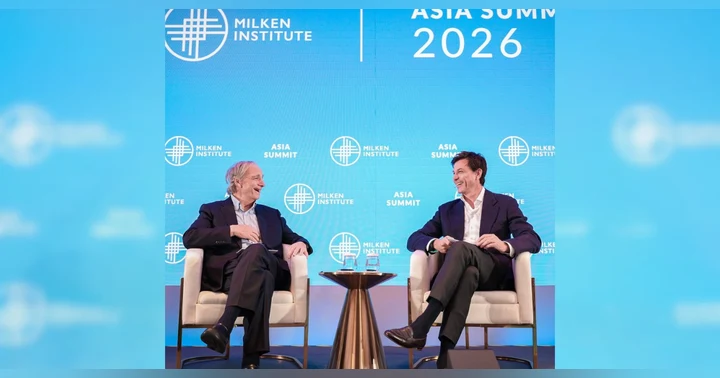
The Hidden Cost of Winning: What Ray Dalio and Toto Wolff Teach Us About Leadership, Failure, and Success