Dara Khosrowshahi on AI, Autonomous Vehicles, and Why the Future of Transportation Is Just Beginning
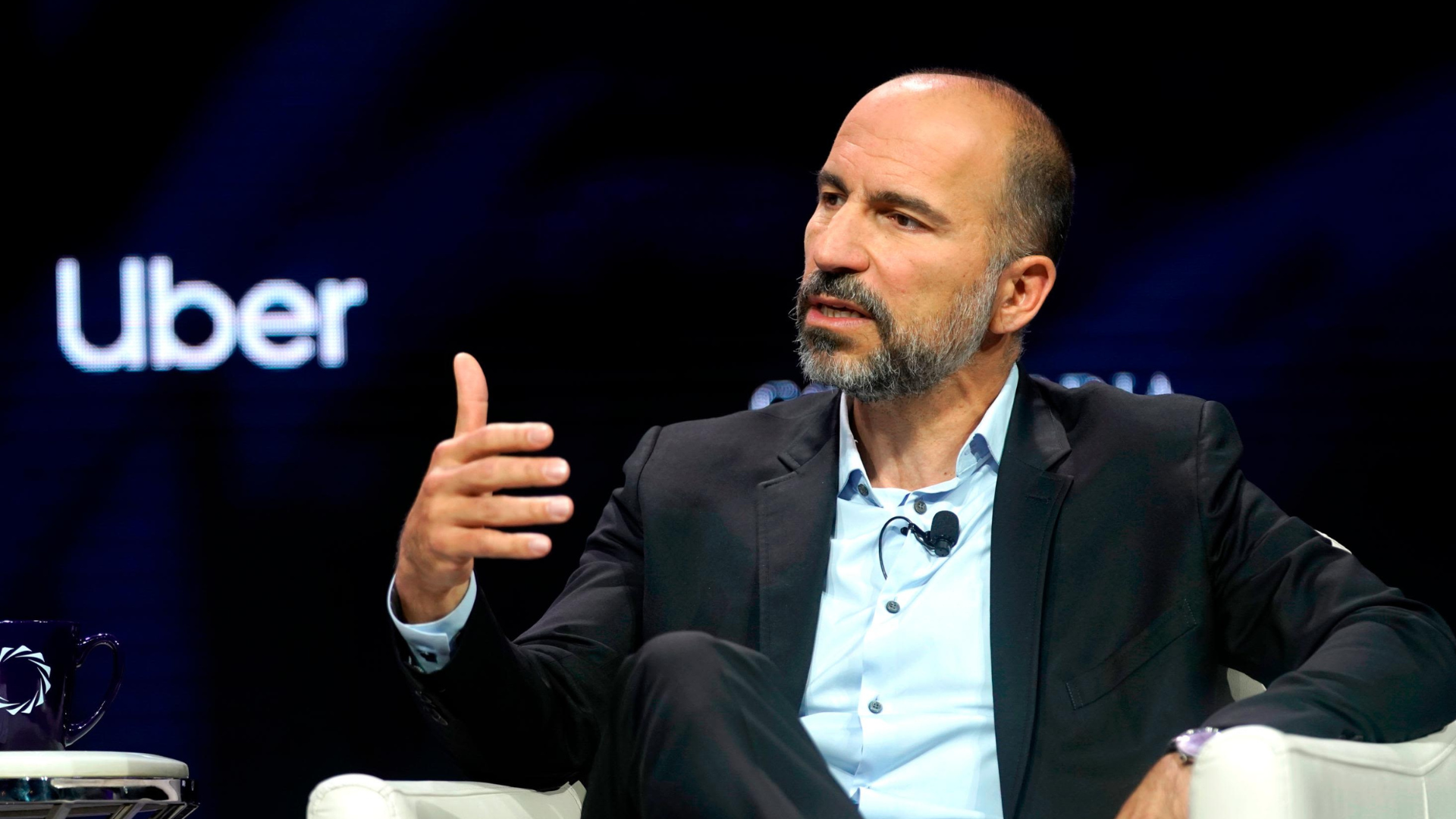
In a recent conversation on Invest Like the Best with Patrick O’Shaughnessy, Uber CEO Dara Khosrowshahi reflected on one of the most consequential transitions in modern business: leading Uber from organizational chaos into profitability while simultaneously preparing for a future defined by artificial intelligence, autonomous vehicles, and entirely new forms of transportation.
For entrepreneurs, the interview offers more than a glimpse into Uber’s future. It reveals how leaders navigate uncertainty, scale through complexity, and make bets on technologies that may reshape entire industries.
The Career Decision That Changed Everything
Khosrowshahi wasn't looking for a new job.
After 13 years at Expedia, he was happy, successful, and comfortable. Uber, meanwhile, was making headlines for all the wrong reasons. The company was embroiled in controversy, leadership instability, and public scrutiny.
Then Spotify founder Daniel Ek posed a question that changed his thinking:
"Since when is life about happiness? It's about impact."
That conversation reframed the opportunity.
Rather than optimizing for comfort, Khosrowshahi began evaluating the role through the lens of influence and contribution. Uber wasn't merely a company in crisis—it was a platform shaping how millions of people move through the world.
For founders, it's a powerful reminder: the biggest opportunities often arrive disguised as difficult problems.
How to Bring Order to Chaos
When Khosrowshahi arrived at Uber, he inherited a company wrestling with board conflicts, cultural challenges, regulatory distrust, and operational complexity.
His solution wasn't a grand turnaround strategy.
Instead, he focused on decomposition.
Rather than viewing Uber's problems as one overwhelming crisis, he broke them into individual components:
- Board governance
- Public trust
- Regulatory relationships
- Executive leadership
- Organizational structure
His approach resembles an engineering principle more than a traditional management framework:
Complex systems become manageable when reduced into solvable parts.
Many entrepreneurs face similar challenges. When businesses hit turbulence, founders often become overwhelmed because they're attempting to solve everything simultaneously.
The lesson from Uber's turnaround is straightforward:
Identify the distinct problems. Solve them individually. Then reconnect the solutions into a coherent whole.
The Immigrant Mindset Behind Resilience
One of the most revealing moments of the interview came when Khosrowshahi discussed his family's move from Iran to the United States.
His family lost everything.
Watching his father struggle to rebuild left a lasting impression—not only professionally but emotionally. Rather than allowing success or failure to define his identity, Khosrowshahi learned to separate personal worth from external outcomes.
That perspective continues to shape his leadership style today.
While many executives speak about resilience, Khosrowshahi's version is rooted in lived experience:
- Focus on solving problems.
- Don't waste energy on panic.
- Stress rarely improves outcomes.
- Identity should exist independently from business results.
For founders navigating uncertainty, that's a valuable distinction.
Businesses fail.
Products fail.
Strategies fail.
But those outcomes don't have to break the people behind them.
Why AI Is the Biggest Opportunity Uber Has Ever Seen
Khosrowshahi describes today's AI wave as one of the fastest technological shifts he's witnessed in his career.
What's particularly interesting is how Uber sits at the intersection of two worlds:
- Digital AI — recommendation engines, search, personalization, and productivity tools.
- Physical AI — autonomous vehicles, drones, robotics, and real-world automation.
Unlike pure software companies, Uber doesn't simply exist on a screen.
Its products must function in unpredictable physical environments filled with traffic, weather, delays, and human behavior.
That makes AI especially valuable.
Uber already uses machine learning to anticipate rider demand, predict destinations, optimize logistics, and improve efficiency. But Khosrowshahi believes the next phase is far bigger:
- AI-powered software engineers
- Larger predictive models
- Autonomous vehicles
- Drone delivery
- Hyper-personalized consumer experiences
His message to teams isn't merely to automate existing processes.
It's to rebuild them entirely.
Don't optimize a process by 20%. Reimagine it from first principles.
That's advice every entrepreneur should consider.
The biggest gains from AI won't come from incremental efficiency.
They'll come from redesigning businesses around entirely new capabilities.
The Autonomous Vehicle Opportunity
Perhaps the boldest prediction from the interview concerns autonomous transportation.
Khosrowshahi believes autonomous vehicles represent another trillion-dollar marketplace.
His thesis is simple:
As technology improves and costs decline, transportation becomes:
- Safer
- More reliable
- More affordable
- More accessible
And when prices fall, demand rises.
We've seen this pattern repeatedly throughout history.
The internet lowered distribution costs.
Cloud computing lowered infrastructure costs.
AI is lowering intelligence costs.
Autonomous vehicles could dramatically lower transportation costs.
Uber's strategy isn't necessarily to build every autonomous system itself. Instead, the company aims to become the platform connecting consumers with a growing ecosystem of AV providers.
It's a familiar playbook:
Own demand. Aggregate supply. Scale network effects.
Why the Best Leaders Seek Troublemakers
One of the most underrated insights from the discussion had nothing to do with technology.
It had to do with people.
Khosrowshahi explained that as companies grow, they naturally become more structured and process-driven. While that creates efficiency, it can also suppress dissent.
His response?
He actively seeks out troublemakers.
Not because they create conflict, but because they introduce mutation.
His analogy was striking:
Companies evolve the same way organisms do. Without mutation, they die.
In practice, that means encouraging unconventional ideas, creating random information flows, and ensuring leadership doesn't become insulated from reality.
For entrepreneurs, this may be one of the most important lessons in the entire interview.
As organizations scale, maintaining adaptability becomes more important than maintaining comfort.
The Founder Takeaway
Dara Khosrowshahi's story isn't really about Uber.
It's about leadership under uncertainty.
It's about choosing impact over comfort.
It's about breaking impossible challenges into solvable pieces.
And it's about remaining curious enough to embrace change before change becomes unavoidable.
The next decade will likely be defined by AI, automation, and entirely new ways of interacting with the physical world.
The companies that win won't simply adopt those technologies.
They'll rebuild themselves around them.
And according to Uber's CEO, that process has already begun.

Why Alex Hormozi’s Marketing Director Walked Away After Breaking the Internet