ElevenLabs CEO Mati Staniszewski: How to Make Your First $10,000 a Month With AI Voice Agents
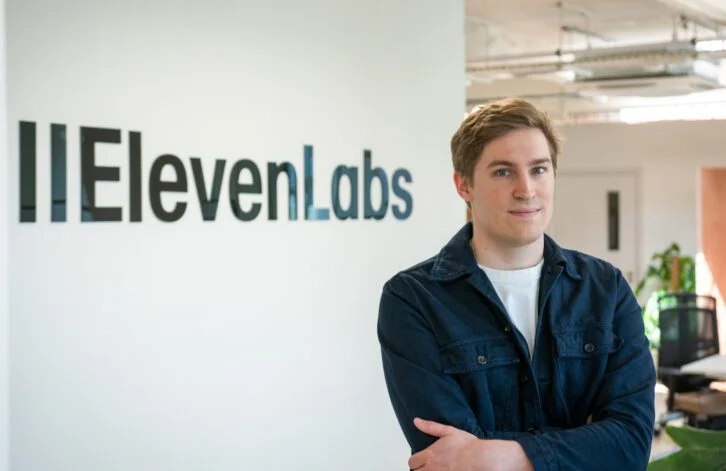
When Mati Staniszewski co-founded ElevenLabs, he wasn’t trying to build a $6.6B AI company.
He was trying to fix bad dubbing.
Growing up in Poland, every foreign film was narrated by a single, monotone voice — regardless of whether the character was male, female, emotional, or whispering. It was flat. Robotic. Detached.
That frustration became a question:
What if voices could sound real — in any language?
In a recent interview on Silicon Valley Girl, Mati shared how that curiosity evolved into one of the fastest-growing AI companies in the world — and more importantly, where the next wave of AI opportunity lies for everyday entrepreneurs.
If you’re trying to make your first $10K/month with AI, this is required reading.
The Real Startup Lesson: Obsess Over the Problem, Not the Technology
Most founders fall in love with the tech.
Mati and his co-founder did the opposite.
They started building a dubbing product. But before finishing it, they talked to users.
The feedback?
“Yes, dubbing is interesting… but can you just fix my voiceover lines after recording?”
That was the unlock.
Instead of pushing their original idea, they pivoted toward what creators actually wanted:
- Fixing lines without re-recording
- Creating audiobooks without days in a studio
- Generating clean voiceovers without vocal fatigue
The biggest early adopters? Book authors.
Recording an audiobook takes days. It’s expensive. Your voice deteriorates. AI solved that immediately.
The takeaway for wantrepreneurs:
Your first idea is probably wrong. Your user’s pain point isn’t.
The $10K/Month AI Opportunity Most People Are Ignoring
When asked directly how someone could make money with AI today, Mati didn’t say “build the next foundation model.”
He said something far simpler.
Take voice agents.
Deploy them for small businesses.
“You don’t have to be the coder. You just need to bring it to those domains.”
Here’s what he suggested:
- Local dentists missing calls and appointment bookings
- Mechanics losing inbound leads
- Doctors overwhelmed with scheduling
- Small service businesses without 24/7 coverage
Most small businesses:
- Don’t know voice agents exist.
- Miss calls daily.
- Lose thousands in unbooked appointments.
The infrastructure already exists. Platforms like ElevenLabs integrate with tools like Twilio. Setup is increasingly no-code.
Your opportunity?
Be the bridge.
Sell implementation and setup to:
- 5–10 local businesses
- At $1,000–$3,000/month retainers
- For appointment handling, sales pre-qualification, multilingual support
That’s your $10K/month.
No AI PhD required.
Why Voice Is Becoming the Default Interface
In 2023, AI was text.
In 2024 and beyond, it’s voice.
Mati believes voice will become one of the primary ways we interact with technology:
- It carries emotional nuance.
- It removes friction.
- It works across literacy and language barriers.
But here’s the deeper opportunity:
Voice unlocks personalization at scale.
He described companies in Asia experimenting with:
- Slower, calmer voices for older callers.
- Energetic, fast-paced voices for younger users.
- Regional accents for local familiarity.
In the future, customers might choose the voice they prefer — just like choosing a theme.
Imagine:
- Your bank speaking in your selected tone.
- Your navigation app narrated by a viral personality.
- Your own AI agent calling businesses on your behalf.
That’s not science fiction. It’s infrastructure being built now.
ElevenLabs Has Paid $5M to Voice Creators. Here’s What That Means.
ElevenLabs built a voice marketplace where users can:
- Record ~30 minutes of speech.
- Create a realistic voice clone.
- Publish it to the marketplace.
- Earn royalties when others use it.
Mati revealed they’ve paid out over $5 million to the community .
There are nearly 10,000 voices on the platform.
Average earnings? Likely a few hundred dollars per month.
But standout voices — unique accents, distinct tones — can significantly outperform.
This reveals something powerful:
AI doesn’t just replace creators. It creates new micro-economies.
Your voice becomes IP.
And IP compounds.
The Hard Question: What About Impersonation?
If voice becomes identity, what prevents abuse?
Mati was candid:
Impersonation will happen.
Instead of assuming detection is perfect, he suggests a future with layered verification:
- Device authentication – Verified devices identify real users.
- Watermarked AI – Authenticated AI voices embed traceable metadata.
- Default AI skepticism – If it isn’t verified human or verified AI, don’t trust it.
That’s a mindset shift.
Today we ask: “Is this AI?”
In the future we’ll ask: “Has this been authenticated?”
For entrepreneurs, this creates entire new categories:
- AI verification startups
- Watermarking tools
- Identity authentication services
- Compliance tooling for AI businesses
Where there is disruption, there is compliance opportunity.
Who Gets Replaced — and Who Wins?
Customer support roles are vulnerable.
Appointment booking. Refund processing. Repetitive workflows.
But Mati emphasized something critical:
“People won’t be replaced by AI. They’ll be replaced by people using AI.”
Domain expertise + AI = leverage.
If you:
- Understand healthcare and use AI
- Understand e-commerce and use AI
- Understand real estate and use AI
You become exponentially more valuable.
If you only understand repetitive workflows?
You’re at risk.
The future belongs to:
- Domain experts who adopt AI
- Builders who deploy AI into traditional businesses
- Creators who use AI as a multiplier
The Founder’s Mindset in an AI Gold Rush
When asked how he sleeps at night amid rapid change, Mati described two forces:
- Massive opportunity.
- Massive responsibility.
He believes this shift may rival — or exceed — the internet revolution.
But he also acknowledges:
- The economy will morph.
- Jobs will shift.
- Entire industries (like language learning) may transform from necessity to hobby.
His core advice for new founders:
- Deeply understand the problem.
- Validate that it’s painful.
- Choose co-founders carefully.
- Move fast, but stay close to users.
It sounds simple.
It rarely is.
So… Should You Become an AI Entrepreneur?
According to Hugging Face’s co-founder (mentioned in the conversation), the next five years may force people into entrepreneurship.
Mati agrees that opportunity is abundant — but not evenly distributed.
If you want to move:
Start here:
- Pick a niche you understand.
- Deploy AI into it.
- Don’t build foundational models.
- Build applied systems.
There is enormous whitespace between AI infrastructure and small business adoption.
That gap is where fortunes are quietly being built.
The Bigger Picture: We’re Still Early
It feels fast.
But in Mati’s view, we’re still early.
Voice agents are just beginning.
Authentication frameworks are evolving.
Creative workflows are expanding.
AI-native businesses are forming.
The question isn’t whether AI will change your industry.
It’s whether you’ll be the one deploying it — or reacting to it.
If you’re a wantrepreneur reading this:
The barrier to entry has never been lower.
The competition has never been more distracted.
The window is open — but not forever.
Voice is just one frontier.
But it might be your fastest path to $10K/month.

The Hidden Fear That’s Quietly Limiting Your Potential