From Freelancer to Founder: Mitchell Thayne’s Playbook for Building a Creative Business
There’s a point in almost every creative entrepreneur’s journey when getting better at the craft stops being enough.
You can buy another camera. Learn another editing technique. Improve your lighting. Build a better portfolio.
But eventually, if you want to build a real business, you have to become good at something many creatives would rather avoid: selling yourself.
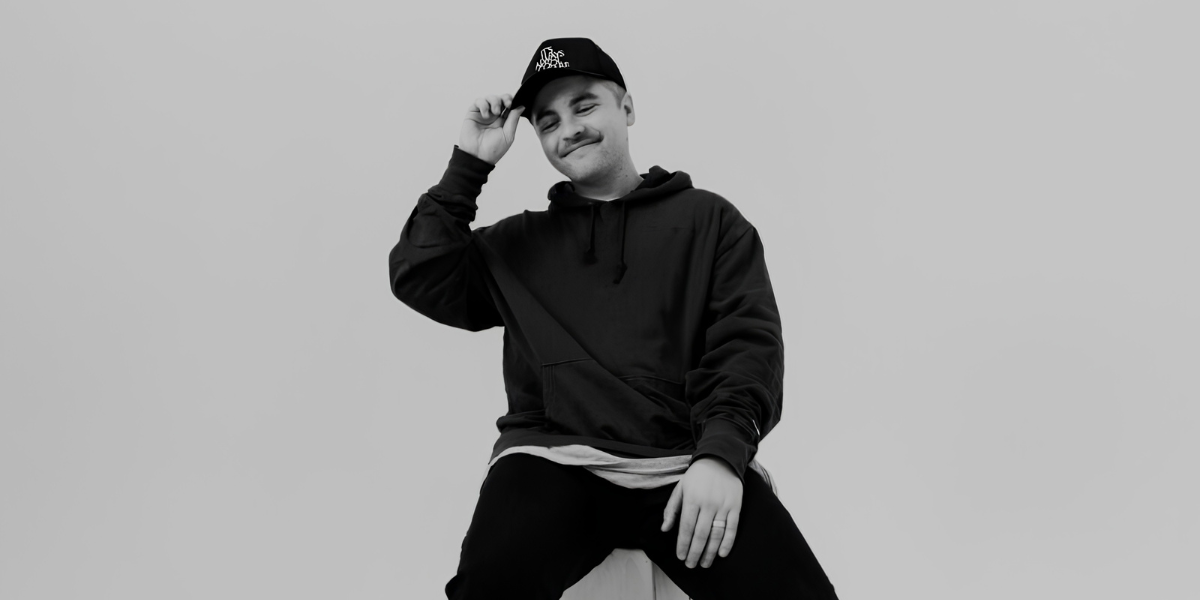
Mitchell Thayne learned that lesson while building Film Lab, his Salt Lake City-based production company. In an appearance on the 505 Podcast, Thayne broke down his evolution from shooting $300 jobs to producing major commercial campaigns—and the business lessons he learned along the way.
His story isn’t really about cameras.
It’s about learning to create value, sell confidence, manage growth, build a brand, and eventually turn creative skills into assets you actually own.
The Difference Between a $3,000 Video and a Six-Figure Campaign
Why would a company spend a few thousand dollars with one videographer but six figures with a production company?
Thayne’s answer is surprisingly simple: certainty.
“At the end of the day, a client is willing to pay more if they have a greater guarantee.”
He’s quick to acknowledge that nobody can literally guarantee a campaign’s success. Algorithms change. Audiences are unpredictable. Distribution matters.
But a sophisticated production company can reduce uncertainty.
Instead of offering only a person with a camera, Film Lab can bring a director, DP, producer, talent, lighting specialists, permits, production processes and contingency plans. More importantly, the team can think beyond one beautiful video and consider how the content fits into a larger campaign.
That means asking questions such as: Where will this content be distributed? What is the primary objective? Does the brand need a hero video, social cutdowns, still photography, product-specific assets or behind-the-scenes content?
For entrepreneurs, there’s a broader lesson here.
Higher prices become easier to justify when you reduce the customer’s perceived risk.
Don’t simply ask, “How can I make my product better?”
Ask: “How can I make choosing us feel safer?”
Your $5,000 Project Should Look Like a $10,000 Project
Thayne didn’t start with six-figure campaigns.
He filmed piano recitals. He made a funeral slideshow. He shot weddings. One of his earliest paid jobs was roughly $300 to photograph a reception.
His progression happened incrementally.
A $2,000 project led to another opportunity. Then he could charge $3,000. Bigger work created evidence that he could handle bigger work.
But there was one strategy behind that progression: make the current opportunity look more valuable than its budget suggests.
As Thayne explained:
“I’d get a five thousand dollar budget, but I made it look like it was ten thousand dollars.”
The key was collaboration.
Instead of trying to become world-class at every part of production, he began bringing in other creatives. Spending $500, $600 or $700 on a talented gaffer, for example, could dramatically improve the final result.
That created a flywheel:
Better collaborators → better work → stronger portfolio → bigger opportunities → bigger budgets.
Wantrepreneurs often think they need to wait for more revenue before producing something exceptional. Thayne’s journey suggests another possibility: strategically reinvest some of today’s revenue into creating evidence that you deserve tomorrow’s opportunities.
When Business Is Slow, Stop Hiding Behind the Work
One of the most useful parts of Thayne’s story comes from a difficult period.
After a business partner left at the end of 2022, Film Lab entered 2023 without enough work or attention.
Thayne responded by creating.
Film Lab launched its LabTakes behind-the-scenes YouTube series. The company experimented with a podcast and newsletter. Thayne began posting consistently—sometimes multiple times per day.
His realization was that creatives can easily confuse improving their craft with generating demand.
Watching lighting tutorials might improve your filmmaking. Testing lenses might make you technically sharper. Searching social media for inspiration can feel productive.
But none of those activities necessarily tell potential customers that you exist.
“We have to take off our creative hat and we got to put on our marketing and our sales hat and just understand that closed mouths will not get fed.”
That lesson reaches far beyond production companies.
When sales slow down, founders naturally retreat toward activities they’re comfortable doing.
They redesign the website.
They tweak the product.
They perfect the pitch deck.
Sometimes the uncomfortable activity—sending the email, publishing the post, making the call—is exactly what the business needs.
Grow Slower Than You Want To
Getting customers is one challenge.
Building an organization capable of serving them creates another.
Thayne admits he hired too aggressively at points because he saw how valuable collaborators could be and desperately wanted support.
But there’s a major difference between hiring someone for a project and putting someone on payroll.
“You need to grow slower than you want to because I’ve grown way too fast at different times. And it’s generally pretty painful.”
Employees create fixed responsibilities in an industry where revenue can be anything but fixed.
Thayne described Film Lab as a “feast with famine” business. After several slow months, he had to make painful decisions, including layoffs and moving some full-time employees to part-time.
One principle he recommends is maintaining enough savings to cover the new costs associated with a hire for at least two or three months.
He also recognized his own limitations and brought in someone better suited to operations, revenue and financial management.
That self-awareness matters.
Scaling doesn’t mean the founder needs to become excellent at everything. It means building a company where the important things are owned by people who are excellent at them.
Then Mitchell Thayne Became His Own Client
Perhaps the most interesting evolution in Thayne’s entrepreneurial journey happened outside Film Lab.
After years of creating content that helped other brands make money, a question kept bothering him.
If his creative work could generate significant value for clients, why couldn’t he use those same capabilities to build something he owned?
That idea eventually collided with another transformation in his life.
After becoming a father, gaining weight and feeling increasingly unhealthy, Thayne started running. He didn’t identify with the stereotypical runner—and suspected plenty of other people felt the same.
That insight became Dead Last, a running brand designed around the underdog.
The company launched in May 2025 after roughly ten months of brand and product development. What began as an experiment grew far beyond Thayne’s expectations. In the interview, he said Dead Last had gone from six figures in its first year toward seven-figure revenue the following year.
And it taught him something important about entrepreneurship.
Film Lab has to continually hunt for the next project.
Dead Last can build something today that keeps creating value tomorrow.
That’s the difference between selling your capabilities and building an asset.
Brand Above All
Ironically, one of Thayne’s best-performing Dead Last advertisements wasn’t an expensive cinematic production.
It was iPhone footage showing reflective printing on a shirt while someone ran.
According to Thayne, that simple creative generated extraordinary return on ad spend.
But he didn’t conclude that beautiful brand content was useless.
Instead, he saw the two types of creative as serving different purposes. Simple content could convert customers. Cinematic work could build identity, connection and community.
That distinction reinforced perhaps his biggest lesson from building Dead Last:
“Brand above all is truly what’s gonna win.”
Performance marketing can optimize what happens today.
Brand gives people a reason to remember you tomorrow.
For early-stage entrepreneurs, that’s an important distinction. It’s tempting to measure every activity against immediate revenue. But the strongest companies are also accumulating something harder to quantify: trust, identity, meaning and connection.
Mitchell Thayne’s journey from $300 creative gigs to Film Lab and Dead Last illustrates what happens when a creative starts thinking like an owner.
Make work better than your current price suggests. Collaborate before you can afford a massive team. Sell when you’d rather hide behind your craft. Hire carefully. Know your weaknesses. And eventually, consider whether the skills you’ve spent years using to build someone else’s company could help you build an asset of your own.
Because the ultimate entrepreneurial upgrade might not be finding a bigger client.
It might be becoming your own.

Building Trust in a Tech-Driven World: Inside Leila Kaneda’s Revolutionary Approach