From Supermodel to Founder: Cindy Crawford’s Lessons on Risk, Ownership, and Personal Brand
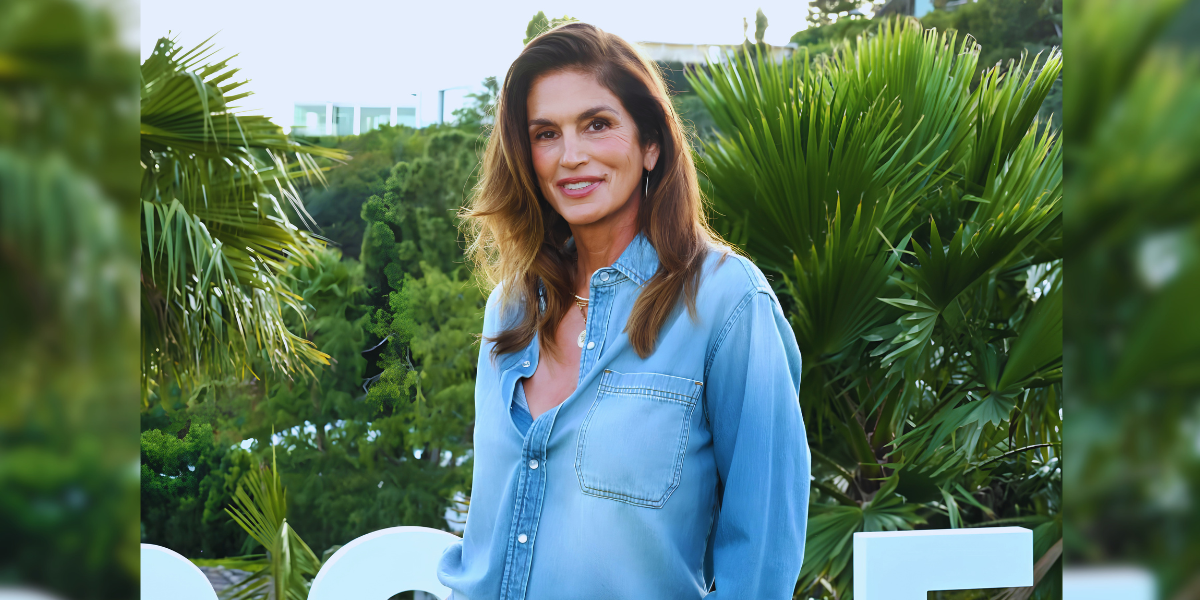
For much of Cindy Crawford’s early career, the business model was straightforward: other companies owned the brands, and she lent them her image.
She appeared in magazines. She worked with designers. She represented major companies. And like most successful models, she was being paid to help build somebody else’s brand.
What she didn’t realize at first was that she was simultaneously building an asset of her own.
Her name.
Her reputation.
Her audience.
And eventually, her ability to choose.
In a recent onstage conversation about her career, Crawford traced the evolution from supermodel to entrepreneur, founder, and stakeholder. Her journey offers a useful lesson for any entrepreneur trying to turn expertise, reputation, or an audience into something bigger.
The central idea is simple: visibility can create opportunity, but ownership creates leverage.
She Didn’t Start With a Grand Vision
One of the more refreshing parts of Crawford’s story is that there was no master plan.
She left Northwestern University, where she had been studying chemical engineering, after her modeling career accelerated. At the time, she assumed the opportunity might be temporary.
She even imagined returning to school when the modeling industry inevitably decided she was too old.
Instead, her career kept growing.
Along the way, Crawford began treating every environment as a classroom. Photographers, designers, makeup artists, clients, executives—each gave her a different window into how the business worked.
That curiosity mattered.
Because entrepreneurship often starts long before someone calls themselves an entrepreneur.
It starts when you stop viewing yourself solely as the person performing the work and begin noticing the machinery surrounding it.
Her First Step Toward Ownership Was Control
One early turning point came after a Sports Illustrated experience where Crawford felt she didn't have enough influence over how she was presented.
Her response was telling.
She created her own calendar.
Looking back, she described it as one of the first moments of “taking my own power.”
That decision foreshadowed much of what came next.
Exercise videos followed. Then MTV. Then opportunities with major consumer brands.
None of it looked like a sophisticated personal-brand strategy at the time. The phrase “personal brand” wasn’t part of the cultural vocabulary yet.
Crawford was simply learning that she could participate in deciding what Cindy Crawford meant.
For founders, that distinction matters.
A brand isn't merely what people recognize. It is also the expectations you deliberately create around that recognition.
Some Opportunities Pay in More Than Money
One of Crawford’s most consequential decisions was taking a small television opportunity with MTV while she was already at the height of her modeling career.
Financially, it made little sense.
Her agent questioned why she would do it.
But Crawford saw something else.
Television allowed people to hear her speak. Instead of being a two-dimensional image on a magazine cover, she became a personality audiences could know.
That broader recognition eventually created opportunities beyond fashion.
Crawford developed a useful way of thinking about those decisions: two bank accounts.
One was the actual bank account.
The other was what she called the “cool bank.”
Certain projects might not pay particularly well, but they increased cultural relevance. Others generated significant income while doing little for the brand.
A sustainable career required understanding the balance.
Entrepreneurs face the same tradeoff.
Not every partnership has to maximize immediate revenue. A podcast appearance, conference talk, ambitious client, experimental product, or strategic collaboration might generate little cash today while dramatically increasing credibility tomorrow.
The important question is knowing which account you’re depositing into.
Define the Downside Before You Chase the Home Run
Crawford and her longtime business partner also use a baseball analogy when evaluating opportunities.
Instead of asking whether every project could become a home run, they ask what a single or double would look like.
That changes the calculation.
Home runs are exciting, but rare. If an opportunity is only worthwhile under the most optimistic scenario, the risk may be too high.
Crawford’s question is more practical:
If this merely gets on base, was it still worth doing?
That is a powerful framework for early-stage entrepreneurs.
Before launching something, define the acceptable outcome.
What would make the project worthwhile even if it doesn't explode?
Maybe it generates ten strong customer conversations.
Maybe it produces a useful case study.
Maybe it introduces you to a strategic partner.
Maybe it earns enough revenue to fund the next experiment.
A venture becomes easier to evaluate when success isn't defined exclusively as the best possible outcome.
Eventually, Crawford Wanted Skin in the Game
The biggest evolution came around age 35.
After spending years working with brands including Revlon, Crawford began questioning whether she wanted to continue being paid primarily as the face of someone else's company.
She decided it was time to build something she owned.
That became Meaningful Beauty.
The key difference wasn't simply that Crawford helped launch a skincare company. It was that she became a stakeholder.
“I want skin in the game,” she recalled thinking. “It’s like you're gambling on yourself.”
The decision aligned incentives.
If the company succeeded, Crawford wasn't simply collecting another endorsement fee. She participated in the value she helped create.
Ownership also changed the way she thought.
As a model, she might naturally focus on the best photographer, premium travel, or the ideal production experience.
As an owner, she had to zoom out.
Where should the company spend money?
Where should the team spend its time?
Which investments actually produced returns?
Equity forces a different kind of thinking because suddenly every resource has an opportunity cost.
Know the Part of the Business Where You Are the Expert
Ownership brought another challenge.
Inside business meetings, Crawford found herself surrounded by people who understood financial statements, supply chains, and other operational areas better than she did.
Sometimes that made her shrink.
Then she realized something important:
She might not be the expert on every function inside the company, but she was, in her words, “the world expert on Cindy Crawford, the brand.”
That realization gave her permission to speak with authority where her expertise was strongest: marketing, product development, positioning, and understanding what felt authentic to the brand.
Founders frequently make the opposite mistake.
They assume leadership requires pretending to know everything.
It doesn’t.
Good founders know where their judgment is unusually valuable—and where somebody else in the room should have the stronger voice.
A Strong Brand Makes Saying No Easier
Crawford describes her brand in relatively simple terms: Midwestern, approachable, wellness-oriented, and centered around confidence.
Those boundaries helped her reject opportunities that didn't fit, including a cigarette campaign.
“The more you can visualize what your brand is,” she said, “the easier it is to say, yeah, this is on brand, this isn't on brand.”
That may be one of the most useful branding lessons for entrepreneurs.
A brand is not merely a tool for deciding what to do.
It is a filter for deciding what not to do.
Clear brands reduce decision fatigue because every opportunity does not deserve equal consideration.
The Definition of Power Eventually Changed
Early in her career, Crawford associated power with a version of the “girl boss” archetype—status, authority, and visible success.
Today, she defines it differently.
Power, she says, is about choices.
The ability to control your schedule.
The ability to decide which opportunities deserve your attention.
The ability to participate in decisions.
The ability to walk away.
That may be the deeper lesson behind Crawford's transformation from model to business owner.
Entrepreneurship is often presented as a pursuit of money, growth, or status.
But those may simply be proxies for something more fundamental.
Optionality.
The most valuable business you can build may be the one that gives you greater control over what happens next.
And Crawford’s career is a reminder that you don't necessarily begin with that power.
You accumulate it.
One smart risk, one clearer boundary, one piece of ownership, and one well-chosen bet at a time.
Why Alex Hormozi’s Marketing Director Walked Away After Breaking the Internet