How Confidence and Conviction Propelled Austin Zhang to Transformative AI Solutions
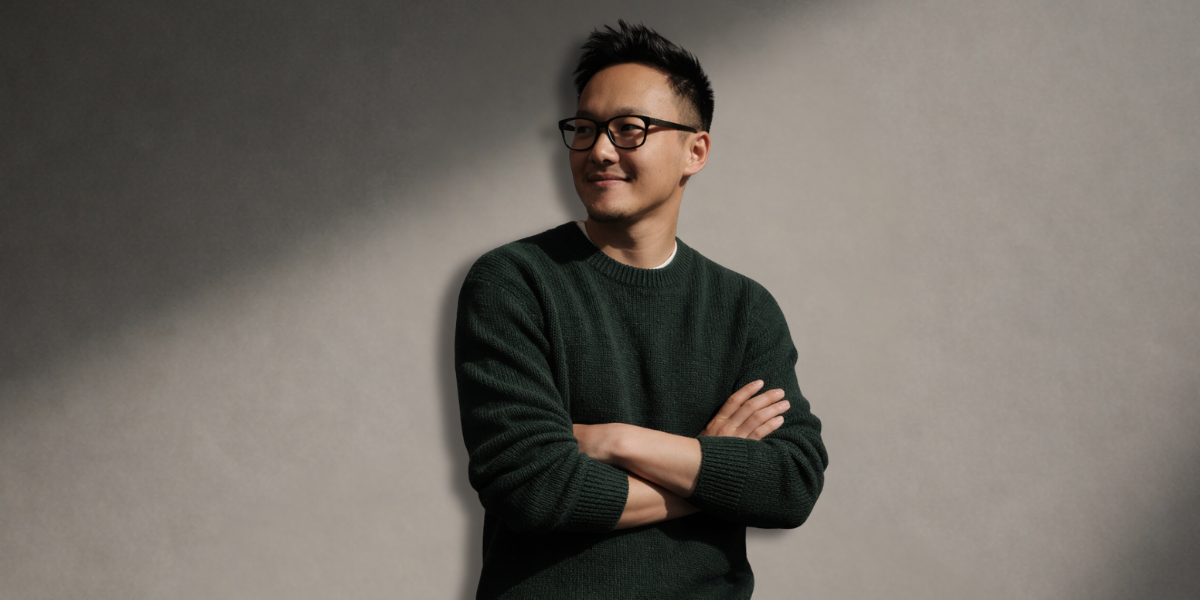
Austin Zhang's entrepreneurial journey began with a spark ignited by ChatGPT's launch, driving him to reshape business operations through AI. As the founder of SIDUS, Austin transforms fragmented business data into cohesive systems, enabling AI agents to streamline workflows with human oversight. In this Wantrepreneur to Entrepreneur Spotlight, discover how Austin's leap from idea to production with Synchat redefined his self-perception, paving the way for SIDUS. His story exemplifies the power of persistence, adaptive learning, and the courage to challenge conventional SaaS norms to create tailored, impactful solutions for businesses.
Hi, Austin! Thanks for joining us today. Tell us about your business. Who do you serve, how do you serve them, and what's the impact that your business and work makes?
I’m the founder and CEO of SIDUS, where we’re building company-specific AI agent systems for small and mid-sized businesses. We’re currently focused on multi-location businesses, where critical information is often fragmented across stores, teams, email, CRM, finance, inventory, and other operational systems.
The problem is that most businesses already have plenty of software and data, but the context required to actually make decisions and complete work is scattered everywhere. SIDUS connects those systems so AI agents can understand how a particular company operates, coordinate workflows, and complete real work with human oversight.
The impact I want SIDUS to create is not simply helping people generate more content with AI. It is reducing the amount of manual coordination, information hunting, and repetitive follow-up required to run a business. I believe the next meaningful phase of AI adoption will happen when agents understand the context, rules, and workflows of an individual company well enough to become genuinely useful inside day-to-day operations.
Tell us about the moment you finally felt like you went from wantrepreneur to entrepreneur.
I had worked on startups and products before, but I carried a quiet insecurity for a long time because I did not come from the traditional computer science or Big Tech founder path. I could understand problems, develop product ideas, and work with technical teams, but somewhere deep down I still felt that turning an idea into a real running product required someone else.
AI coding agents changed that. I built across the desktop application, backend services, authentication, payments, licensing, deployments, and all of the messy details that come with getting real software into users’ hands.
There was no single glamorous moment. It was actually a painful process. But when the product was finally running in production, my perception of myself changed. I stopped thinking of myself as someone waiting for permission to build.
That was when I really felt like a builder—and, in a deeper sense, an entrepreneur.
Describe the moment or period in your life/career that motivated you to make the entrepreneurial leap.
The defining moment came when ChatGPT launched in late 2022.
Like a lot of people, I was amazed by what it could do. But my reaction went beyond thinking it was an impressive new product. I had a very strong conviction that this technology was going to fundamentally change how people build, work, and interact with software.
I decided that I wanted to be part of that transformation.
The funny thing is that I had no clear roadmap at the time. I did not know exactly what company I would build or how I would get there. I just had conviction and a willingness to start moving.
That period taught me something important about entrepreneurship: sometimes you do not begin with perfect clarity. You see a change in the world that you believe deeply in, step into the uncertainty, and learn through building.
The products evolved—from Synchat, to Sloth, and eventually to SIDUS—but that original decision to go all-in on AI has remained constant.
Describe a tool, service, or software that has been a game-changer for your business. How does it contribute to your success?
AI coding agents have been the biggest game-changer in my entrepreneurial journey.
They dramatically changed the amount of leverage one founder can have. They allowed me to move from product ideas into architecture, implementation, debugging, deployment, and production software in a way that would have been extremely difficult for me before.
But I think it is important not to romanticize that experience. AI coding agents did not turn building software into “one prompt and you’re done.” I still had to understand the system, make architecture decisions, trace failures, work through deployment problems, manage integrations, and spend long days figuring out why something was not working.
What changed was the boundary of what I could personally attempt.
That has had a much deeper impact than simply making me more productive. It changed the way I think about entrepreneurship. Small teams can now test ideas, build products, and acquire technical capabilities at a speed that was previously available only to much larger teams.
For me, AI did not replace the work. It expanded what I believed I was capable of doing.
We know that success is very often a non-linear path. Tell us about a failure, pivot point, or lesson that changed your course or direction and helped to get you where you are today.
The evolution from Synchat to Sloth and eventually SIDUS has probably taught me more than any single success.
Synchat began as a real-time AI meeting copilot. Building it taught me how valuable conversations are as a source of business context, but it also exposed a bigger problem: capturing and summarizing context is not enough. The real work begins afterward—follow-ups, decisions, documents, tasks, approvals, and actions across different systems.
That insight pushed me toward Sloth, where I went much deeper into persistent context, memory, agent execution, and human oversight. Through that process, I started to see an even broader problem: businesses do not simply need another generic AI assistant. They need AI systems that understand how their specific company operates.
That became SIDUS.
The biggest lesson was that a pivot does not necessarily mean the previous idea was a failure. Sometimes building one product gives you access to a deeper layer of the problem.
I have learned to be stubborn about understanding the problem, but much less emotionally attached to my first solution.
What unconventional strategy did you employ that significantly impacted your business?
One unconventional decision behind SIDUS is that I have deliberately rejected one of the traditional assumptions of SaaS: that every customer should receive essentially the same product.
Businesses do not operate the same way. They have different terminology, approval structures, workflows, systems, and operating rules. Trying to force all of that into one generic interface can make software easier for the vendor to scale but less useful for the customer.
Our approach is to make the customer-facing workspace specific to how that company actually operates while standardizing the difficult infrastructure underneath it.
The workflows and experience can differ, but identity, permissions, agent execution, memory, approvals, auditability, integrations, and other foundational capabilities should be shared and reusable.
The important discipline is not to over-generalize too early. The first time we encounter a customer requirement, it may remain customer-specific. When the same need appears repeatedly and we understand what is truly common, then we extract it into the shared platform.
The goal is not customization for its own sake. It is making every customer implementation teach the platform something that makes the next one faster and stronger.
What’s something you wish you knew sooner that you’d give as advice for aspiring or newer entrepreneurs?
I wish I had understood sooner that confidence is often an output of action, not a prerequisite for it.
For a long time, I thought I needed to feel more prepared before taking certain steps. I thought I needed the right technical background, the right team, or more certainty before I could build some of the things I imagined.
My experience has been almost the opposite.
You build something difficult. You hit a wall. You fail to solve it. You come back the next day and try again. Eventually you get through it, and only then does your perception of what you are capable of start to change.
Entrepreneurship has felt like five steps forward and two steps back for me. Sometimes it feels like the same wall has pushed you back ten times. I have learned that grit does not mean never feeling exhausted or discouraged. Sometimes the right move is to get a good night’s sleep and come back stronger the next morning.
The important part is that you come back.
Want to dive deeper into Austin's work? Check out the links below!
- Visit SIDUS's website: mysidus.com/

Bob Iger on Leadership, Reinvention, and the Responsibility of Power