How Doug McMillon Reinvented Walmart by Betting on People Before Technology
Twelve years ago, if you’d asked most analysts what Walmart’s future looked like in the age of Amazon, the answer would’ve been blunt:
It doesn’t have one.
Legacy retailer. Slow. Bureaucratic. Brick-and-mortar dinosaur.
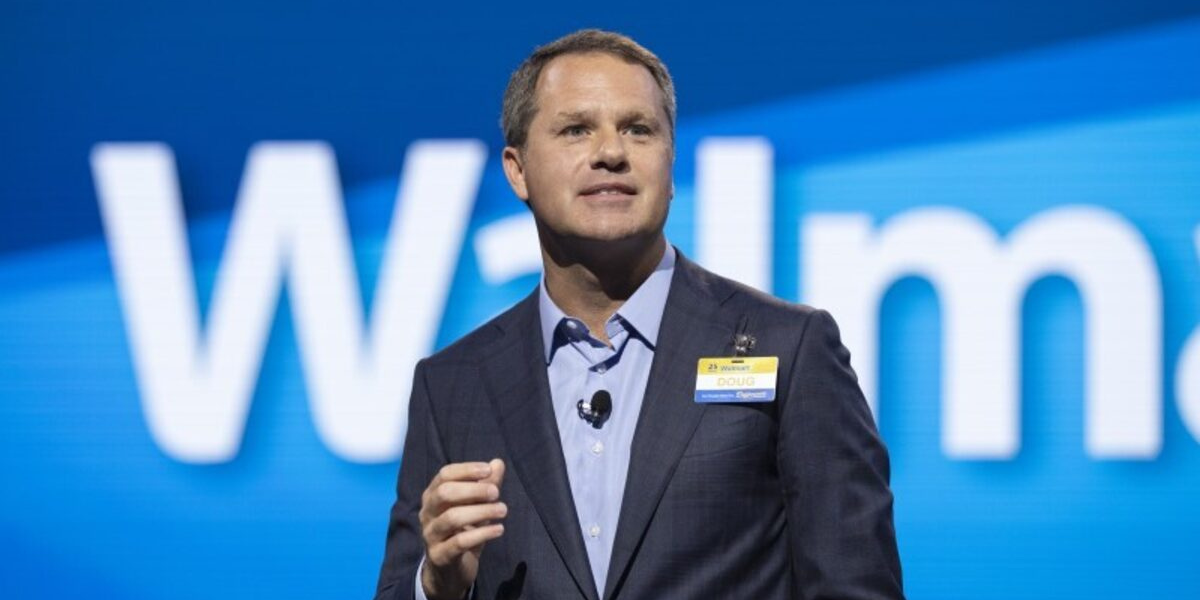
But in his final week as CEO, Doug McMillon sat down in Bentonville, Arkansas, for an interview with The Wall Street Journal Leadership Institute to reflect on his 12-year run leading the world’s largest company.
The story he told wasn’t about survival.
It was about reinvention.
Today, Walmart isn’t just alive — it’s a digital force, an omnichannel powerhouse, and a trillion-dollar enterprise.
So what changed?
Not technology first.
People first.
And that sequencing may be the most important leadership lesson of McMillon’s tenure.
The First Problem Wasn’t Amazon. It Was Negative Store Growth.
When McMillon took the CEO role in 2014, Walmart U.S. Supercenters had posted several quarters of negative comparable sales.
That’s corporate speak for something serious:
The core engine was stalling.
Before he touched e-commerce, before Jet.com, before Flipkart, before AI — he did something deceptively simple.
He grabbed a yellow pad and went to the stores.
He asked associates:
“What do you think we ought to change?”
The answer wasn’t complicated:
- Wages were too low.
- Schedules were unpredictable.
- Inventory wasn’t flowing properly.
- The company needed to get back to “everyday low price.”
The frontline workforce wrote the prescription.
And McMillon listened.
The $3 Billion Bet Wall Street Hated
One of his first major moves was a massive investment in associate wages and training — roughly $3 billion.
The market reaction? Brutal.
Operating income dropped. Stock took a hit. Analysts questioned the logic.
Why invest billions in labor when Amazon was eating your lunch?
Because McMillon understood something foundational:
“You couldn't do the technology stuff if you didn't get the people in the right place.”
This wasn’t sentimentality. It was sequencing.
If stores kept declining, there would be no confidence — internally or externally — to fund bold digital bets.
The transformation started by stabilizing the core.
Lesson for founders:
Before you pivot, scale, or chase innovation — fix your engine.
The Silicon Valley Wake-Up Call
Around the same time, McMillon made a pilgrimage to Silicon Valley.
One message stood out from tech leaders:
Legacy retailers couldn’t beat Amazon.
One conversation, described as a “dumb pipe” warning, implied Walmart’s margins would disappear and survival would be unlikely.
For some leaders, that would’ve been discouraging.
For McMillon?
Motivating.
“We’re from Arkansas. We love being underestimated.”
That underdog mentality — David versus Goliath — became fuel.
And then came the second controversial bet.
Jet.com and the Innovator’s Dilemma
In 2016, Walmart bought Jet.com for $3.3 billion.
It was losing money.
It had just $1 billion in gross merchandise volume.
It clashed culturally with Bentonville discipline.
Wall Street was skeptical. Internally, there was friction.
McMillon knew exactly what he was walking into:
Clay Christensen’s Innovator’s Dilemma.
A profitable legacy business sitting next to an unprofitable, high-growth disruptor.
His solution?
Keep them separate.
Protect the startup from being crushed by the core.
Absorb the learning.
Accept losses.
Build capability.
“We have to change to serve customers the way they want to be served. We don’t decide how people shop.”
That conviction mattered.
Jet.com wasn’t just an acquisition. It was an injection of digital DNA.
And over time, leaders like John Furner helped integrate digital and physical into one omnichannel system.
For wantrepreneurs, this is critical:
- You can’t cling to your original business model.
- You can’t protect profit at the expense of relevance.
- You must be willing to endure temporary losses to secure long-term survival.
COVID: Leadership in Real Time
If the first half of McMillon’s tenure was strategic transformation, COVID was crisis leadership at scale.
Stores in Wuhan were already reporting issues in January 2020. Within weeks, the world shut down.
Decision cycles shifted from quarterly to daily — sometimes hourly.
When uncertainty hit, McMillon empowered frontline leaders:
“You decide. You’re in the best position to know.”
Plexiglass barriers. Mask procurement. Supply chain chaos.
At one point, John Furner had already secured 200 million masks before the internal debate had fully resolved.
Margins didn’t drive decisions.
Principles did:
- Keep associates and customers safe.
- Keep stores open and inventory flowing.
- Help communities if possible.
This philosophy echoed a lesson from Hurricane Katrina years earlier:
“Don’t worry about the P&L. Unleash everything. Add it up later.”
Crisis compresses time horizons.
Strong cultures accelerate decision-making.
What Didn’t Change
One of McMillon’s most subtle leadership moves was how he framed transformation.
When everyone asked, “What’s going to change?” he realized listing everything would create fear.
So he flipped the script.
He told associates what wouldn’t change:
- Walmart’s purpose: save people money and help them live better.
- The culture: servant leadership.
- The values.
Everything else was open.
This gave people psychological stability during massive change.
Repetition mattered. Consistency mattered.
He learned not to rephrase the message creatively.
“Just say the same thing the same way.”
Leadership isn’t just strategy.
It’s disciplined communication.
Stakeholder Capitalism — Without the Politics
McMillon was part of the Business Roundtable statement expanding corporate purpose beyond shareholders.
But when critics called that “woke,” his response was practical:
- Do you want employees to feel included and perform well?
- Do you want less pollution?
- Do you want more efficient packaging?
“It’s just better business.”
His time horizon extended beyond quarters.
“If your time horizon is long enough, it changes how you look at all these things.”
For founders obsessed with short-term metrics, this is the deeper insight:
Longevity demands a broader lens.
The AI Inflection Point
As he steps down at 59, McMillon openly says AI will transform nearly every job.
He frames it in two lenses:
- Growth opportunities — making shopping better.
- Productivity transformation — changing skills and workflows.
He believes the next decade requires stronger digital and technical acumen — and that’s one reason he’s handing off leadership.
That humility is notable.
Great leaders don’t cling to power.
They know when the next era requires a different operator.
From Warehouse Worker to CEO
Perhaps the most inspiring part of McMillon’s story isn’t the strategy.
It’s the trajectory.
At 16, he took a warehouse job because Walmart paid $6.50 an hour — more than McDonald’s.
He was shocked by how happy employees were in sweltering Arkansas heat.
That culture stuck.
He never worked anywhere else.
From unloading trailers to CEO.
When asked his theory of leadership, he doesn’t cite a management framework.
He cites Sam Walton’s book, Made in America.
Servant leadership.
Long-term thinking.
Relentless customer focus.
And maybe most importantly — caring deeply.
The Founder Takeaways
For wantrepreneurs and early-stage founders, Doug McMillon’s tenure offers five hard-earned lessons:
1. Fix the Core Before You Transform
Don’t scale dysfunction. Stabilize it.
2. Invest in People Before Platforms
Technology amplifies culture. It doesn’t replace it.
3. Take Asymmetric Risks With Conviction
Jet.com, Flipkart, wage increases — bold bets require board alignment and long-term backing.
4. Communicate What Won’t Change
In transformation, identity anchors people.
5. Lead With a Long Time Horizon
If you want to win for 50 years, you cannot optimize for 50 days.
Doug McMillon inherited the world’s largest retailer at a moment when many believed its best days were behind it.
He leaves behind a digitally capable, globally positioned, trillion-dollar enterprise.
Not because he chased technology first.
But because he understood something timeless:
Transformation begins with people.
And for every founder trying to future-proof their business, that lesson might matter more than any algorithm.

Mastering Freight: Akash Singel’s Blueprint for Turning Loads into Profits