How MrBeast Cracked the Attention Economy (And Why Story Still Wins)
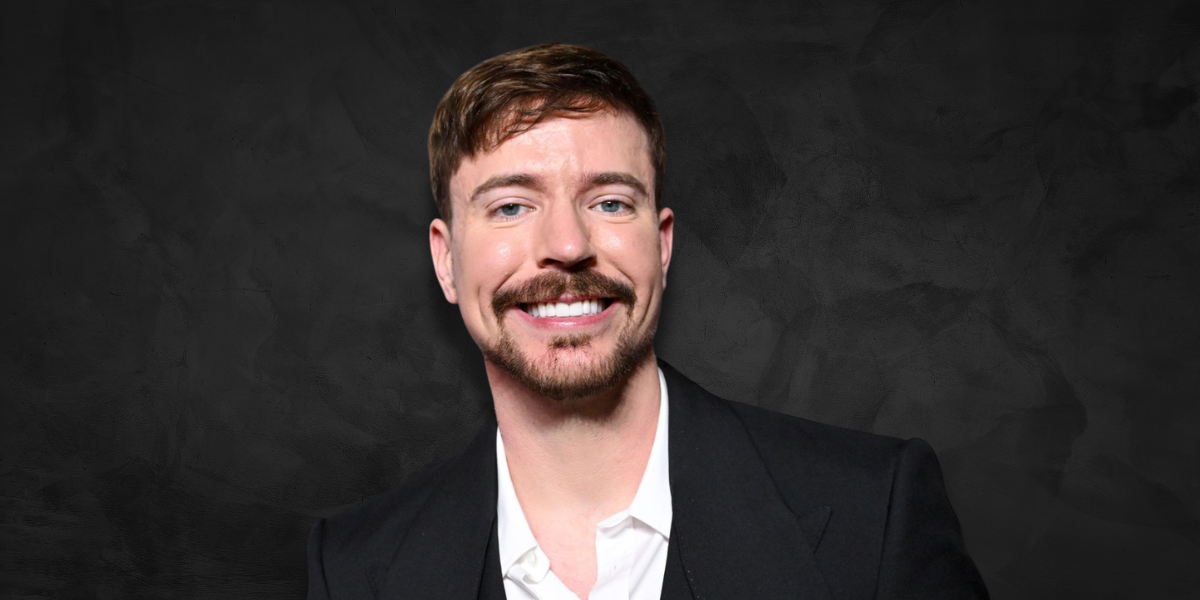
In a wide-ranging interview on The Wall Street Journal’s CEO Council Summit, Jimmy Donaldson — better known as MrBeast — pulled back the curtain on how he built the most dominant creator brand in the world .
When he was 11 years old, he uploaded his first YouTube videos.
Two people watched.
For the next eight years, he obsessed over a question most creators never ask deeply enough:
Why do some videos get 100 million views… and others get 100?
Today, the world knows him as MrBeast — the most followed individual creator on the planet. His empire spans YouTube, Beast Games on Amazon Prime, Feastables chocolate, toys, snack brands, a mobile company, and a financial services platform. Beast Industries now carries a reported $5.2 billion valuation .
But the real story isn’t about scale.
It’s about obsession.
The Teenage Years Nobody Saw
Before the billion followers, before the $10 million prize pools, before the 300-person production team — there were years of near-total obscurity.
Jimmy didn’t stumble into virality. He reverse-engineered it.
“I was really curious why certain pieces of content would get 100 million views and others would get 100… I spent my entire teenage years just basically studying.”
He wasn’t studying filmmaking.
He wasn’t studying branding.
He was studying human behavior through the algorithm.
Here’s the insight most founders miss:
“The more you study social media algorithms, the more you just realize it’s just a reflection of what people want to watch.”
The algorithm isn’t magic.
It’s a mirror.
And mirrors don’t lie.
The Global Rule of Attention
Jimmy shared a stat that should make every entrepreneur pause:
“2% of all humanity’s time is spent on YouTube.”
That attention is distributed by recommendation engines. Which means if you understand what humans consistently choose, you understand leverage at planetary scale.
His early breakthrough wasn’t just better thumbnails or higher budgets.
It was this:
Make content that transcends culture.
If someone in India, Brazil, and America can all emotionally understand your concept, you win.
For example:
An ex-couple chained together for 30 days for $300,000.
It sounds outrageous — but it taps something universal: love, tension, reconciliation, human drama.
The takeaway for entrepreneurs?
- Don’t build culturally narrow products if you want global scale.
- Tap into human constants: status, fear, belonging, competition, generosity, redemption.
Attention scales when it hits instinct.
The Myth of the Short Attention Span
There’s a popular narrative that attention spans are collapsing.
Jimmy disagrees.
On YouTube, average video lengths that succeed are actually increasing — especially in the U.S., where over 50% of watch time now happens on televisions .
His own content evolved from 12–15 minutes to 25–30 minutes.
The insight?
People don’t have short attention spans.
They have low tolerance for boredom.
If the story is compelling, they’ll stay.
For founders, that’s a powerful reframe:
Don’t simplify your vision.
Make it more engaging.
Trust Is the Real Moat
One of the most overlooked parts of MrBeast’s success is something less flashy than $10 million giveaways:
Compounded trust.
“As they watch content, they know that it's going to be good because the last 50 times they experienced your content, it was a positive interaction.”
That’s brand equity in its purest form.
Most startups chase growth hacks.
Jimmy chased consistency.
Sixteen years of posting.
Constant quality improvements.
Endless iteration on “granular levers” most viewers can’t articulate — but feel.
You don’t build that overnight.
When Spectacle Stops Working
Here’s where the story gets interesting.
After years of escalating prize money, bigger sets, larger productions, Jimmy admitted something most founders wouldn’t:
“After a while you do get a little numb to money being given away… but hearing a great story is something you never get numb to.”
That’s a master-level insight.
Spectacle has diminishing returns.
Story compounds.
Which is why he publicly committed to going into “ultra-grind mode” to create the greatest content of his life — not by spending more, but by telling deeper stories .
For entrepreneurs, this is critical:
- Features get copied.
- Funding advantages disappear.
- Distribution changes.
But story — the narrative around your mission — is defensible.
Platform Strategy: Why YouTube Wins (For Business)
Jimmy is everywhere: TikTok, Instagram, YouTube, Amazon Prime.
But when asked which platform actually builds durable business?
He didn’t hesitate.
YouTube.
Why?
Because depth matters.
Watching a five-second clip is not the same as spending 20 minutes with someone. The latter builds relationship, memory, and trust .
For founders building personal brands or audience-driven companies:
- Short-form builds awareness.
- Long-form builds loyalty.
- Loyalty builds revenue.
Building a $5.2B Ecosystem Around Attention
Beast Industries now operates across three divisions :
- Media (YouTube, Shorts, Beast Games, animation)
- Consumer Products (Feastables, toys, snacks, mobile service, financial services)
- Creator Marketplace Platform
Half of revenue currently comes from media. Half from consumer products .
That’s important.
He didn’t just monetize views.
He converted trust into product.
But here’s what makes it strategic — not opportunistic:
Each product ties back to mission.
Feastables became the largest ethically sourced chocolate brand in the world, addressing child labor in cacao farming .
He realized that simply paying more for cacao could disrupt exploitative supply chains.
That’s leverage.
Use attention to build cash flow.
Use cash flow to fix broken systems.
Document it.
Reinforce the brand.
Flywheel.
Why He Avoids Politics (And Most Controversy)
With global influence comes temptation to polarize.
Jimmy avoids it deliberately.
Not because he’s afraid — but because it’s inefficient.
He put it plainly:
Creating political division would instantly make half the audience hate him — and reduce his ability to drive impact elsewhere .
Instead, he focuses on initiatives that scale:
- Ethical sourcing
- Tree planting
- Ocean cleanup
- School building
He’s playing the long game.
For founders, there’s a subtle lesson:
Not every viral opinion increases enterprise value.
The 10-Year Question
A decade from now, what is Beast Industries?
Their mission is ambitious:
To be the most impactful entertainment brand in the world.
That’s not just a media goal.
It’s a systems goal.
Media → Products → Financial Services → Creator Infrastructure.
If you’re a wantrepreneur reading this, here’s the deeper takeaway:
Jimmy didn’t start with a $5.2B vision.
He started with a single obsession:
Why do people click?
Sixteen years later, that curiosity compounds across industries.
The Final Lesson: Obsession Beats Talent
Before the empire, there was a teenager pretending to go to college — sitting in his car editing videos.
Before the billion followers, there was a 40-hour video of him counting to 100,000.
The world saw the explosion.
It didn’t see the 8 years of obscurity.
Attention is rented.
Trust is earned.
Story is forever.
And if MrBeast has cracked the attention economy, it wasn’t by hacking it.
It was by studying humans long enough to understand what they actually care about.

Discovering Hidden Assets: The TurboTax-Inspired Tool Simplifying Estate Settlements