How Yousef Ahmad’s AI is Revolutionizing Legal Intakes in Minutes
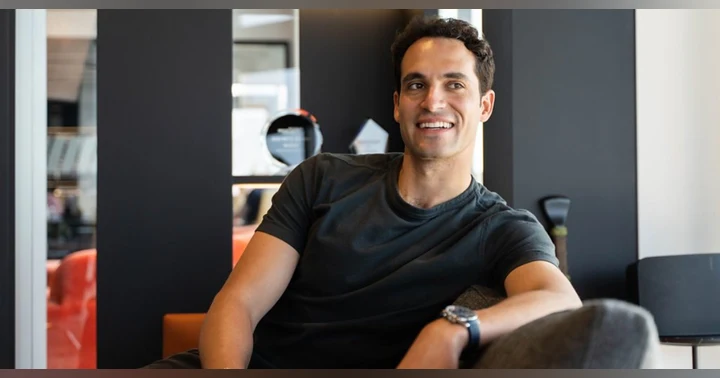
Yousef Ahmad's journey from wantrepreneur to entrepreneur is marked by a keen insight into solving systemic issues within the legal industry. As the founder of IntakeIQ, an AI-powered legal intake platform, Yousef transformed recurring frustrations from his wife’s law practice into a pioneering solution for law firms. In this Wantrepreneur to Entrepreneur Spotlight, he shares how launching his first paying customer redefined his business perspective, and why radical honesty and streamlined architecture became his guiding principles. Yousef’s story is a testament to how innovative thinking and integrity can reshape traditional sectors.
Hi, Yousef! Thanks for joining us today. Tell us about your business. Who do you serve, how do you serve them, and what's the impact that your business and work makes?
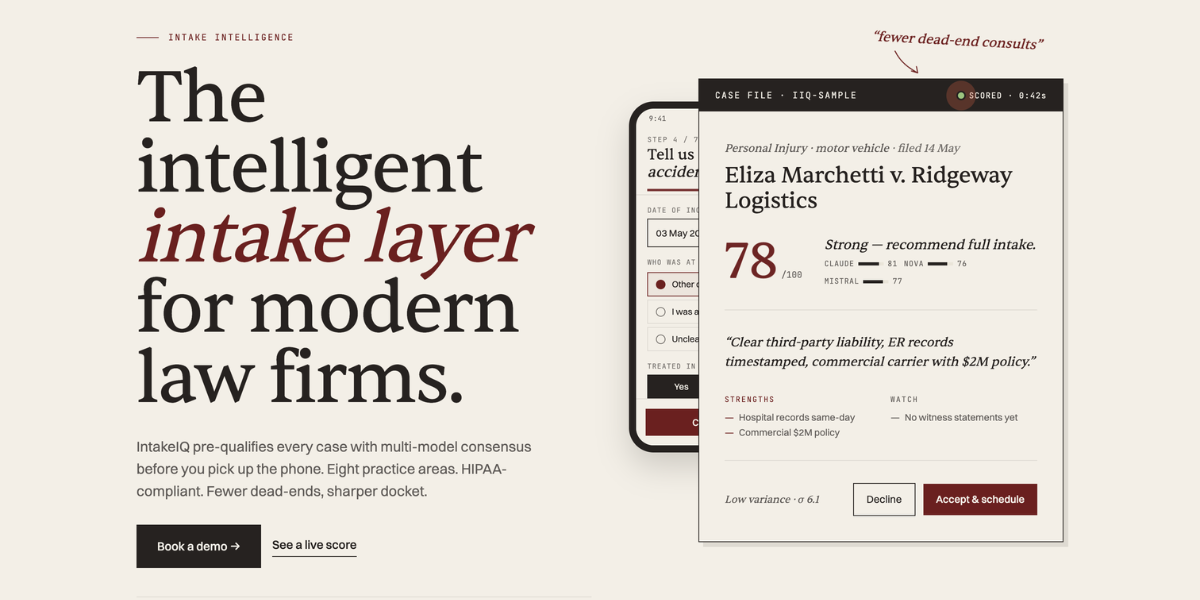
IntakeIQ is an AI-powered legal intake platform for law firms. When a potential client reaches out — through a form, or now even just a plain email to the firm's inbox — IntakeIQ structures the inquiry, scores the case using multiple AI models running in consensus, and hands the attorney a full dossier: strengths, weaknesses, an estimated damages range, and citations back to the client's own words. Firms use it to respond in minutes instead of days and to stop losing viable cases in crowded inboxes. Everything runs inside AWS with HIPAA-grade controls, because intake in areas like personal injury and employment law routinely contains protected health information — we treat that as a first-class engineering constraint, not a compliance checkbox.
Tell us about the moment you finally felt like you went from wantrepreneur to entrepreneur.
The honest answer is a specific date: the day IntakeIQ went live and, days later, the first law firm put in a card and paid. Up to that point everything was potential — a roadmap, a demo, opinions about the legal industry. A firm trusting us with their actual client pipeline, on their own money, changed the psychology completely: every decision after that had a real customer on the other end of it.
Describe the moment or period in your life/career that motivated you to make the entrepreneurial leap.
The entrepreneurial leap wasn't a single dramatic moment — it was a recurring frustration I kept hearing secondhand. My wife runs her own law practice, and she'd come home describing the same problem over and over: her intake team would spend hours on calls with potential clients, but critical details — dates, prior incidents, key facts that actually determined whether a case was viable — kept slipping through the cracks. It wasn't a lack of effort on her staff's part; it's just an inherently hard thing for a person to do consistently, call after call, while also trying to build rapport with someone who's often calling during a stressful moment in their life.
Having spent years in software development, I realized this wasn't really a "hire better people" problem — it was a systems problem, and one AI was well-suited to solve. An intake conversation follows patterns; the information that needs to be captured is fairly well-defined, even if every caller tells their story differently. That gap between what should be captured and what actually gets captured, at scale, across every law firm doing intake the same manual way, felt like a real opportunity — not just for her practice, but for a much broader market of attorneys who couldn't do intake or accept new clients while working with existing ones.
That's what pushed me to start building IntakeIQ: a way to make sure firms never lose the information that determines whether they can actually help a client.
Describe a tool, service, or software that has been a game-changer for your business. How does it contribute to your success?
Two, honestly. AWS Bedrock is the architectural one: it lets us run frontier AI models entirely inside our AWS environment, so client data never leaves our infrastructure and never trains anyone's model — that single choice is what makes our HIPAA posture defensible rather than aspirational. And AI-assisted development — I build with Claude Code daily — changed the economics of being a small team entirely: features that would have been a quarter's roadmap ship in weeks, and I ship them with tests, documentation, and updated privacy policies in the same breath. The leverage isn't that the AI writes code; it's that nothing sits half-finished anymore.
We know that success is very often a non-linear path. Tell us about a failure, pivot point, or lesson that changed your course or direction and helped to get you where you are today.
Early on, our AI scoring ran across three cloud providers because each had a model I liked. It worked — and it was a compliance nightmare in waiting, because every additional provider was another data processor to explain to a law firm's IT reviewer. We tore it out and consolidated everything onto AWS Bedrock, which meant weeks of unglamorous replumbing with nothing new to show for it. The lesson stuck: for products handling sensitive data, your architecture is your sales pitch, and simplicity you can explain in one sentence beats capability you have to apologize for.
What unconventional strategy did you employ that significantly impacted your business?
Radical honesty about being small. We have a strict internal rule that our marketing must reflect exactly the customers we actually have — early on, that meant building everything for and around one paying firm, with zero manufactured social proof. It's counterintuitive in an industry where everyone inflates, but law firms are professional skeptics: the moment they catch one exaggeration, you're done. Being the vendor whose claims all check out — down to the privacy policy matching the actual code — has closed more trust than any testimonial wall could.
What’s something you wish you knew sooner that you’d give as advice for aspiring or newer entrepreneurs?
Use your own product the way a bored, impatient customer would, on a phone, on a bad day. Almost every serious issue we've caught — features buried where nobody looks, buttons that silently failed, rate limits punishing real users — was found not by tests but by actually working through the product like the customer does. Automated tests confirm the code does what you meant; only real use tells you whether what you meant was any good.
Want to dive deeper into Yousef's work? Check out the links below!
- Visit IntakeIQ's website: intakeiq.io/
- Subscribe to IntakeIQ's Youtube Channel: IntakeIQ
- Follow IntakeIQ on LinkedIn: IntakeIQ
The Aelos Advantage: Simplifying International Moves with AI