Inside Sundar Pichai’s AI Playbook: Speed, Scale, and the Myth of Being “Late”

In the narrative of the AI boom, one storyline keeps resurfacing: Google invented the transformer, yet someone else turned it into ChatGPT.
It’s a clean story. It’s also, according to Sundar Pichai, wrong—or at least deeply incomplete.
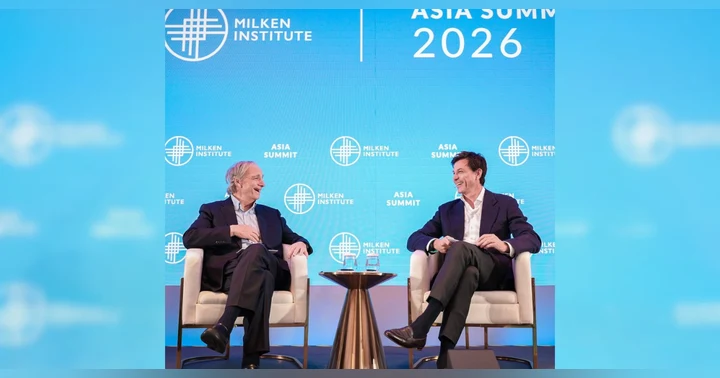
In a recent conversation reflecting on Google’s AI journey, Pichai pulls back the curtain on how one of the most powerful companies in the world actually thinks about innovation, product timing, and the future of AI.
For founders, the lesson isn’t about who “won” the AI race.
It’s about how enduring companies build—and why they sometimes appear to lose before they win.
The Misunderstood Origin Story of Transformers
The popular narrative goes like this: Google invented transformers, but OpenAI turned them into a product.
Pichai sees it differently.
“Transformers were done… to solve a specific product need… how to make translation better.”
This is a critical distinction.
At Google, transformers weren’t a moonshot experiment detached from reality. They were built to improve real products—Search, Translate, and language understanding at massive scale.
And they were deployed immediately.
- BERT and MUM powered major leaps in search quality
- Transformers improved how Google understood queries and web pages
- Internal systems like LaMDA were early versions of conversational AI
In other words: Google didn’t just invent transformers. It operationalized them—just not in the way the public expected.
Why Google Didn’t Ship “ChatGPT First”
So why didn’t Google launch a ChatGPT-style product earlier?
According to Pichai, it comes down to product standards and risk tolerance.
“The version I saw was… more toxic at a level we couldn’t have possibly put out.”
This reveals a tension every founder eventually faces:
Speed vs. responsibility.
Google had:
- The models
- Internal prototypes
- Even early conversational systems
But it also had:
- Billions of users
- A reputation tied to trust and accuracy
- A “search-quality bias” that demanded higher reliability
Startups, by contrast, can ship earlier, iterate faster, and tolerate imperfection.
That difference—not capability—is often what creates the illusion of being “behind.”
The Real Competitive Advantage: Speed (But Not How You Think)
When most people think of product speed, they think of shipping fast.
Pichai thinks of something more fundamental: latency.
“Latency… is one of the distinguishing features of a great product.”
At Google, speed operates on two levels:
1. User Speed (Latency)
- Measured in milliseconds
- Directly impacts user perception
- Teams have strict “latency budgets”
2. Organizational Speed
- How fast teams ship and iterate
- How quickly ideas turn into products
This dual-speed framework is something early-stage founders often overlook.
They focus on shipping velocity—but ignore the user experience of speed, which can be just as decisive.
The Future of Search Isn’t Search
If you’re building anything in AI, Pichai’s view on search is worth paying attention to.
Because in his mind, search isn’t disappearing—it’s evolving into something much bigger.
“Search would be an agent manager… you’re doing a lot of things.”
Instead of:
- Typing queries
- Clicking links
You’ll have:
- Agentic workflows
- Long-running tasks
- Systems that act, not just respond
Think:
- Planning trips end-to-end
- Managing workflows across apps
- Running multiple “threads” of work simultaneously
For founders, this shift is massive.
It means the next generation of products won’t just answer questions—they’ll execute outcomes.
Why AI Is Not a Zero-Sum Game
One of the most contrarian ideas Pichai shares is this:
“It feels so far from a zero-sum game.”
History supports this.
- Google didn’t kill Amazon
- Facebook didn’t kill YouTube
- TikTok didn’t kill Instagram
Instead, markets expanded.
AI, Pichai argues, is another expansionary moment:
- More value creation
- More use cases
- More room for multiple winners
The real risk isn’t competition.
It’s failing to evolve your product.
The Founder Lesson: Ride the Curve, Don’t Predict It
Perhaps the most practical insight from Pichai isn’t about AI at all.
It’s about how to think in exponential environments.
“You can paralyze yourself thinking 10 years ahead… it’s exciting to just do that year ahead.”
In fast-moving markets:
- Long-term predictions break down
- Short-term execution compounds
- The “curve” matters more than the plan
This is especially relevant for wantrepreneurs stuck in analysis mode.
The winning strategy isn’t to perfectly predict the future.
It’s to:
- Stay close to the technology curve
- Build fast feedback loops
- Adapt continuously
Final Thought: What Google Got Right (and What You Can Steal)
Google didn’t lose the AI race.
It played a different game:
- Deep infrastructure (TPUs)
- Long-term bets (10+ years)
- Relentless focus on product quality
But the bigger takeaway for founders is this:
Innovation isn’t just about being first. It’s about being ready when the world catches up.
Startups win by moving fast.
Incumbents win by building systems that scale when the moment arrives.
The best founders learn to do both.

Building Trust in a Tech-Driven World: Inside Leila Kaneda’s Revolutionary Approach