Jeffrey Katzenberg: Fired by Disney, Built DreamWorks, and Rewrote the Rules of Storytelling
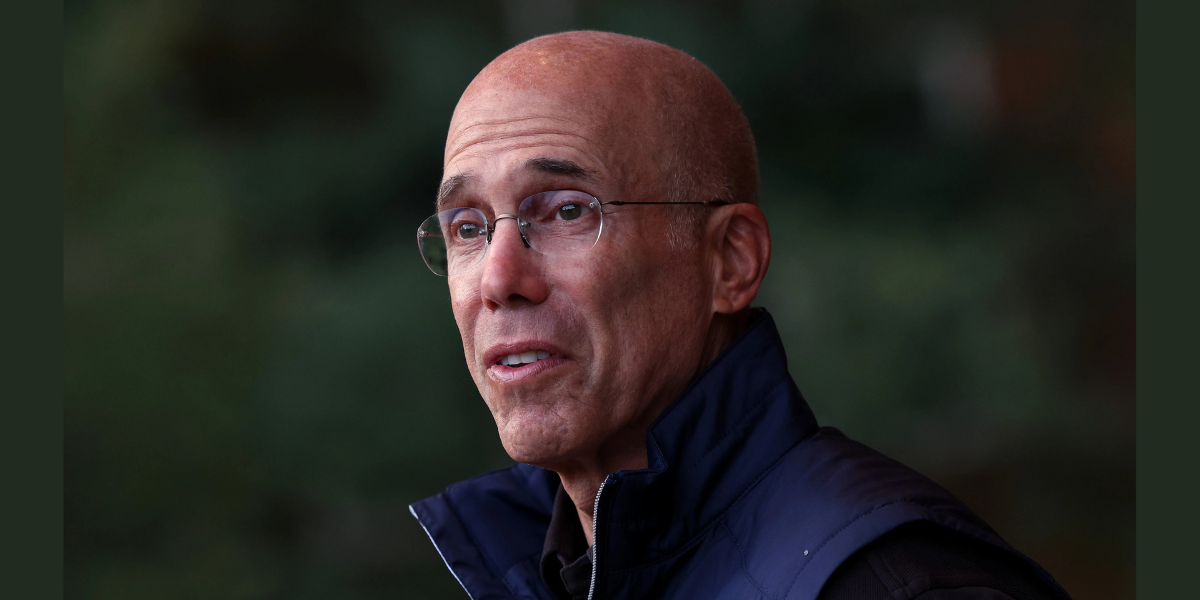
In Hollywood, careers are often defined by hits and misses. But for Jeffrey Katzenberg, the defining moment wasn’t a blockbuster—it was getting fired.
Publicly. Brutally. And at the peak of his career.
What happened next didn’t just reshape his life—it reshaped an entire industry.
In an interview on Big Shot Podcast, Katzenberg reflects on the lessons behind Disney’s golden era, the birth of DreamWorks, and the mindset that turned failure into one of the most iconic entrepreneurial comebacks in modern history.
The Philosophy That Changed Everything
Katzenberg lives by a deceptively simple mantra:
“Never let your memories be greater than your dreams.”
It’s not just a quote—it’s a strategic operating system.
Most founders cling to past wins. Katzenberg actively avoids them. Even after shaping films like The Lion King, Aladdin, and Beauty and the Beast, he refuses to look backward.
This mindset creates a powerful advantage:
- No complacency
- No nostalgia traps
- Constant forward motion
For early-stage founders, this is critical. Success can be just as dangerous as failure if it anchors you to the past.
The Moment Everything Broke
By the early 1990s, Katzenberg was one of Disney’s most important executives. Then came the fallout with CEO Michael Eisner.
The tension escalated. Trust eroded. And eventually, the inevitable happened.
He was fired.
But what made it worse wasn’t the termination—it was how it happened.
While Katzenberg was still in the meeting, Disney’s PR team released the news to the public.
For most people, that’s a career-ending blow.
For Katzenberg, it was a starting line.
Two Weeks Later: The Dream Team
Within weeks, Katzenberg made a move that defied logic.
He partnered with:
- Steven Spielberg (the greatest storyteller of a generation)
- David Geffen (one of the sharpest entrepreneurs in media)
Together, they launched DreamWorks.
This wasn’t just a company—it was a calculated combination of complementary strengths:
- Geffen → The entrepreneur (capital, structure, strategy)
- Spielberg → The creative genius
- Katzenberg → The builder (execution, teams, operations)
“An entrepreneur understands structure and finance… I’m a builder—I know how to execute and bring things to life.”
This distinction is subtle—but important.
Most founders try to be everything. The best ones know exactly what role they play.
The Builder’s Edge: Exceed Expectations
If Katzenberg has a “superpower,” it’s this:
“Exceed expectations.”
Not meet. Not match. Exceed.
He applied this across every layer:
- His bosses
- His peers
- His team
- His customers
And ultimately, his brand.
“Brand isn’t something you declare. It’s your customer’s gift.”
This is a masterclass in modern startup thinking.
Your brand isn’t your logo, messaging, or pitch deck. It’s the emotional residue of consistently exceeding expectations.
How DreamWorks Beat Disney (Without Competing Directly)
Katzenberg didn’t try to recreate Disney.
He deliberately avoided it.
Instead, he redefined the audience:
- Disney: “Movies for children and the child in all of us”
- DreamWorks: “Movies for adults and the adult in every child”
That strategic shift led to Shrek.
And with it, one of the boldest creative decisions in animation history:
They kept a controversial joke that pushed the film from G to PG.
It sounds minor—but it signaled something bigger:
DreamWorks wasn’t playing by Disney’s rules.
They were building a different category.
Failure Isn’t the Enemy—It’s the Cost of Innovation
One of Katzenberg’s most valuable lessons comes from his mentor Barry Diller:
“If you do things that are unique and original, that equals risky… and risk means failure cannot be fatal.”
This reframes failure entirely.
Failure isn’t a mistake—it’s a prerequisite.
But there’s a nuance:
- Failure is acceptable
- Catastrophic failure is not
This is where many founders go wrong. They either:
- Avoid risk completely
- Or take reckless, existential bets
Katzenberg sits in the middle: measured risk with room for failure.
The Hidden Lesson: Generosity Drives Legacy
Long before Hollywood, Katzenberg learned a different kind of lesson—from his father.
As a child, he watched his dad tip everyone generously—sometimes the equivalent of $1,000 today.
When he asked why, his father said:
“Take care of those who take care of you—and those who cannot take care of themselves.”
Later, actor Kirk Douglas reinforced it with a line Katzenberg never forgot:
“You haven’t learned how to live until you learn how to give.”
For entrepreneurs, this might seem secondary.
It’s not.
Generosity builds:
- Relationships
- Loyalty
- Reputation
- Meaning
And over time, those compound into something far more valuable than revenue.
The Final Mindset Shift: Without Fear
Katzenberg doesn’t describe himself as fearless.
He makes a sharper distinction:
“It’s not that I’m fearless. It’s that I’m without fear.”
Why?
Because he understands the risks.
Like a Formula 1 driver at 220 mph, he knows:
- The system
- The constraints
- The margins
That knowledge replaces fear with clarity.
For founders, this is the goal:
Not blind confidence—but informed conviction.
What Wantrepreneurs Should Take Away
Jeffrey Katzenberg’s story isn’t about movies.
It’s about building.
Here’s the distilled playbook:
- Don’t live in your past wins → Stay future-focused
- Define your role → Builder, entrepreneur, or creator
- Exceed expectations relentlessly → That’s your brand
- Take measured risks → Failure is part of the process
- Differentiate boldly → Don’t compete—reframe
- Stay generous → It compounds in unseen ways
- Operate without fear → Understand the game deeply
Because sometimes, the worst thing that can happen to you—
Getting fired, losing everything, starting over—
Is exactly what puts you on the path to building something iconic.
The Real Reason You’re Not Taking Action Isn’t What You Think