Jeremy Allaire Didn’t Chase Bitcoin. He Built the Infrastructure Behind It
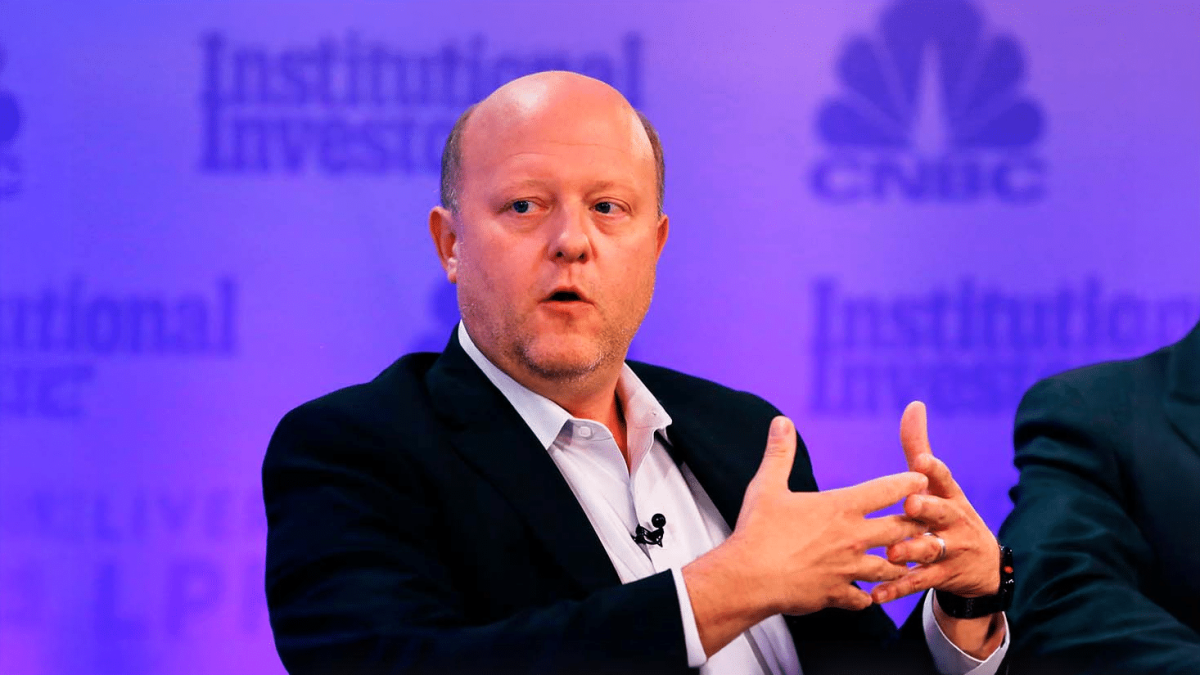
In an interview on the My First Million podcast, Jeremy Allaire—founder and CEO of Circle—offers a radically different lens on crypto.
In a space obsessed with volatility, hype, and overnight gains, Allaire made a contrarian bet: what if the real opportunity isn’t in speculation, but in infrastructure?
Instead of chasing upside, he chased stability.
Instead of building an asset people hold, he built one people use.
And in doing so, Circle quietly became one of the most important companies in crypto.
The Insight: Crypto Was Missing Its “Internet Moment”
Allaire didn’t start with finance. He started with the internet.
As a teenager in the early 1980s, an Apple II computer became his “spider bite”—a moment that reshaped how he saw the world. Computers weren’t just tools; they were infrastructure for empowerment.
That framing stuck.
So when he encountered Bitcoin years later, he didn’t see it as digital gold. He saw something deeper:
“This is a computer science breakthrough… a missing infrastructure layer of the internet.”
Most people saw an asset.
Allaire saw a protocol.
And that difference in perspective shaped everything that followed.
The Contrarian Bet: Stability Over Speculation
While the market obsessed over Bitcoin’s volatility, Allaire asked a simpler question:
What does the world actually need?
His answer: money that behaves like the internet itself—fast, programmable, and frictionless.
Not volatile. Not speculative. Just… useful.
That led to USDC, a stablecoin designed to always equal one U.S. dollar.
At first glance, it sounded almost boring.
And that was the point.
“We used to say we’re the boringest thing… it’s always a dollar.”
But that “boring” design unlocked something powerful: trust + usability at scale.
Reframing Stablecoins: “Over-the-Top Internet Money”
To understand Allaire’s thinking, consider his analogy:
Stablecoins are to money what Netflix was to TV.
Not a new type of content—just a radically better way to deliver it.
He calls it:
“Over-the-top internet money.”
Here’s what that means in practice:
- Traditional dollars = locked in banking systems
- Stablecoins = dollars that move like data
Just like MP3s made music infinitely shareable, stablecoins make money:
- Instant
- Programmable
- Borderless
- Low-cost (or near zero)
The breakthrough isn’t the currency—it’s the delivery system.
The Real Problem: Financial Infrastructure Is Broken
If you’ve ever waited days for a bank transfer or paid fees to move your own money, you’ve felt the problem.
According to Allaire, the global financial system is essentially:
“Technology from the seventies, the eighties, the nineties… layered on top of each other.”
Modern apps like Venmo or PayPal feel sleek—but underneath, they’re sitting on decades-old rails.
That’s why:
- Payments take days to settle
- Fees stack up across intermediaries
- Cross-border transfers are expensive and slow
Allaire’s insight was simple but profound:
Don’t optimize the interface. Rebuild the rails.
Circle’s Strategy: Build the “Plumbing”
Circle doesn’t position itself as a crypto company.
It positions itself as a financial infrastructure company.
That distinction matters.
While others built coins to trade, Circle built systems to enable:
- Payments between individuals
- Transactions between businesses
- Transfers between machines (yes, even AI agents)
In Allaire’s words:
“Circle is a critical infrastructure company… building an internet financial platform.”
This is the “plumbing” strategy.
And historically, plumbing wins.
- AWS didn’t create content—it powered the internet
- Stripe didn’t sell products—it enabled commerce
- Shopify didn’t invent retail—it digitized it
Circle is playing the same game for money.
Why This Matters: From Content Explosion to Capital Explosion
There’s a deeper pattern behind Allaire’s thinking.
When the internet reduced the cost of distributing information to near zero, we saw:
- An explosion in content (YouTube, blogs, social media)
- A surge in innovation (apps, SaaS, platforms)
Now apply that to money.
If the cost of moving money approaches zero:
- Global commerce becomes frictionless
- Microtransactions become viable
- New business models emerge
- Financial access expands globally
Allaire’s belief:
If we did for dollars what we did for data, the economic impact could be exponential.
This isn’t just fintech.
It’s a replatforming of the financial system.
The Hidden Power of “Boring”
Here’s where most founders get it wrong.
They chase excitement.
Allaire chased inevitability.
Stablecoins aren’t exciting in isolation—but they’re foundational.
And foundational technologies tend to:
- Scale quietly
- Integrate everywhere
- Become indispensable
Today, USDC is already handling massive transaction volume—reportedly surpassing traditional giants in certain contexts.
Not because it’s flashy.
Because it works.
The Long Game: Trillions, Not Trends
Allaire isn’t building for the next bull run.
He’s building for the next decade.
He believes stablecoins could grow into a trillion-dollar (or multi-trillion) layer of global finance—powering everything from:
- Retail payments
- Capital markets
- Cross-border trade
- Machine-to-machine transactions
And importantly, this growth doesn’t require replacing the dollar.
It extends it.
Lessons for Founders
Jeremy Allaire’s journey offers a powerful set of lessons for early-stage entrepreneurs:
1. Look for Infrastructure, Not Trends
The biggest opportunities often sit beneath the hype.
Ask:
- What systems enable everything else?
- Where are the bottlenecks?
2. Reframe the Problem
Bitcoin asked: What if money wasn’t controlled?
Allaire asked: What if money worked like the internet?
Different question. Different outcome.
3. “Boring” Can Be a Competitive Advantage
Excitement attracts attention.
Reliability builds empires.
4. Adopt a First-Principles Approach
Instead of patching old systems, Allaire rebuilt from the ground up:
“Solve it at the fundamental level… build it from first principles.”
5. Play the Long Game
Infrastructure takes time—but when it clicks, it becomes unavoidable.
Final Thought: The Future Belongs to Builders of Rails
At the end of the interview, Allaire summarized his thesis simply:
“We are seeing the internet colliding with the financial system.”
Most people are still focused on what rides on top of that collision—coins, tokens, speculation.
But the real opportunity lies underneath.
In the rails.
In the protocols.
In the plumbing.
Because when the foundation changes, everything built on top of it changes too.
And the founders who understand that?
They don’t chase trends.
They build the future those trends depend on.

From “Hot Model” to Founder: Vita Sidorkina’s Identity Shift That Changed Everything