Joe Tsai on Building Alibaba: Why “Find Your People” Matters More Than Your Business Plan
When Joe Tsai first climbed the stairs to Jack Ma’s apartment in Hangzhou, there was no business plan.
No revenue.
Not even a company.
Just a domain name, a fresh website, and a second-floor apartment scattered with sleeping bags and ten toothbrushes on the bathroom sink.
That was the birth environment of Alibaba.
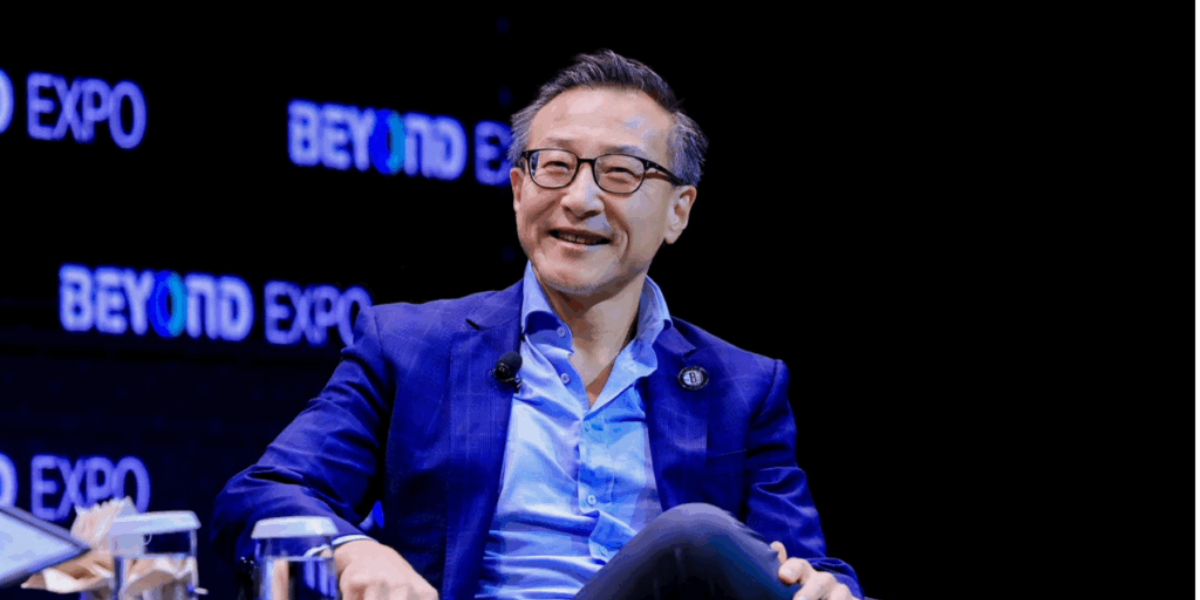
In a recent conversation at Stanford GSB’s View From the Top, Tsai — co-founder and now Chairman of Alibaba — reflected on what convinced him to leave private equity and join what would become one of the most important companies in the world.
His answer wasn’t market size.
It wasn’t financial modeling.
It wasn’t even the internet boom.
It was people.
The Bathroom Test: Choosing Founders Over Financials
When Tsai met Jack Ma for the first time, Alibaba wasn’t incorporated. Jack had no formal business plan.
When investors later asked for one on Sand Hill Road, Jack famously responded: “I don’t have a business plan.”
But what Tsai saw in that apartment mattered more.
Jack’s charisma.
His clarity of mission.
His ability to communicate as a former teacher.
Tsai recalls realizing that the apartment wasn’t just a startup workspace — it was a living organism. People were sleeping there. Living there. All-in.
That’s when he made a decision many founders struggle with:
When you switch jobs or start something new, find the people you want to partner with.
For early-stage entrepreneurs obsessed with TAM, valuation, and product-market fit, Tsai’s decision is a reminder:
Great companies often begin as bets on people — not spreadsheets.
Why Complementary Co-Founders Win
Alibaba didn’t start with two founders.
It started with eighteen.
Tsai argues that’s not accidental.
Most startup advice glorifies the lean founding team. But Tsai highlights an under-discussed truth: as companies scale, culture dilutes. When you only have two founders, you run out of cultural surface area fast.
Eighteen founders meant:
- Broader touchpoints across employees
- Stronger cultural reinforcement
- Complementary skill sets
- Fewer blind spots
Tsai also emphasizes something deceptively simple:
“Do you want to go out and have a beer with this person?”
Skill complementarity matters.
But trust, chemistry, and shared resilience matter more.
If you’re choosing a co-founder, the test isn’t IQ.
It’s durability.
Can you survive 24/7 startup life together?
Rejected 15 Times — and Why That Helped
When Tsai and Jack pitched Alibaba on Sand Hill Road, they struck out in 15 consecutive meetings.
No demo.
No PowerPoint.
No traction metrics.
Investors were baffled.
In hindsight, that rejection did something critical:
It forced clarity.
Instead of contorting the company around investor feedback, Alibaba doubled down on its mission:
“To make it easy to do business anywhere.”
That mission still sits on Alibaba’s website today.
For founders, the lesson is subtle but powerful:
Rejection can purify your conviction.
If investors don’t “get it,” that doesn’t mean you’re wrong.
But it does mean you need to decide: Are you building for them, or for your customers?
The Taobao Decision: Compete Anyway
When eBay held roughly 90% of China’s consumer e-commerce market, Alibaba launched Taobao.
Internally, there was pushback. Even their CTO resisted the move, scarred by Yahoo’s prior e-commerce struggles.
Jack overruled him.
Tsai, unsure about the strategy but aware of financial risk, structured Taobao as a 50/50 joint venture with SoftBank — limiting downside exposure.
Strategic boldness.
Financial discipline.
Secret execution from an apartment.
Within two years, Taobao overtook eBay China.
The lesson?
You don’t need perfect certainty.
You need:
- A visionary willing to push
- An operator who manages risk
- A team aligned enough to execute in secret
Founders don’t need unanimous agreement. They need productive tension.
The Hardest Founder Skill: Focus
After Alibaba’s historic IPO in 2014, the company expanded aggressively across multiple divisions.
Years later, Tsai returned as Chairman in 2023 to streamline.
His first move?
Choose two lanes:
- Core e-commerce
- AI and cloud
Everything else? Sell it. Exit it. De-prioritize it.
Tsai is blunt about something many founders avoid:
“Management has limited bandwidth… You’re not going to be able to watch eight different businesses.”
Focus is subtraction.
And subtraction hurts.
It means telling teams their division isn’t core. It means letting go of things that once mattered.
But without focus, innovation dies under operational complexity.
Innovation at Scale: Ownership Over Titles
When asked how a 120,000-person company continues innovating, Tsai rejected the idea of a separate “innovation division.”
That doesn’t work.
Instead, he believes in instilling ownership mentality.
People shouldn’t work to impress their boss.
They should work to serve customers.
When employees think like owners, they ask:
- What will customers want next?
- What will disrupt us?
- How do we stay ahead?
Innovation is less about labs and more about mindset.
And it requires something else founders hate:
Making decisions with incomplete information.
In high-growth tech, you must tolerate deficiency of information — and move anyway.
Then pivot fast if you’re wrong.
Agility beats certainty.
AI Is Not a Race — It’s Infrastructure
Tsai pushes back on framing AI as a U.S.–China arms race.
He describes AI as electricity. As water. As air.
Winning, to him, means proliferation — the most people benefiting from it.
For founders building in AI today, that framing matters.
The question isn’t “How do we beat competitors?”
It’s:
How do we create real user demand?
How do we allocate capital wisely across infrastructure, models, and applications?
How do we anticipate demand before it fully materializes?
AI investing requires belief before ROI.
Just like Alibaba required belief before revenue.
Final Advice: Don’t Build Global. Win Local.
At the end of the talk, Tsai was asked for his best advice to founders hoping to build global companies.
His answer defies ambition culture:
Don’t think about building global from day one. Win local first.
Small wins train teams.
Local dominance builds talent.
Infrastructure scales gradually.
Global companies are built on accumulated local victories.
Not grand visions alone.
The Throughline: Find Your People
From a Taiwanese teenager struggling to fit in at boarding school…
To a lawyer turned private equity investor…
To co-founding Alibaba without a business plan…
To leading a 120,000-person company through reinvention…
Joe Tsai’s career revolves around one theme:
Find your people.
The right mentor.
The right co-founder.
The right cultural core.
The right leadership team.
The business model evolves.
Technology shifts.
Markets fluctuate.
But aligned people compound.
For wantrepreneurs and early-stage founders reading this:
Before you refine your pitch deck…
Before you obsess over your valuation…
Before you try to “go global”…
Ask yourself:
Have you found your people yet?
Because if you get that right, the rest becomes possible.

Mastering Freight: Akash Singel’s Blueprint for Turning Loads into Profits