Jonathan Anderson Didn’t Believe in Couture, Until He Had to Lead It
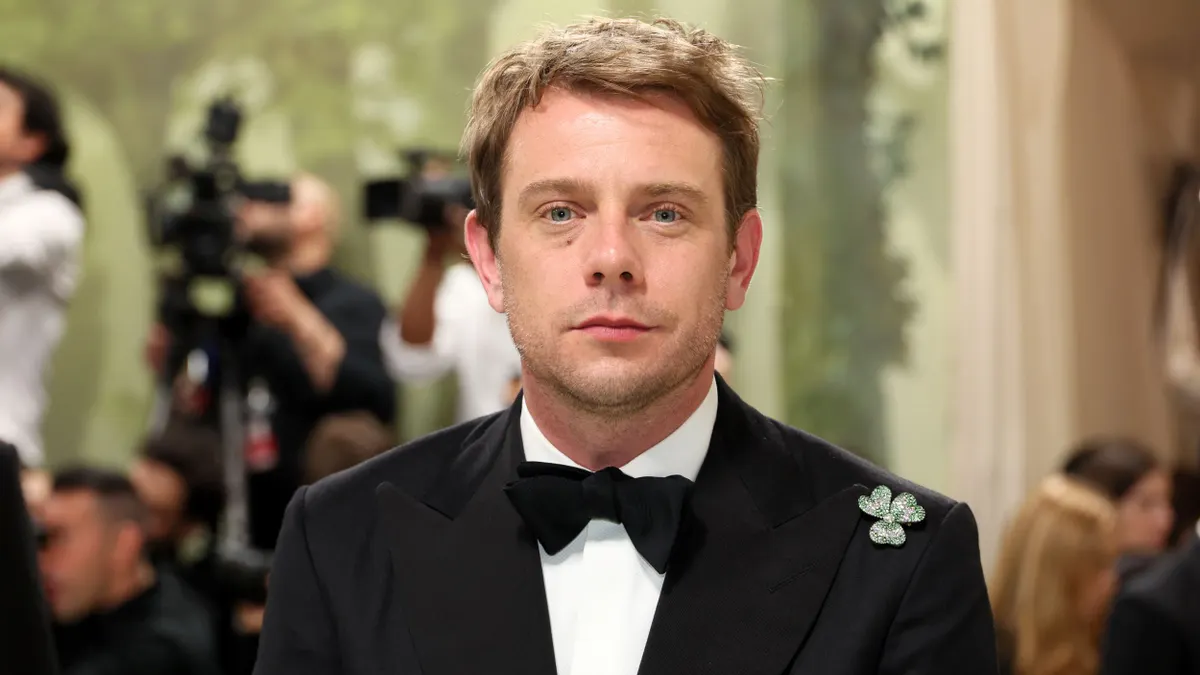
In a candid conversation on The Business of Fashion (BoF) Podcast, Jonathan Anderson—Creative Director of Dior—admits something surprising: he once thought couture was irrelevant.
“A year and a half ago… I would have probably said something like, well, I think it’s irrelevant.”
That’s not the kind of statement you expect from the person now tasked with redefining one of fashion’s most iconic couture houses. But it’s exactly what makes Anderson’s journey so compelling—and so instructive for founders navigating unfamiliar terrain.
Because what followed wasn’t just a change in opinion. It was a complete reframing of how he sees creativity, craft, and leadership at scale.
The Moment Everything Changed
Anderson describes his first real encounter with couture as both overwhelming and addictive.
“I feel like I’m doing a PhD in couture.”
Stepping into Dior’s ateliers—where garments are constructed entirely by hand, often over thousands of hours—forced him to confront something many entrepreneurs face when entering a legacy system: you don’t know what you don’t know.
At first, he couldn’t relate to it. Couture felt distant, hierarchical, even outdated.
Then came a single breakthrough moment: one dress.
“They did one dress and then I was like, okay, I’m kind of addicted.”
That shift—from skepticism to obsession—is the inflection point. It’s where curiosity replaces judgment. Where learning begins.
Couture as an “Endangered Craft”
What ultimately changed Anderson’s perspective wasn’t just the beauty of the garments—it was the realization of what couture represents.
“Couture is kind of like an endangered craft… a mythology and making with hand.”
This insight reframes couture from luxury indulgence into something far more strategic: preservation of knowledge.
For entrepreneurs, this is a powerful lens:
- What looks “inefficient” may actually be irreplaceable
- What seems outdated may be foundational
- What feels niche may be your strongest differentiator
At Dior, couture isn’t just about selling dresses. It’s about safeguarding a system of making that would otherwise disappear.
From Product to Platform: Couture as a Creative Lab
Perhaps the most important strategic move Anderson makes is redefining couture’s role inside Dior.
He doesn’t treat it as a standalone category. He turns it into a laboratory.
“For me, it’s going to be a lab.”
In practice, this means:
- Testing new fabrics and techniques
- Experimenting with construction methods
- Developing ideas that later scale into ready-to-wear, bags, and accessories
It’s R&D—but for creativity.
This is a lesson most early-stage founders overlook:
Your highest-end offering doesn’t need to be your biggest revenue driver. It can be your innovation engine.
Couture becomes the place where Dior can:
- Take risks without immediate commercial pressure
- Build long-term capabilities
- Create a pipeline of ideas that feed the entire brand
The Discipline Behind the Fantasy
From the outside, fashion looks glamorous. Anderson dismantles that illusion quickly.
“The reality of fashion today… it’s not 10 years ago. Fashion has grown like crazy.”
Behind every show is a complex system:
- Merchandising
- Manufacturing
- Financial planning
- Team coordination across hundreds of people
He describes himself not as the sole creator, but as:
“Just the conductor.”
This is a critical mindset shift for founders scaling their businesses:
- You are no longer the product
- You are the system builder
- Your job is alignment, not control
Anderson emphasizes that creativity must coexist with structure:
“If you don’t deal with the real part… it will bite you on the other side.”
Balancing Legacy and Reinvention
One of the hardest challenges Anderson faces is navigating Dior’s history.
On one hand:
- A massive archive
- Deep customer expectations
- Iconic predecessors like John Galliano
On the other:
- His own creative instincts
- The need to evolve the brand
- A new generation of customers
“You’re trying to respect the codes of the house and then slowly bring codes to me.”
This balancing act is familiar to any entrepreneur entering:
- A family business
- A legacy brand
- Or a saturated market with strong expectations
The key isn’t choosing one side. It’s building a bridge between them.
The Power of Emotional Anchors
One of the most human moments in the interview comes when Anderson recalls a visit from John Galliano.
Galliano brought flowers—cyclamen tied with black ribbon—and a bag of snacks for the team.
That small gesture became the emotional foundation for the entire collection.
“That is the starting point for this collection… pink and black.”
From there, it influenced:
- The show design
- The embroidery
- The invitation
- Even the ceiling concept
This is a masterclass in creative leadership:
Big ideas often come from small, emotional triggers.
Founders often chase масштаб (scale) when they should be paying attention to meaning.
Why Most People Don’t Really Experience Products Anymore
Anderson is also deeply critical of how modern audiences consume creativity.
“We do shows… and bam… we like, we hate… but we don’t digest anymore.”
This applies far beyond fashion.
In today’s world:
- Products are judged instantly
- Opinions form before understanding
- Depth is replaced by speed
His response? Slow people down.
He introduces:
- Physical exhibitions open to the public
- Deeper client experiences
- Opportunities to see the craftsmanship up close
“A photograph is never going to tell you that.”
For founders, the takeaway is clear:
If your product has depth, design experiences that force people to feel it.
Leading Through Uncertainty
Perhaps the most relatable part of Anderson’s journey is his honesty about doubt.
“I feel like an imposter.”
Despite leading one of the biggest fashion houses in the world, he’s still figuring it out in real time.
His approach?
“Everything I do at the moment is for the first time.”
Instead of resisting uncertainty, he leans into it:
- Treating each season as an experiment
- Building systems gradually
- Accepting that clarity comes through doing
The Real Job of a Creative Leader
By the end of the conversation, Anderson reframes what success actually looks like.
It’s not just about:
- Great collections
- Viral moments
- Critical acclaim
It’s about responsibility.
“I have to have the responsibility to the thousands of people who work here to make sure it works.”
That’s the shift from creator to leader.
From:
- Making things
To:
- Making things work
Final Takeaway
Jonathan Anderson’s first year at Dior isn’t a story about fashion.
It’s a story about:
- Entering systems you don’t fully understand
- Respecting legacy while building your own voice
- Turning uncertainty into a creative advantage
And most importantly:
Realizing that what looks irrelevant from the outside might be the very thing that defines your future.
Eugenia Kuyda Didn’t Wait for a Co-Founder, She Built Replika Anyway