Junior Innovators: Micah Alexander's Bold Vision for High School Entrepreneurship
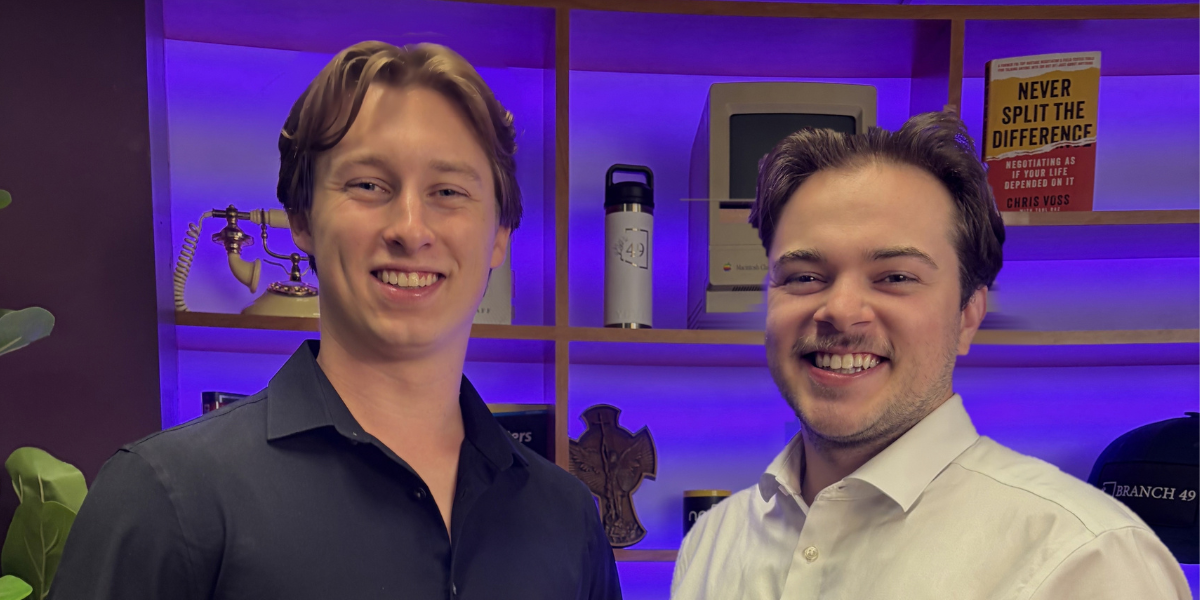
Micah Alexander's journey from wantrepreneur to entrepreneur began with a simple question: How can we empower high school students to dive into real entrepreneurship? As the co-founder of Junior Innovators, Micah tackles the gap between theory and practice by creating immersive programs that let students experience the highs and lows of starting a business. In this Wantrepreneur to Entrepreneur Spotlight, discover how Micah's early ventures, intrinsic entrepreneurial spirit, and a no-funding approach have shaped a curriculum that's transforming classrooms into launchpads. His story is a testament to resilience, innovation, and the power of action-driven learning.
Hi, Micah Alexander! Thanks for joining us today. Tell us about your business. Who do you serve, how do you serve them, and what's the impact that your business and work makes?
Junior Innovators was really just created to help young entrepreneurs get out and try to start something real instead of just learning about business and entrepreneurship. As entrepreneurs ourselves, we didn't see a high school level program that really leaned into the real aspects of entrepreneurship. We saw a ton of theory and simulation, but as most entrepreneurs know that can only take you so far. It's really about how you take action on your ideas that brings about new opportunities. We realized we may need to attempt to bring a little structure to the unstructured mess that is real entrepreneurship, so we created a high school curriculum that's designed to fit into a classroom, but more importantly designed to push high school students into the deep end of the pool and watch them sink or swim. Failure is not something that is punished in this program, it's simply just another day as an entrepreneur. We are rolling out the most recent version to any forward thinking high schools that want to give their students an opportunity to actually try and start a business, not just dream about it.
Tell us about the moment you finally felt like you went from wantrepreneur to entrepreneur.
I've always had the desire to start something for myself and bring value to those around me. In high school I attempted 2 businesses, the first being a snow shoveling service in the middle of the night for folks in my neighborhood. The second was an apparel business that created designs and t-shirts for local restaurants and businesses. Neither one lasted very long, but that was the experience that told me this is possible. It's going to be really hard, but it's all up to you and how much effort you put in. As I went through undergrad I saw so many of my friends get their first adult jobs and I just didn't feel like that was going to be for me. I needed flexibility, and I needed to know that however much success I had (or didn't have) was going to fall on my shoulders, not someone else's. We started Junior Innovators because we felt we had something to offer high school age students, which was the knowledge that we had gained through our business mentors, fellow entrepreneurs, and professors. We had been hearing that entrepreneurs eventually just do it. We decided that we were going to "do it" by helping high school students "do it" as well.
Describe the moment or period in your life/career that motivated you to make the entrepreneurial leap.
I've always kind of had an intrinsic entrepreneurial fire in me. I remember being a little kid and thinking lemonade stands were the coolest thing ever. I remember doing a little marketplace in the 3rd grade and I was pumped to be able to try and sell the brownies my mom helped me make to my classmates. As I grew up, I had a lot of positive mentors around me. My father worked for a bank, but the way we managed people was different than a lot of corporate suits I see today. He really wanted to help people that worked under him excel and push themselves to a better version of themselves. I remember he would run his branch like it was his own business, even though he technically worked for a larger corporation. I saw him push himself beyond work, trying to get extra certifications and education that would help him in the future. Unfortunately, he passed away in 2016. As I was entering high school, I was determined to have an impact on people the way my dad did. As I got a little older and moved into college, I felt that the best way for me to do that was through entrepreneurship. I felt this was the best way to have the greatest direct impact on the most people in a positive way. After all, that'd what's at the heart of entrepreneurship: Creating value for someone in such a positive way that Hey! they might even pay you money to do it.
Describe a tool, service, or software that has been a game-changer for your business. How does it contribute to your success?
We can't ignore the positive benefits of AI. It's a bit of a touchy subject in 2026, but it's completely revolutionizing the way business is done. My partner and I are a part of the first generation of founders that are able to do exponentially more work with less overheard, and less outside help. Creating jobs is extremely important, and I hope that eventually I can be a person that has created jobs for more people than just myself, but in reality it's extremely hard to do that for a young startup without outside funding. My partner and I use a hefty stack of AI tools to help us run almost all operations at Junior Innovators. It has allowed us to be more productive while it's just us, and it has been a great tool for learning as well. It helps us understand and manage our finances, it helps us draft new versions of our curriculum, and it keeps things organized in a way that would not have been possible 5 years ago. It helps us build digital tools, and it's teaching me technical aspects of business that I wasn't able to learn from my time at university. AI has been the operational layer for our business, and we have been given the opportunity to do so much more with just a couple people that wouldn't have been possible without it.
We know that success is very often a non-linear path. Tell us about a failure, pivot point, or lesson that changed your course or direction and helped to get you where you are today.
There's been a few points at which I've failed or had to pivot, not just in my high school businesses, but at Junior Innovators as well. Junior Innovators began as Center for Innovation and Entrepreneurship Consulting, or CIE Consulting. It was a small group of us at Grand Canyon University that felt we could help local high schools build better entrepreneurship programs.
We quickly realized that not only was this not scalable with 4 people, it also was difficult to communicate how we felt an entrepreneurship program should be built without an example of one that worked outside of universities. We thought about what the ideal entrepreneurship program would look like at a high school, and consolidated our thoughts and the recommendations of our professors and mentors into one cohesive program. We then realized we should see if this program would be considered as a standalone curriculum in a high school.
We got the opportunity to pitch to a room full of high school administrators from across the country, and we sold it to our first customer! That first school became our main focus, and we were adamant that this program had to work. We didn't have a website, an LMS, or a structured curriculum. We just had our thoughts and ideas of what topics and ideas would help high school students actually engage in entrepreneurship. We were sending our "product" to our first customer as a series of PDF files over email, and visiting the classroom often to see if it was working. And to our surprise, it did!
Multiple students started successful businesses, and a couple even brought their businesses outside of the classroom and beyond high school. Sure it was only a couple, but that was what we needed to see. We needed to see that when given the opportunity and the space to try, high school students would actually start a small business that would make them a little bit of money and give them a whole lot of relevant experience.
We've improved our product since then, put it on our own digital platform, and brought it to more schools. We are still open to pivots and failures, because we know that being fluid and creating value for people is what matters the most.
What unconventional strategy did you employ that significantly impacted your business?
We chose the slightly unconventional path of not raising ANY outside funding to start our business. We are still to this day completely bootstrapped, and it significantly impacted our motivation and the way we have run our business thus far. The business only has money if we sell our program, and in turn my partner and I only make money if we sell enough to cover our business expenses. This is quite a risky path, and because of it we've had to keep second jobs throughout the early years of Junior Innovators. It's forced us to stay focused and lean, and make sure that our benefit is only based on our effort.
What’s something you wish you knew sooner that you’d give as advice for aspiring or newer entrepreneurs?
I wish I'd known sooner to leverage my network for more than just tips. To all entrepreneurs: talk to people you know about challenges you're facing. Ask questions about their experience. Ask them for an introduction to someone that may be a customer for you. Successful entrepreneurs want more entrepreneurs, and they want to help. The right person will be more than willing to make a connection if you've proven to them that you won't squander it. People are willing to give advice on how to overcome specific challenges because they've been through the same things before. It's so important to continuously grow your network and be in conversations with people that have experienced things you are experiencing. Ask the right questions, and don't take their answers for granted.
Want to dive deeper into Micah's work? Check out the links below!
- Visit Junior Innovator's website: junior-innovators.org/
- Follow Junior Innovator on LinkedIn: Junior Innovator

The Gstaad Guy on Success, Risk, and Why Entrepreneurs Should Stop Chasing “More”