Michael Dell’s Infinite Game: Lessons in Obsession, Curiosity, and Endurance from a 41-Year Founder
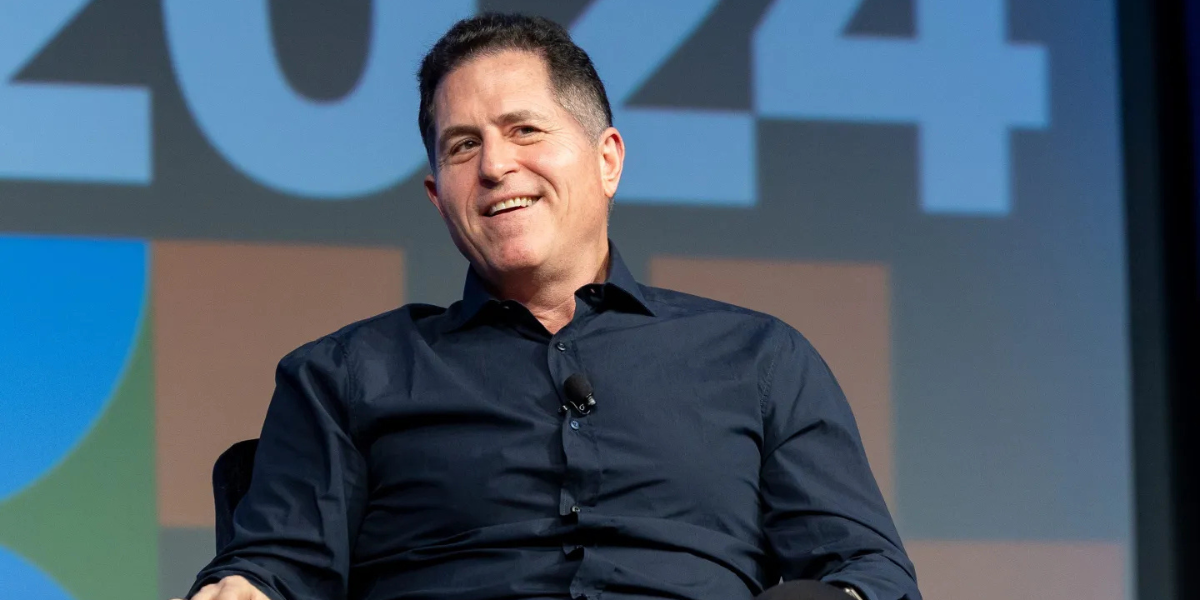
“It's like a big puzzle to solve and understand.”
That’s how Michael Dell, founder and CEO of Dell Technologies, describes his 41-year (and counting) entrepreneurial journey.
In an in-depth interview with David Senra on the Founders podcast, Dell opened up about everything from his early days reverse-engineering computers in his bedroom to leading one of the largest tech companies in the world through six or seven major reinventions.
This isn't a story about chasing unicorn valuations or explosive virality. It's about the power of compounding curiosity, relentless iteration, and the underrated advantage of not being taken seriously.
The 11-Year-Old Who Took Apart a $2,000 Computer
Dell’s origin story doesn’t start in a garage or with venture funding. It starts with curiosity.
At 11 or 12, Dell was taking buses downtown just to watch stock tickers and learn about financial markets. By the time he was a teenager, he was dismantling radios and home appliances — not out of rebellion, but to understand how they worked.
When he finally bought his first Apple II computer at age 15, he didn’t even plug it in before taking it apart. “How can you understand something if you don’t take it apart?” he said.
This tactile curiosity — not just about what works, but why — would become the cornerstone of Dell’s leadership philosophy.
“You always want to do that. I would feel unfulfilled if I couldn’t figure out a puzzle.”
—Michael Dell
Reverse-Engineering the Giants
At 17, Dell tore down an IBM PC, then the most valuable company in the world. What he discovered was game-changing: the components weren’t proprietary. Every part — the chips, disk drives, and power supply — was manufactured by someone else.
This wasn’t magic. It was a supply chain.
Dell added up the component costs and compared them to the retail price. The margins were massive. This realization sparked a simple question: Why couldn’t I build this myself — better and cheaper?
This was more than youthful hubris. It was structural insight. And it gave Dell the confidence to launch a business from his dorm room that would eventually take on IBM, Compaq, and HP — and win.
$1,000 and a Negative Cash Conversion Cycle
Dell famously started his company with $1,000 from his UT Austin dorm. But what enabled him to scale wasn’t capital — it was operational creativity.
By selling directly to customers and keeping only five days of inventory (compared to competitors’ 90 days), Dell created a negative cash conversion cycle. He got paid before he paid suppliers — effectively using customer prepayments to fund growth.
He didn’t learn this in business school. He learned it by obsessively reading chip dates inside competitors’ machines and figuring out how long they had been sitting on shelves.
“If our components are five days old and theirs are 90 days old, well, theirs cost a lot more than ours do.”
—Michael Dell
This single advantage compounded across cost, customer satisfaction, and innovation speed — and became a moat that incumbents never understood until it was too late.
Obsession Over Optimization
Michael Dell is addicted to understanding. Whether it’s logistics, chip pricing, or AI, he dives deep.
“If you haven’t examined your costs in detail, it’s very likely there’s a major opportunity lurking.”
—Ken Griffin, quoted in the episode
Dell embodies this philosophy. He doesn’t just track metrics — he breaks them down like puzzles.
When his competitors underestimated him as a “mail-order kid,” he didn’t correct them. He let the misunderstanding grow. Being underestimated became an asset.
“They didn’t see us coming… All that was incredibly motivating.”
—Michael Dell
Iteration, Not Prediction
Dell emphasized that success doesn’t come from being right about the future — it comes from iterating into it.
This is especially true now, as Dell Technologies transforms itself around AI and large language models. Instead of legacy thinking, Dell encourages his teams to behave like startups.
He told his entire company:
“Five years from now, we’ll have a new competitor… faster, more efficient, and more capable. They’ll put us out of business — unless we become that company.”
That mindset — not just embracing change, but engineering it — is what’s allowed Dell to survive and thrive through every major technological shift of the last four decades.
“Pain Is the Best Teacher”
Dell admits he's made plenty of mistakes. But he’s deliberate about making them small and learning fast.
“You want to make mistakes. You just want to make them small and iterate quickly.”
From the Osborne Effect to failed product launches, he’s internalized that failure is unavoidable — but mismanaging it is not.
And the most dangerous enemy, he says, isn’t competition.
It’s you.
“Most companies I’ve seen fail weren’t taken out by competitors. They sabotaged themselves.”
Final Thought: Obsession Is a Strategy
What sets Michael Dell apart isn't that he’s the smartest guy in the room — it's that he’s the most obsessed.
He’s proof that early-stage founders don’t need perfect predictions or massive capital. What they need is a deep, relentless curiosity and a willingness to keep asking one more question than everyone else.
“When it’s a passion or an obsession, there’s no end to it.”
Key Takeaways for Founders:
- Curiosity compounds. Make time to explore how things work, not just what works.
- The best advantage is a misunderstood one. Let competitors underestimate you.
- Iterate into the future — don’t try to predict it.
- Study the cost structure of your industry down to the penny.
- Let obsession be your differentiator. Most people stop after the first question.

Discovering Hidden Assets: The TurboTax-Inspired Tool Simplifying Estate Settlements