Out of the Founder's Head: Graham Mull's Blueprint for a Sales Operating System
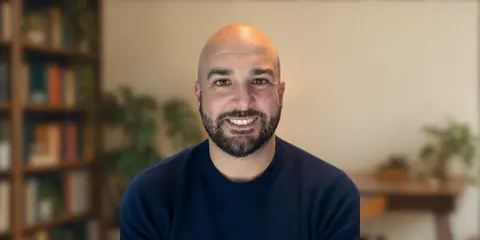
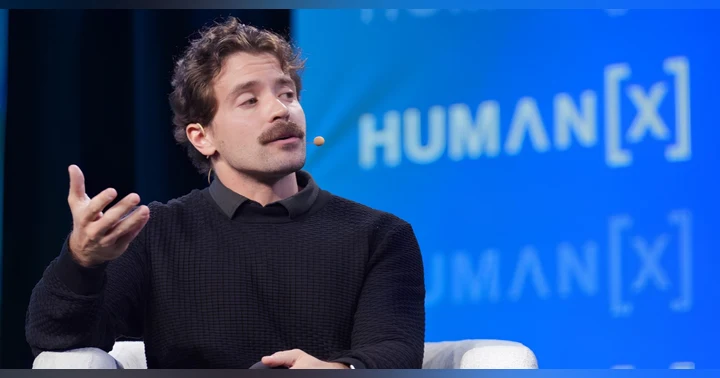
Graham Mull spent almost 20 years in corporate sales before a tough year showed him he never wanted to be just a line item on a P&L again. Today, as the founder and CEO of KAGrowth Partners, he designs and builds sales operating systems for founder-led service businesses, turning follow-up that lives in the founder's memory into a process the whole team can run. In this Wantrepreneur to Entrepreneur Spotlight, Graham shares the moment a partner put his own reputation behind KAGrowth's work, how Claude Code lets a small firm build like a development team, and why refusing to be anyone but himself has become one of his biggest strengths.
Hi, Graham Mull! Thanks for joining us today. Tell us about your business. Who do you serve, how do you serve them, and what's the impact that your business and work makes?
I run KAGrowth Partners, based in the Charlotte area. We serve founder-led service businesses doing $1M to $15M in revenue, mostly across Charlotte and the Carolinas. These companies have real sales activity, and the founder is still holding it all together. Follow-up lives in someone’s memory, the CRM is half-used, and deals slow down the moment the owner gets busy.
We build what we call a sales operating system: the connected people, process and tools behind a company’s sales. It starts with a two-week Diagnostic of the CRM and how real deals move through the business. From there, we build the agreed changes inside the tools the client already uses and help the team adopt them.
The impact is a business that depends less on its founder. Follow-up happens on time, handoffs have a clear owner, and the owner can see what’s really in the pipeline.
Tell us about the moment you finally felt like you went from wantrepreneur to entrepreneur.
For me, it was the first time someone else brought me work. Until then, every conversation KAGrowth Partners had started with me. Then a partner who runs a web design agency in Charlotte brought me in on a client because he saw a problem he knew I could solve. He put his own reputation behind my work, and I hadn’t asked him to. That’s when it stopped feeling like just an idea and started feeling like a business, because other people were willing to stake their name on it.
Describe the moment or period in your life/career that motivated you to make the entrepreneurial leap.
I've always wanted to, but I've never had the right timing and opportunity. As I mentioned on my episode, when I left corporate after almost 20 years, I worked for a small business and realized how many things I'd taken for granted in corporate life (CRM already set up, processes, policies & procedures, etc.). These things often seemed like annoyances at big companies, but in a small business, I realized how vital that infrastructure is, and how many small businesses lack the ability to implement a true sales system in-house. That's when timing and opportunity intersected, and KAGrowth was born.
Describe a tool, service, or software that has been a game-changer for your business. How does it contribute to your success?
Claude Code. It lets a small firm build things that would normally take a development team.
I used it to build and run my company website. It also helped me build the internal system that runs my own operations, connecting my CRM, billing, and project tracking and sending me a daily report. For clients, it’s how I can build working sales systems inside the tools they already use, rather than handing them a slide deck.
It contributes most when I treat it like a fast junior teammate. I bring the sales judgment, set the rules, and review everything. The tool gives me speed, and the discipline around it is what makes the output trustworthy.
We know that success is very often a non-linear path. Tell us about a failure, pivot point, or lesson that changed your course or direction and helped to get you where you are today.
When I left corporate, I was a Sales Executive and had a bad year. Life caught up to me, and the outside noise was too much. It made me realize that a big company didn't care about me. I was just a number on the P&L. At that point, I decided I would never be reduced to a line item on a P&L again, and I was willing to sacrifice my job and income security to work only for myself or in a small business.
At the time, I had no clue what I was doing or if it was the right move. Ultimately, it was the right move both personally and professionally.
What unconventional strategy did you employ that significantly impacted your business?
I refuse to wear a suit and tie. I wear shorts in the summer (when appropriate). It may seem trivial, but it's vital to me. Being a made-up or filtered version of yourself keeps you from unlocking your true potential. You end up constantly chasing a moving target: someone else's vision of who you should be. Work with people who want to work with the real you, and don't waste time on those who don't.
What’s something you wish you knew sooner that you’d give as advice for aspiring or newer entrepreneurs?
Without passion, success is hard to find. It doesn't necessarily mean you need to be passionate about what your company does. Another business owner I know owns a painting company. He has no passion for painting, but he's passionate about his brand, serving his clients at a high level, and running a great business.
Want to dive deeper into Graham's work? Check out the links below!
- Visit KAGrowth Partners' website: kagrowth.com/
- Connect with Graham Mull on LinkedIn: Graham Mull
- Follow KAGrowth Partners on LinkedIn: KAGrowth Partners
Law Roach on Knowing Your Worth: How He Turned Creative Talent Into a Multimillion-Dollar Business