Paul Bakaus on Why AI Can Build Your App, But Human Judgment Makes It Great
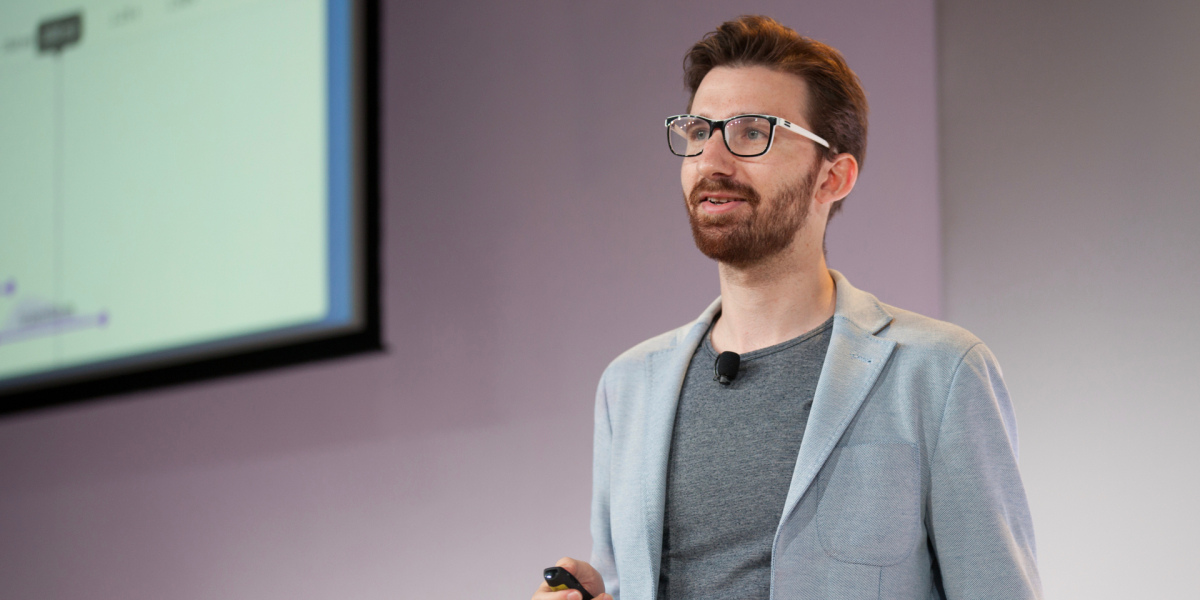
Artificial intelligence can write code, generate interfaces, and build functional applications faster than ever before. But according to entrepreneur and developer Paul Bakaus, that's only half the story.
In a recent conversation on the Solo Founders podcast, the creator of Impeccable and founder of Renaissance Geek argued that the real competitive advantage isn't getting AI to produce more—it's knowing what to remove, what to refine, and what deserves to exist in the first place.
For founders racing to build with AI, it's a perspective worth paying attention to.
The Next Competitive Advantage Isn't Coding—It's Judgment
Bakaus has spent his career lowering the barrier to software creation.
From contributing to jQuery and creating jQuery UI, to building developer tools, selling a startup to Zynga, working at Google, and now launching Renaissance Geek, his mission has consistently been to make powerful technology accessible to more people.
Today, AI has dramatically accelerated software development.
But Bakaus believes the bottleneck has shifted.
Instead of asking whether AI can build software, founders should ask:
Can AI build software that's actually worth using?
His answer is nuanced.
AI can create a solid first draft.
Humans create products people remember.
Why "Pretty Good" Is Becoming the New Average
One of Bakaus' recurring themes is the explosion of what he calls AI slop—interfaces and experiences that technically work but feel generic, cluttered, or disconnected from a product's identity.
As AI coding tools improve, creating software becomes easier.
Creating memorable software becomes harder.
That's because everyone has access to similar models, similar prompts, and similar workflows.
The result?
Thousands of products that look and feel remarkably alike.
For founders, that creates a new opportunity.
Standing out no longer comes from simply shipping faster.
It comes from making better decisions.
Great Founders Edit More Than They Create
One of the most memorable moments in the interview is Bakaus' perspective on Steve Jobs.
He challenges the common narrative that Jobs was simply a creative genius.
Instead, Bakaus argues that Jobs' greatest strength was editing.
He consistently eliminated ideas, features, and distractions until only the essential remained.
For founders building with AI, this becomes a practical framework.
Instead of asking:
"What else can AI add?"
Ask:
"What should never have been there in the first place?"
Whether it's unnecessary code, bloated interfaces, excessive copy, or feature overload, subtraction is increasingly becoming a competitive advantage.
AI Still Needs Human Intent
Bakaus doesn't believe AI should replace designers or builders.
Instead, he sees humans and AI working together during different phases of creation.
The earliest stage requires defining the problem.
Who is the customer?
Why does this product exist?
What outcome should it create?
Those are fundamentally human decisions.
The middle stage—implementation—is where AI excels, rapidly generating code and prototypes.
The final stage requires human judgment once again.
That last stretch involves refining interactions, simplifying experiences, protecting brand identity, and ensuring the product reflects an intentional point of view.
According to Bakaus, that's where exceptional products separate themselves from merely functional ones.
Why Impeccable Exists
This philosophy led directly to the creation of Impeccable, the open-source project that has gained significant attention among developers.
Rather than simply generating attractive interfaces, Impeccable helps AI coding assistants better understand design intent.
Instead of focusing only on colors and typography, it encourages builders to define:
- Who the product serves
- The purpose of the application
- The design system it should follow
- The language needed to communicate design decisions
By giving AI richer context, Bakaus believes developers can achieve more consistent, higher-quality outcomes while staying aligned with their product's identity.
The goal isn't replacing designers.
It's helping both humans and AI make better design decisions together.
The Rise of the Solo Founder
Another major theme from the interview is solo entrepreneurship.
After years leading engineering teams and moving into management, Bakaus realized he wanted to spend more time building and less time managing.
AI made that possible.
Instead of scaling by hiring larger engineering teams, he began experimenting with scaling his own capabilities through AI-assisted workflows.
That shift changed how he thinks about hiring.
Rather than immediately adding more builders, he chose to protect his most valuable asset—his time spent creating.
For Bakaus, one of the earliest strategic hires wasn't another engineer.
It was operational support that could remove administrative overhead and preserve creative focus.
His philosophy is simple:
The founder who creates the most value shouldn't necessarily become the organization's full-time manager.
Momentum Beats Busy Work
Throughout the interview, Bakaus repeatedly returns to one idea:
Every day should create value.
He describes measuring his work not by meetings attended or emails answered, but by asking a simple question:
"What value did I create today?"
For entrepreneurs, that's a powerful mindset.
It's easy to confuse activity with progress.
It's much harder—and ultimately more rewarding—to focus relentlessly on creating something customers genuinely value.
That mindset also shapes how he thinks about momentum.
Momentum comes from solving meaningful problems, shipping improvements, and maintaining focus.
It disappears when founders become consumed by unnecessary processes, excessive management layers, or work that doesn't directly improve the product.
Building an Audience Before Building a Business
Interestingly, Bakaus didn't begin by monetizing Impeccable.
He focused on creating something developers genuinely found useful.
As more people discovered the project organically, many began asking why it wasn't a paid product.
For him, that became one of the strongest indicators of product-market fit.
Rather than forcing distribution through paid acquisition, he concentrated on creating something people naturally wanted to share.
That philosophy mirrors his broader belief about startups:
Products should earn advocacy because they're valuable—not because they're aggressively marketed.
The Future Belongs to Builders Who Can Judge
AI will continue making software development faster.
That's almost certain.
But speed alone won't determine which companies succeed.
Founders who combine AI's execution with human intuition, craftsmanship, and editorial discipline will build products that stand apart from an increasingly crowded landscape.
Paul Bakaus' message isn't anti-AI.
It's pro-human.
AI can generate almost anything.
Knowing what deserves to survive—that remains one of the most valuable entrepreneurial skills of all.
As AI lowers the barriers to building, the founders who thrive won't necessarily be those who produce the most.
They'll be the ones who know what to keep, what to cut, and how to shape technology into something people genuinely want to use.

Jennifer Garner on Rejection, Resilience, and Building Once Upon a Farm