Robert Downey Jr. on Discipline, Resilience, and the Real Secret to Happiness
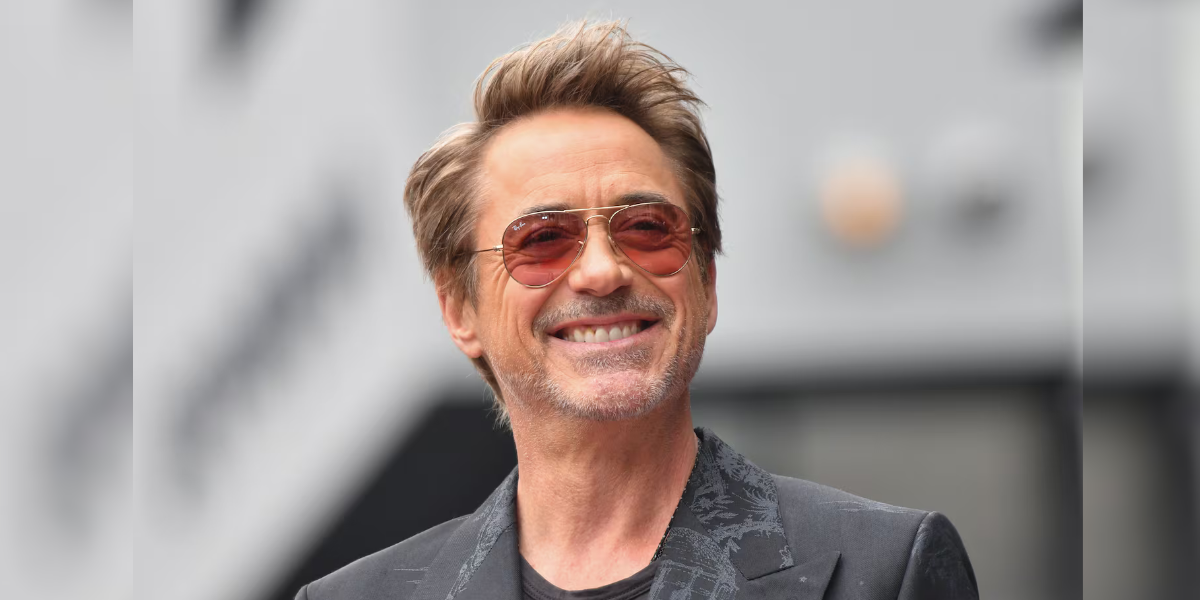
For most people, Robert Downey Jr. is synonymous with reinvention.
The Academy Award-winning actor has lived multiple lives in one career: child actor, Hollywood superstar, public cautionary tale, comeback story, and now one of the most respected figures in entertainment.
But what’s striking about Downey today isn’t his success.
It’s how he thinks about it.
In a recent conversation with Chris Williamson, Downey reflected on discipline, failure, relationships, happiness, and what it takes to build a life that actually feels meaningful—not just successful.
For entrepreneurs, founders, and anyone trying to build something worthwhile, his insights offer a refreshing alternative to the endless hustle narrative.
Success Doesn't Eliminate the Work
One of the most surprising themes from the conversation is that Downey doesn't view personal development as something you "complete."
Even after decades of success, he remains deeply committed to routines, self-awareness, and continuous improvement.
Looking back on his younger years, he admits he lived as though resilience was unlimited. Eventually, reality caught up.
The lesson?
You always pay the bill eventually.
Today, much of his focus revolves around maintaining balance rather than recovering from chaos. He speaks openly about protecting his center—emotionally, mentally, and physically.
For founders, this is a crucial distinction.
Many entrepreneurs treat wellness as recovery from work.
Downey approaches it as preparation for work.
Instead of asking, "How do I bounce back?" the better question may be:
How do I avoid getting knocked off balance in the first place?
Discipline Is Freedom—But Only If It's Sustainable
Downey's philosophy on discipline challenges the traditional image of grueling self-sacrifice.
Throughout the conversation, he repeatedly emphasizes efficiency over punishment.
He recalls years of excessively long workouts and intense regimens that often triggered compensatory behaviors afterward—overeating, burnout, or resentment.
Eventually, he discovered a simpler truth:
The best system is the one you can consistently maintain.
That's particularly relevant in entrepreneurship, where founders often mistake suffering for progress.
Building a business doesn't require endless 16-hour days forever.
It requires creating systems that remain effective long after motivation fades.
Consistency beats intensity.
Every time.
Failure Isn't the Exception—It's the Norm
One of the most powerful moments in the discussion comes when Williamson asks whether hardship is a prerequisite for success.
Downey's answer is nuanced.
Failure, he argues, isn't some rare event reserved for ambitious people.
Failure is normal.
The real differentiator is learning how to navigate seemingly insurmountable circumstances.
Entrepreneurs often romanticize adversity.
But Downey offers a healthier perspective.
The goal isn't to seek suffering.
The goal is to develop the capacity to continue moving when suffering inevitably arrives.
That's a subtle but important distinction.
The founder who succeeds isn't necessarily the most talented.
It's often the person who survives long enough to learn, adapt, and keep going.
Self-Awareness Is Expensive
Downey describes himself as self-aware—but not because it came naturally.
In fact, he suggests the opposite.
His self-awareness was earned through painful consequences.
As he puts it, he's paid a high price for the times he wasn't self-aware.
That's a lesson every entrepreneur eventually encounters.
Blind spots aren't free.
Whether it's ignoring customer feedback, neglecting relationships, or letting ego drive decisions, the cost always shows up somewhere.
The most effective leaders aren't those who never make mistakes.
They're the ones willing to examine themselves honestly enough to learn from them.
Self-awareness isn't a personality trait.
It's a practice.
The Happiness Trap
Perhaps the most valuable section of the conversation centers on happiness.
Downey dismantles a belief many ambitious people secretly hold:
"I'll be happy when..."
I'll be happy when I raise funding.
I'll be happy when I hit seven figures.
I'll be happy when I sell the company.
Downey has reached milestones most people can barely imagine, yet he understands that achievement rarely delivers the emotional payoff we expect.
The reason?
Because when the goal arrives, you're still you.
The external circumstances change.
The internal experience often doesn't.
Instead, he offers a different definition of happiness:
- Feeling understood.
- Feeling safe.
- Having a clear conscience.
- Being able to put your head on the pillow without unresolved wreckage behind you.
That's not a viral social media definition.
But it may be a more durable one.
Relationships Are the Real Long-Term Investment
When the conversation turns toward longevity and fulfillment, Downey repeatedly comes back to one thing:
Relationships.
Not status.
Not wealth.
Not recognition.
Relationships.
This aligns with decades of research from the Harvard Study of Adult Development, which has consistently found that strong relationships are among the strongest predictors of happiness and longevity.
Downey's perspective is practical rather than sentimental.
He talks about showing up for people.
Creating rituals around grief.
Being present during difficult moments.
Protecting boundaries from energy-draining relationships.
And remaining open to new experiences and new connections.
Entrepreneurs often obsess over building networks.
Downey's message is simpler:
Build real relationships.
The returns compound far longer than business outcomes ever will.
Know Your Action
At the end of the interview, Williamson asks Downey for the best advice he's ever received.
His answer is surprisingly simple:
"Know what your action is."
In other words:
What are you actually doing right now?
Not what you're worried about.
Not what you're planning.
Not what you're hoping.
What are you doing?
Sometimes the answer is:
- Building a business.
- Showing up for your family.
- Learning a new skill.
- Recovering from a setback.
Clarity creates momentum.
And momentum creates progress.
Many founders spend years stuck because they're trying to solve everything at once.
Downey's advice is a reminder that life becomes much more manageable when you focus on the action directly in front of you.
Final Takeaway
Robert Downey Jr.'s story is often framed as one of redemption.
But this conversation reveals something deeper.
His greatest transformation wasn't professional.
It was philosophical.
He moved from chasing outcomes to building practices.
From seeking validation to cultivating self-awareness.
From pursuing success to protecting meaning.
For entrepreneurs, that's the real lesson.
Success isn't the destination.
It's a byproduct of living intentionally, maintaining discipline, investing in relationships, and continuing to grow long after you've achieved the goals you once thought would make everything complete.
And perhaps that's what happiness really is.
Not getting everything you want.
But becoming someone you genuinely enjoy being.
Annie Lamont’s Biggest Investing Lesson After 40 Years: Bet on the Founder, Not Just the Idea