Scott Wu Isn't Building a Better Coding Tool. He's Trying to Redefine How Humans Work with Computers.
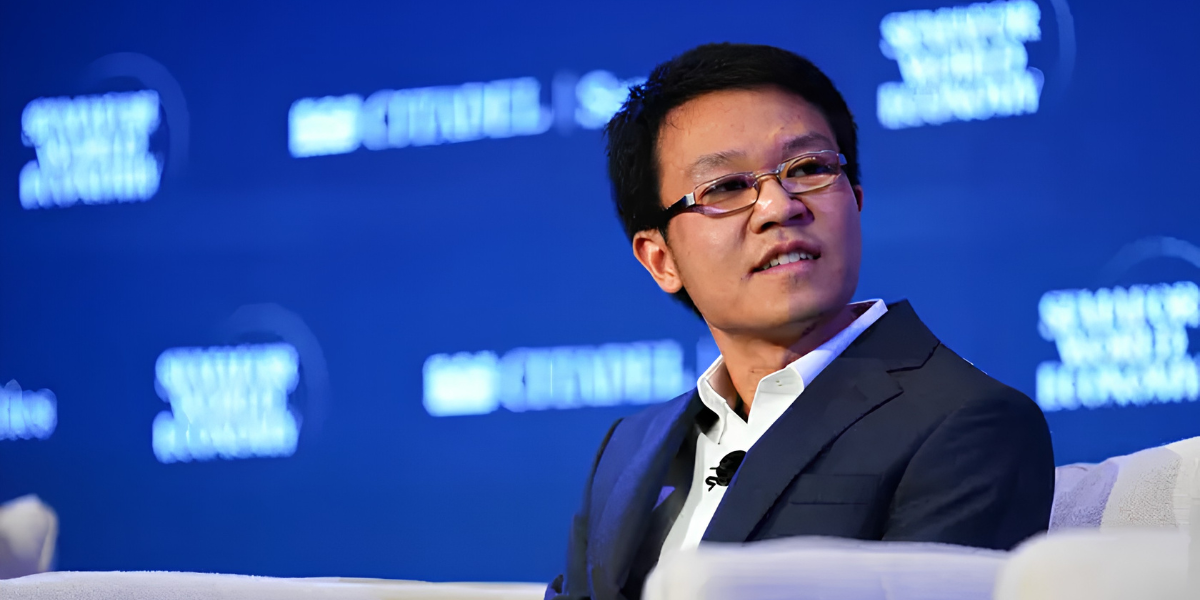
Most startup founders dream about building a successful company.
Scott Wu dreams about building a generational one.
That distinction matters.
As the co-founder and CEO of Cognition, the company behind Devin, one of the world's first AI software engineers, Wu isn't chasing incremental improvements to developer tools. His ambition is far larger: create the interface through which humans tell computers what they want, while AI handles the execution.
It's an audacious vision. But listening to Wu explain it, you quickly realize this isn't a sudden insight born from the AI boom. It's the natural extension of a mindset he's carried since childhood.
During an interview on Founders with David Senra, Wu traced that mindset back to a second-grade math competition where he competed against middle school students. He didn't win.
"I just remember being so pissed about that," he admitted.
That reaction—more than the competition itself—became the defining thread of his life.
Competition Was Never a Hobby. It Was an Operating System.
Wu describes himself as "salty," but not in the internet sense of being bitter.
To him, it means hating to lose.
Growing up, competition wasn't confined to academics. Math Olympiads, programming contests, Super Smash Bros., poker, chess, Go—it didn't matter. Everything became another strategic game to solve.
Looking back, Wu doesn't separate entrepreneurship from those experiences.
Building a company is simply another competition.
It's a giant decision tree where every move creates new possibilities, and success comes from constantly evaluating which path gives you the greatest chance of winning.
That mental model explains why Cognition has consistently made decisions that looked irrational at the time.
The Best Startups Don't Follow the Market. They Bet Against Consensus.
When Cognition launched Devin in early 2024, the reaction was polarizing.
Some called it revolutionary.
Others called it vaporware.
The criticism wasn't entirely unfair. Devin was still an early prototype, capable of completing only a fraction of software engineering tasks reliably.
But Wu wasn't optimizing for today's capabilities.
He was optimizing for tomorrow's trajectory.
Instead of asking, "What can AI do today?"
He asked a different question:
"If AI gets exponentially better every few months, what product should exist when that happens?"
That's first-principles thinking.
Rather than pattern matching against existing software, Wu focused on where the technology was heading.
That meant treating AI less like a chatbot and more like a coworker capable of executing complex, multi-step tasks independently.
Today, that once-controversial bet has become one of the defining trends in AI.
Devin Isn't the Product. It's the First Step.
Most people think of Devin as an AI programmer.
Wu doesn't.
He thinks of it as the beginning of a much larger shift.
Software engineering, he argues, has always been about one thing:
Helping humans communicate instructions to computers.
The implementation has changed—from punch cards to assembly language, to Python, to modern development frameworks—but the goal has remained constant.
AI simply raises the level of abstraction again.
Eventually, most people won't care what programming language powers an application.
They'll describe what they want.
The AI will figure out the rest.
It's a subtle distinction, but an important one.
Cognition isn't trying to automate coding.
It's trying to redefine how software gets created altogether.
The Next Billion-Dollar Software Companies May Never Hire Engineers
One of Wu's most intriguing observations has little to do with programming.
Today, custom software only makes economic sense if it's used thousands—or millions—of times.
That's because software is expensive to build.
But AI changes the equation.
Imagine needing a one-off workflow to analyze hundreds of documents, organize research, complete repetitive administrative work, or automate a unique business process.
Historically, hiring engineers for that task wouldn't make financial sense.
With AI agents, it suddenly does.
Instead of building reusable software for everyone, businesses may increasingly generate custom software on demand—for themselves, whenever they need it.
It's a shift that dramatically expands what's economically possible.
Why Cognition Focused on Enterprise Instead of Consumers
Many AI startups began by chasing viral consumer adoption.
Cognition chose enterprise customers.
That wasn't accidental.
Wu and his team quickly discovered that AI created the most value on repetitive, high-volume engineering work inside massive organizations.
Large banks, automotive companies, and government agencies all shared the same problem:
Thousands of engineers spending countless hours on tedious migrations, upgrades, maintenance, and repetitive coding tasks.
Those weren't glamorous problems.
But they delivered immediate ROI.
Instead of trying to replace software engineers, Cognition helped engineering teams eliminate the work they least wanted to do.
It's a lesson many founders overlook.
The biggest opportunities often hide inside the least exciting workflows.
Focus Beats Resources
One of the interview's most revealing moments came when Wu discussed competition with tech giants.
On paper, Cognition shouldn't exist.
Microsoft owns GitHub.
OpenAI dominates public attention.
Google has nearly unlimited computing resources.
Yet Wu remains remarkably unconcerned.
His reasoning echoes Spotify founder Daniel Ek's philosophy during Apple's entry into music streaming:
"We're simply going to care more about music than they do."
Wu believes the same applies to software engineering.
Large companies build broad platforms.
Startups obsess over specific problems.
That obsession becomes their competitive advantage.
Focus isn't a limitation.
It's leverage.
Building for the Long Game
Perhaps the most striking part of the conversation had nothing to do with AI.
It was about ambition.
When asked whether there was a price at which he'd sell Cognition, Wu's answer wasn't framed around valuation.
Instead, he explained that the only reason to sell would be if it represented the most ambitious path forward.
Otherwise, why stop?
For Wu, success isn't defined by wealth.
It's defined by realizing the fullest version of what his team believes they're capable of building.
He admitted he'd rather fail pursuing that vision than spend the rest of his life wondering what might have happened if they'd pushed further.
That's a rare perspective in today's startup ecosystem, where acquisitions often arrive long before companies reach their full potential.
The Entrepreneur's Takeaway
Scott Wu's story isn't really about AI.
It's about conviction.
Every meaningful startup begins with a founder willing to believe something that most people don't.
In Cognition's case, that belief was simple:
The future of software won't be humans writing code.
It will be humans expressing intent—and AI building everything in between.
Whether that future arrives in five years or ten, Wu's journey offers a timeless reminder for entrepreneurs.
Markets reward those who optimize for today.
History remembers those who build for tomorrow.

Junior Innovators: Micah Alexander's Bold Vision for High School Entrepreneurship