Stephen Haney on Why Human Taste Is the Real Advantage in the AI Era

AI has made it dramatically easier to build.
It can write code, generate landing pages, create graphics, produce variations, translate assets, and execute tasks that once required hours of specialized work.
But easier execution creates a new problem for entrepreneurs: if everyone has access to the same acceleration, how do you build something people actually remember?
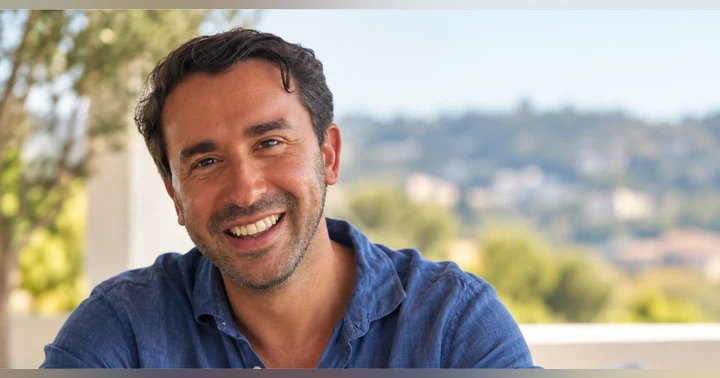
Stephen Haney, founder of the AI-native design tool Paper, believes part of the answer is design.
In a conversation with Y Combinator, Haney demonstrated how Paper allows designers to work alongside AI agents while making a larger argument about where software is headed: AI should amplify human judgment rather than eliminate it.
“The agents can speed you up,” Haney explained. “They can save you a lot of work.”
But speed alone isn't the goal.
The opportunity is to use that speed while preserving the human decisions that make a product distinctive.
For early-stage entrepreneurs, that distinction may become one of the most important competitive advantages of the AI era.
When Everyone Can Build, Taste Becomes More Valuable
Haney pointed to a strange consequence of today's explosion in AI-assisted software creation: there may be more software being produced, but that doesn't automatically mean the software is getting better.
AI-generated products increasingly carry recognizable visual fingerprints—bold typography, excessive cards, purple gradients, unnecessary pills, tiny uppercase labels, decorative icons, and features that exist simply because the model generated them.
None of those design choices are inherently bad.
The problem is sameness.
When founders accept the first thing an AI model produces, their product can begin to look like thousands of other AI-generated projects.
“It's probably very tempting to use whatever Claude design spits out,” Haney said. “I don't think it helps you stand out from the crowd.”
That's an important lesson far beyond visual design.
As AI lowers the cost of execution, execution itself becomes less differentiating.
The founder's advantage increasingly shifts toward judgment:
What should we build?
What should we remove?
What deserves attention?
What should this experience feel like?
What do our customers actually value?
Those questions still require taste.
AI Should Expand the Creative Process, Not Replace It
Paper's workflow offers an interesting glimpse into what human-AI collaboration could look like.
Instead of asking an AI agent for one finished design, Haney showed how designers can ask agents to create numerous variations. Humans can then examine the results, identify promising ideas, combine elements, delete unnecessary details, and push the design further.
The AI explores.
The human curates.
Haney described designers setting agents loose on large numbers of variations and returning later to decide which ideas are worth pursuing.
That changes the economics of experimentation.
A founder who previously had time to explore three directions might suddenly explore 30. A designer can delegate repetitive work while preserving their energy for the decisions where judgment matters most.
Haney summarized the philosophy simply: Paper is a human design tool first that happens to work extremely well with agents.
That's a useful mental model for founders adopting AI elsewhere in their companies.
Don't ask only, “What can AI replace?”
Ask, “What becomes possible when my best people can explore dramatically more possibilities?”
Design Is About Trust, Not Decoration
One of the most revealing parts of the conversation came as Haney reviewed startup websites.
Again and again, the discussion returned to trust.
A healthcare product can have a clear value proposition, but sloppy alignment and generic AI aesthetics can subconsciously communicate a lack of care.
A financial product can have impressive technology, but if its presentation looks hastily generated, customers may hesitate to trust it with their money.
That creates a direct business consequence.
Customers don't experience your internal intentions. They experience what you put in front of them.
And they extrapolate.
If the homepage feels careless, what else might be careless?
Haney argued that exceptional companies tend to take design seriously because design communicates intentionality.
“If you want to be one of those really great companies,” he said, “you have to put the care in on design and make sure that you stand out.”
For resource-constrained founders, that doesn't necessarily mean spending months polishing pixels.
Sometimes it means deleting.
Reduce the number of font sizes. Pull back unnecessary bold weights. Remove decorative widgets that communicate nothing. Make the value proposition obvious. Bring the most important information above the fold.
Less, when chosen deliberately, can communicate more.
Stephen Haney's Founder-Market-Fit Lesson
Paper itself started with something much more personal than a market analysis.
Haney wanted to build it.
Before Paper, he founded Modulz and helped create Radix UI, which became a widely used React component library. When he returned to entrepreneurship, he knew he wanted to build creative tools again.
Paper began as a solo project.
There were months when Haney wondered whether anyone would care. But he kept working because, as he put it, Paper was “the thing I was gonna do anyway.”
His advice for founders was similarly direct: do the thing you're going to do anyway.
That's founder-market fit in its most practical form.
Startups are difficult enough when the founder loves the problem. Choosing a market solely because it appears attractive can become brutal when the novelty disappears and years of execution remain.
Haney knew he loved building tools for creative professionals.
That conviction came before competitors, positioning, or market strategy.
For wantrepreneurs endlessly searching for the “perfect” startup idea, there's a useful question here:
What problem would you still want to work on if nobody applauded for the first year?
The answer may reveal more than another market-sizing spreadsheet.
Find the Bottleneck, Then Attack It
Haney also shared a deceptively simple operating philosophy from building Paper: focus on the current bottleneck.
Early in Paper's life, the company needed attention and community. So Haney went on podcasts, talked about design, spoke with users, and publicly articulated the values he believed designers shared.
According to Haney, Paper reached roughly 25,000 Twitter followers before it even had a product.
Later, the bottleneck changed.
Early adopters were embracing Paper, but broader adoption required features users already expected from mature design tools. So the company's focus shifted toward those missing capabilities.
The lesson is straightforward:
Your startup doesn't need everything at once. It needs the thing that unlocks the next stage.
Instead of constructing an elaborate strategy for the next three years, ask:
What is preventing this company from moving forward right now?
Then work on that.
Talk to Users Until Their Problems Become Instinctive
Haney followed another rule during Paper's first year: talk to a designer every single day.
He kept it up for the entire year.
Why?
Because founders inevitably develop what he described as a different perspective once they're inside the company. They know too much about the product. They understand things customers don't. Assumptions that seem obvious internally may be completely invisible externally.
Frequent customer conversations counteract that.
At Paper, Haney wants that behavior distributed throughout the organization rather than reserved for the founder.
The goal isn't merely collecting feedback.
It's creating people capable of making better independent decisions because they understand customers deeply.
For a 12-person company, that matters enormously.
And as AI enables smaller teams to accomplish more, it may matter even more.
The Founder Advantage AI Can't Commoditize
AI will keep improving.
Models will get better at typography, layouts, code, visual hierarchy, and countless other tactical skills. Many of today's obvious “AI tells” will probably disappear.
But Haney believes design encompasses something larger than the pixels eventually displayed on a screen.
It involves requirements, stakeholders, tradeoffs, customer problems, organizational decisions, and judgment.
That's why the entrepreneur's role isn't disappearing.
It's becoming clearer.
AI can generate possibilities. Humans still have to decide what deserves to exist.
The entrepreneurs who win this era won't necessarily be those who automate the most work.
They may be the ones who combine machine-level speed with deeply human levels of care.
Because when everyone can build faster, what you choose to build—and how intentionally you build it—matters more than ever.

Danny Meyer’s Entrepreneurial Playbook: Turn Mistakes Into an Advantage