The Aelos Advantage: Simplifying International Moves with AI
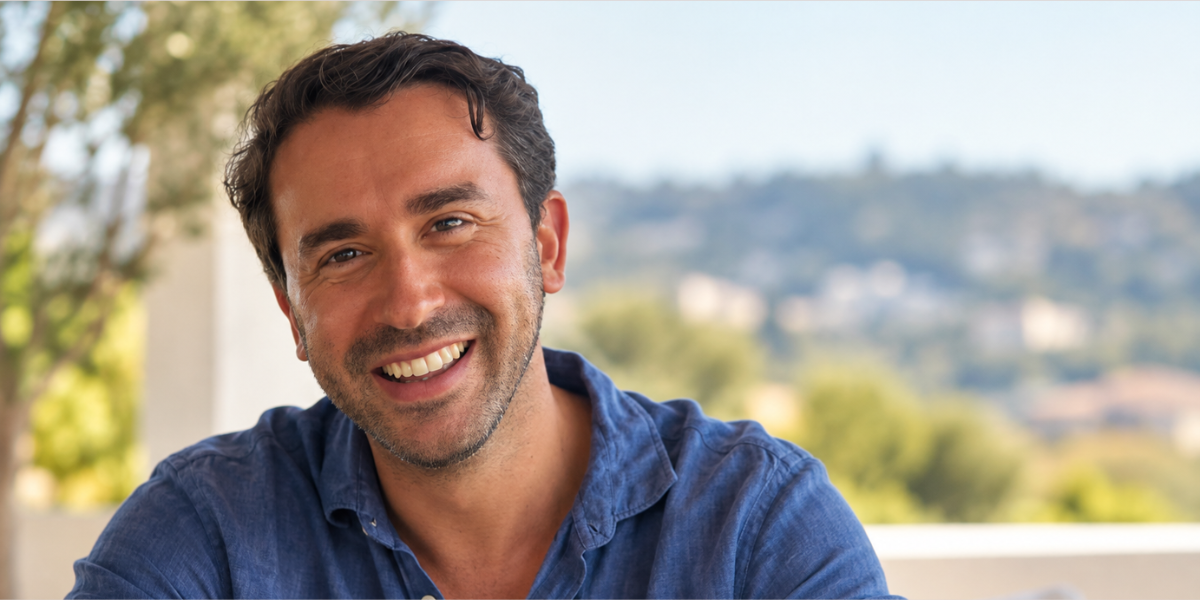
Ali Benslimane’s journey from wantrepreneur to entrepreneur is a testament to the power of purpose-driven innovation. As the founder of Aelos, Ali simplifies the complex process of international relocation, starting with Americans moving to France. In this Wantrepreneur to Entrepreneur Spotlight, discover how Ali’s experience at Stripe and his early ventures laid the groundwork for Aelos’s AI-powered platform, transforming daunting transitions into seamless experiences. Ali’s story highlights the importance of action over ideas and the value of cultivating deep customer relationships, offering an inspiring blueprint for aspiring entrepreneurs navigating their own paths.
Hi, Ali! Thanks for joining us today. Tell us about your business. Who do you serve, how do you serve them, and what's the impact that your business and work makes?
Aelos helps people navigate one of the most complicated transitions in their lives: moving to another country and building a life across borders. We’re starting with Americans moving to France, many of whom are retiring or approaching retirement.
What looks like a move is actually a web of interconnected decisions across immigration, taxes, healthcare, banking, housing, insurance and estate planning. Today, people typically have to figure out how all of these pieces fit together themselves, while coordinating multiple specialists who each only see one part of the picture.
Aelos is building an AI infrastructure that orchestrates that expertise in one place. Our technology manages the underlying complexity, documents, workflows and dependencies, and brings in the right specialists when human expertise is needed. Customers have one system and one point of accountability rather than having to coordinate everything themselves.
The immediate impact is making an international move dramatically less stressful and less prone to costly mistakes. But our ambition goes beyond relocation. Moving is the moment when we first build trust with a household; the longer-term opportunity is to help people manage their financial and administrative lives across countries for years afterward. We ultimately want Aelos to become the orchestration layer for cross-border life.
Tell us about the moment you finally felt like you went from wantrepreneur to entrepreneur.
For me, it came in a few steps. Incorporating the company was the first real commitment. Suddenly there was a legal entity — something existed beyond an idea. Then came the website. In computer science terms, that was our “Hello, World!” moment. We existed, and we were telling the world what we were building.
But the moment I really felt like an entrepreneur was when we got our first customer. Someone had said yes — not just to me, but to the product and the value proposition — and was willing to pay us for it. From that point on, we were on the hook to deliver.
There was also something powerful about knowing that if we could convince one person, we could potentially convince many more. Whether that eventually becomes ten customers, a hundred, or millions is what determines the scale of the business. But for me, that first customer was the moment it stopped being an idea and became a real business.
Describe the moment or period in your life/career that motivated you to make the entrepreneurial leap.
The entrepreneurial itch really started when I was at Stripe, working on partnerships and operations for Stripe Atlas. Our customers were founders, so I spent a lot of time talking to people who were starting companies. I loved their energy — the ambition, the optimism, and the fact that they were taking an idea and turning it into something real. Being around that every day was infectious.
Eventually, I felt like I couldn’t just keep watching from the sidelines. I started a small side business selling dog vitamins and probiotics, first on Amazon and then through Shopify. It wasn’t the business I ultimately wanted to spend my life building, and it no longer exists, but I got hooked on the process: creating something from nothing, putting it in front of customers, seeing whether they wanted it, and constantly figuring out what to do next.
That experience made me realize that I eventually wanted to build a company of my own, but also that the next one needed to be something I genuinely cared about — something more mission-driven and ambitious. That took me a few more years and a few more chapters in my career, but I feel like I’m finally living that desire with Aelos.
Describe a tool, service, or software that has been a game-changer for your business. How does it contribute to your success?
The obvious answer would probably be ChatGPT or Claude, but I imagine everyone is saying that. So I’ll go with Front, the shared inbox we use to manage customer communication.
We deal with a high volume of customer emails, often involving several people on our side, and Front makes that collaboration incredibly easy. But what really made it a game-changer for us is how extensible it is. We’ve built some pretty useful workflows on top of its API, which has allowed us to automate parts of how we triage, route and respond to customer conversations while still keeping the human context intact.
It sounds like a fairly simple tool, but when so much of your business depends on communicating well with customers, having one place where the whole team can collaborate and where you can build your own automation layer on top of it has been incredibly valuable.
We know that success is very often a non-linear path. Tell us about a failure, pivot point, or lesson that changed your course or direction and helped to get you where you are today.
One of the biggest lessons for me was realizing how methodical sales actually is. I used to think you build a good product, tell people about it, and they either want it or they don’t. When I started selling Aelos myself, I realized how naive that was.
At first, I mostly winged it. I’d ask prospects about themselves, explain what we did, and, probably because of the engineer in me, immediately start trying to solve their problems on the call. I eventually realized that wasn’t the point. The call is about understanding the customer: what they need, whether you can actually help them, how important the problem is, how they make a decision, and what needs to happen for them to become a customer. You’re there to diagnose the problem and determine whether there’s a fit — not deliver the service for free.
So I went back and actually learned how to sell. I read books and articles, watched videos, and became much more deliberate about qualification, asking better questions, following up, understanding conversion rates and ultimately closing.
It sounds obvious to anyone who has spent a career in sales, but it genuinely changed how I thought about building a company. A great product doesn’t sell itself. Sales is a craft, and like any other part of a business, you have to learn it, measure it, and keep getting better at it.
What unconventional strategy did you employ that significantly impacted your business?
One strategy I believe in, especially in the early days, is doing things that don’t scale. Startup culture tends to obsess over scale from day one, and I love scale too, but your first customers are incredibly hard to win. When you only have a handful of them, I think you should go far beyond what would make sense at scale.
I saw this firsthand at Stripe. When a Stripe Atlas founder raised their first seed round or Series A, we might send them a handwritten card to congratulate them. It was a tiny gesture and obviously not something you’d build a scalable process around, but it created a very different kind of relationship with customers.
We try to bring that same mentality to Aelos. Our early customers are much more than revenue. They’re the people who give us our best feedback, write our first testimonials, refer their friends, talk about us in communities, and ultimately help us figure out what the company should become.
You can optimize for scale later. In the beginning, I think it’s more important to create a small number of customers who genuinely love what you do.
What’s something you wish you knew sooner that you’d give as advice for aspiring or newer entrepreneurs?
The biggest thing I wish I had understood sooner is that action is worth a hundred times more than an idea. Ideas, on their own, are almost worthless.
People can be incredibly protective of their ideas. They’re afraid to talk about them because someone might steal them. But chances are, plenty of other people have had the same idea. The difference is that most of them will never do anything about it.
Taking action does two things. First, it gives you information. You put something into the world, see what happens, learn what works and what doesn’t, and adjust. You can start with a terrible idea and learn something valuable very quickly. Second, action builds confidence. Once you’ve taken that first uncomfortable step, taking the next one becomes easier.
Building a company is ultimately thousands of actions, not one brilliant idea. You talk to a customer, build something, put up a website, send an email, make a sale, get something wrong, fix it, and do it again. The people who make progress aren’t necessarily the ones who started with the best idea. They’re the ones who kept doing things and learning from what happened.
Want to dive deeper into Ali's work? Check out the links below!
- Visit Aelos' website: aelos.net/
- Find Aelos on Facebook: Aelos
WHOOP Founder Will Ahmed on the Pivot That Turned a Struggling Startup Into a $10.1 Billion Company