The Companies That Survive AI Won’t Use It Better… They’ll Be Designed Differently
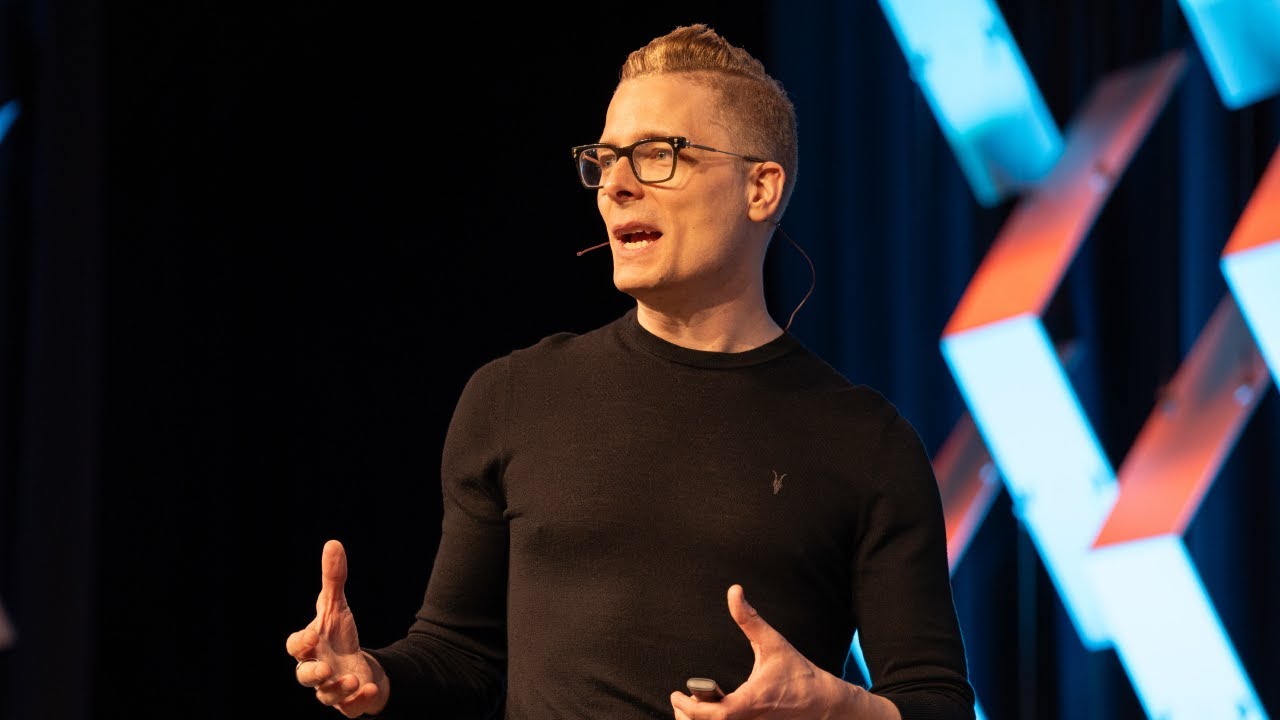
In a recent talk, Ian Beacraft—CEO of Signal & Cypher—made a sharp distinction most companies are missing:
The winners in the AI era won’t be the ones using better tools.
They’ll be the ones redesigning how work itself happens.
Right now, most organizations are doing the opposite.
They’ve adopted AI. People are faster. Output is up. But when asked what they do with the extra time, the answer is simple:
“More work.”
That’s not transformation. That’s acceleration.
Why AI Feels Big—but Changes So Little
Most teams are treating AI like a productivity layer on top of existing systems. Tasks get done faster, but the structure of work stays the same.
The result is familiar: small gains, new bottlenecks, inconsistent adoption.
As Becraft puts it:
“Great AI tools do not make an AI-native worker.”
Because tools don’t change systems. They just speed them up.
The Real Shift: Execution Is No Longer the Advantage
For over a century, companies were built around human limits—limited time, limited attention, limited expertise.
That’s why we have departments, approvals, and rigid workflows.
But AI changes the equation.
Execution is becoming cheap. Coordination is not.
And that breaks the logic behind how most organizations are designed.
Many companies are already making a critical mistake: adding AI into old systems instead of rebuilding those systems entirely.
There’s a big difference between having AI agents—and building a company where agents are how work gets done.
From Doing Work to Designing It
This shift changes what it means to contribute.
For most of our careers, value came from execution—writing, analyzing, producing. But if AI can handle that faster and at scale, competing there is a losing game.
The new leverage is higher up.
It’s about designing workflows, building systems, and—at the highest level—encoding judgment into how work gets done.
The goal isn’t to do the work faster.
It’s to design systems that do the work for you.
That’s where human value moves.
What AI Can’t Replace (Yet)
When companies rush to automate, they often confuse two things: coordination and judgment.
AI is excellent at handling tasks and workflows. But it struggles with nuance, edge cases, and taste—the things that define quality.
Becraft points to companies that over-automated too quickly, only to reverse course when systems broke under real-world complexity.
The lesson is simple: you can automate execution, but you still have to define what “good” looks like.
And that definition—your standards, your values, your judgment—is what scales through AI.
A New Way to Build
One of the most powerful shifts is how ideas turn into reality.
The cost of building a prototype is now lower than the meeting to plan it.
So instead of debating ideas endlessly, the new model is simple: build, test, and let reality respond.
Planning becomes hypothesis. Building becomes feedback.
And speed is no longer just an advantage—it’s a way of thinking.
The Real Opportunity for Entrepreneurs
For early-stage founders, this moment is bigger than just efficiency.
The barriers to building are collapsing. Small teams—or even individuals—can now compete with much larger organizations.
But the edge isn’t technical.
It comes down to clarity:
- Can you articulate what you want?
- Can you define what good looks like?
- Can you design systems that solve more than one problem at a time?
Because in a world where execution is cheap, thinking small is the real risk.
The Bottom Line
AI isn’t just changing how work gets done—it’s changing what work is.
Your job isn’t to master the tools.
It’s to design the environment where work happens.
The companies that understand this won’t just move faster.
They’ll operate on a completely different model.
And that’s what makes them impossible to outpace.

How Higgsfield’s Alex Built a $200M AI Company in 9 Months — And His 90-Day Blueprint for $1M ARR