The Privacy Game-Changer: Shikha Soneji on Making Digital Consent Understandable
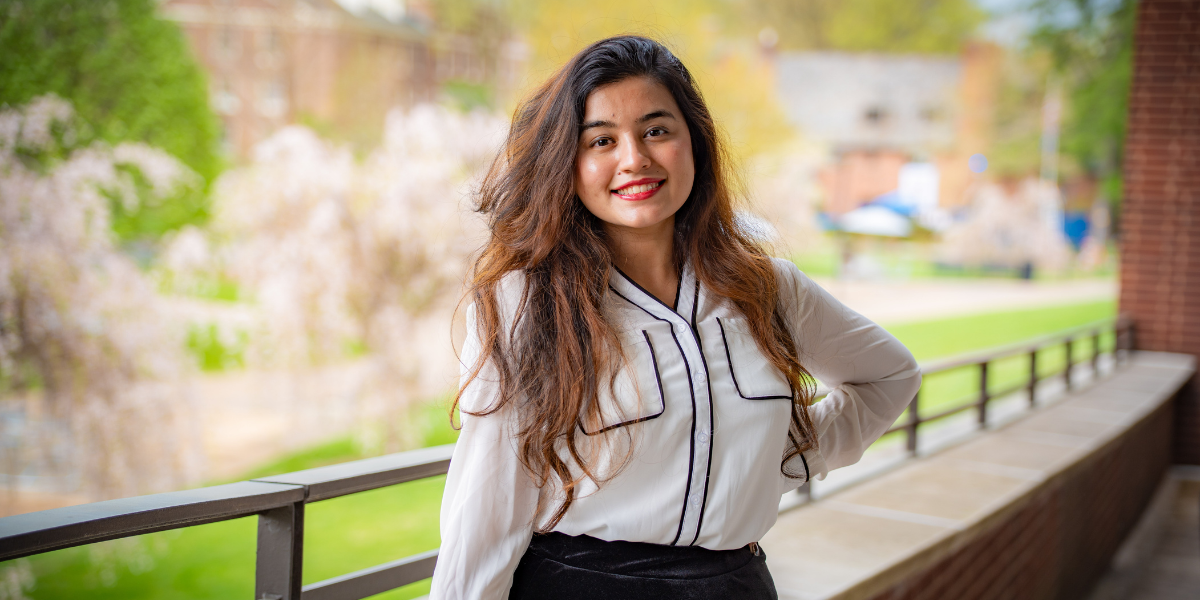
Shikha Soneji’s journey from academic researcher to AI innovator is a testament to resilience and vision. As the founder of ConsenTerra, she’s reshaping how we understand digital consent, bridging the gap between complex legal jargon and user-friendly insights. In this Wantrepreneur to Entrepreneur Spotlight, Shikha shares how encouragement from strangers and her mother’s unwavering support pushed her to transform a research project into a groundbreaking tool that empowers individuals in the digital age. Her story is a powerful reminder that entrepreneurship thrives on courage, community, and the willingness to start today.
Hi, Shikha Soneji! Thanks for joining us today. Tell us about your business. Who do you serve, how do you serve them, and what's the impact that your business and work makes?
ConsenTerra is an AI startup that helps people actually understand what they're agreeing to online. Every day, billions of people click "I agree" on privacy policies, terms of service, and consent forms without reading a single word — and honestly, even if they tried, those documents are written in legal language designed for lawyers, not humans. We use AI to analyze those agreements and break them down into clear, structured insights — what data is being collected, who it's shared with, what rights you're giving up, and where the hidden risks are. On the consumer side, think of a browser extension that reads a privacy policy before you click "accept" and gives you a plain-language risk summary in seconds. On the enterprise side, we work with organizations in healthcare, finance, and tech that deal with massive volumes of compliance and consent documentation — our AI handles the heavy lifting of classifying clauses, flagging risks, and mapping language to regulatory frameworks, so their legal and compliance teams can focus on judgment calls instead of reading every line of every document. The impact is simple but powerful: we're shifting the balance of power back to individuals in a digital world where consent is almost never truly informed. We're building a future where nobody has to blindly agree to something they can't understand — whether that's a patient signing a healthcare consent form, a parent downloading an app for their kid, or a business evaluating a vendor contract.
Tell us about the moment you finally felt like you went from wantrepreneur to entrepreneur.
It wasn't a single lightning bolt — it was a slow wave that kept building until I couldn't ignore it anymore. Last year, I started stepping outside of the academic world and into the real one. I attended events, showcased my research, started writing about it on LinkedIn, and began pitching at hackathons. And something I didn't expect started happening — people reacted. Not politely, not "oh that's interesting" — they got genuinely excited. They kept asking me "when is this coming out? We would love to see this." The moment that really tipped things for me was at an event where a Penn State alum was there with his eight-year-old daughter. After my talk, this little girl came up to me and asked what data was being collected from the game she plays on her iPad. Eight years old, curious about her own privacy. That blew my mind. I'd go home after these events and tell my husband — who is also my co-founder — about these conversations, and he kept saying "Shikha, people need this. You need to build this." He saw the business before I fully did. Between the strangers at hackathons asking when they could use it, the real people in my research studies who were shocked by what companies collected from them, and my husband's steady encouragement, I finally collected all the courage to stop being a researcher who thought about building something "someday" and actually become a founder who was building it right now. That transition from "someday" to "today" — that's when I became an entrepreneur.
Describe the moment or period in your life/career that motivated you to make the entrepreneurial leap.
The motivation came from two places — one deeply personal, one deeply professional. On the personal side, my mom is the reason I'm here at all. She's a military mom with a PhD in English Literature, and she's the one who pushed me to come study in the US in the first place. She said "go see the world." She's my backbone — every problem I've ever faced, big or small, I've taken to her. She doesn't always know the technical answer, but she sits with me, understands the problem, helps me find solutions, and guides me — sometimes with a good scolding too. Resilience is something I didn't learn from a book. I watched her live it every single day. That foundation gave me the courage to do things that seemed crazy — like pursuing a full-time PhD at Penn State while working full-time as a data scientist. People close to me literally said "don't go." But my mom said go, and that was enough. On the professional side, during my PhD research I ran interview studies where I showed participants what companies actually collect from their users. The reactions were visceral — genuine shock and sometimes anger. People had been using apps for years without any idea what they'd agreed to. Everything was technically disclosed in the privacy policy, but nobody could understand it. Seeing that gap between what's legally disclosed and what's actually comprehended by a real human being — over and over and over — that's what made me say: this has to become a product. This can't just live in an academic paper. People need this in their hands, right now.
Describe a tool, service, or software that has been a game-changer for your business. How does it contribute to your success?
Honestly, LinkedIn has been a game-changer for ConsenTerra, and I say that as someone who was terrified to post on it at first. I'm a researcher by training — I was used to writing for academic journals that maybe twelve people read, and half of those were the reviewers who had to. Putting my ideas and opinions on a public platform where thousands of people could see and judge them was a completely different experience. But it turned out to be one of the best things I did for the business. I started writing about digital consent, privacy policies, and the problem ConsenTerra is solving, and people engaged in ways I never expected. They shared their own frustrations, told me stories about feeling tricked by terms of service, asked questions, and connected with me. It built an entire community around ConsenTerra before the product even fully existed. LinkedIn taught me that this problem resonates way beyond the academic world — real people in every industry care about this. And now it's become my primary channel for thought leadership, customer discovery, and building relationships with potential partners and investors. For any founder reading this who's hesitant about putting yourself out there on social media — just start. The conversations that come from it are worth more than any paid marketing you could do at the early stage.
We know that success is very often a non-linear path. Tell us about a failure, pivot point, or lesson that changed your course or direction and helped to get you where you are today.
The biggest lesson I've learned — and it's an ongoing one — is that being a deep domain expert does not automatically make you a business expert. I spent years building expertise in AI, privacy, and digital consent. I ran user studies with almost 500 participants, published peer-reviewed research, built a novel classification framework. The research side? I had that locked. But when I stepped into the founder role, I quickly realized that fundraising, marketing, go-to-market strategy, pricing, team building — that's an entirely different skill set that nobody prepares you for in a PhD program. I had to get really comfortable with being a beginner again, and for someone who is naturally competitive and likes to feel like she knows what she's doing, that was genuinely humbling. My husband — my co-founder — has been incredible through this. He's taught me two things that have fundamentally changed how I operate: patience and letting go. Patience to trust that learning the business side is just like learning the research side — one question at a time, one experiment at a time. And letting go of the need to control every outcome, because in a startup, you can't. That pivot from "I need to know everything" to "I need to learn everything, and that's okay" — that changed my entire trajectory as a founder.
What unconventional strategy did you employ that significantly impacted your business?
Going to hackathons — not as a developer, but as a researcher pitching a business idea. That's not the typical way people use hackathons, but it turned out to be one of the most important things I did for ConsenTerra. Most founders validate ideas by talking to friends, family, or maybe running a survey. I wanted something more raw and unfiltered. Hackathons gave me that. You are standing in front of complete strangers who have zero reason to be nice to you, and you get to watch their faces in real time as you explain what you're building. Every single time I pitched my product, the reaction was the same: "When is this coming out? I would use this right now." My husband came with me to some of those events and he would watch people's faces during my pitch. Afterward he would say "did you see that? They get it." That kind of validation from strangers — people who don't owe you anything — is worth more than any market research report. It's what gave me the confidence to stop treating ConsenTerra as an academic research project and start treating it as a real business that needed to exist. My advice to any founder: go find your strangers. Put your idea in front of people who have no reason to be polite. Their honest reactions will tell you everything you need to know.
What’s something you wish you knew sooner that you’d give as advice for aspiring or newer entrepreneurs?
I wish someone had told me that you don't need permission to start. I spent way too long in "someday" mode — someday I'll build this, someday I'll start a company, someday I'll take the leap. I was waiting for some magical moment where everything would feel ready and safe and certain. That moment never comes. What actually pushed me forward was a combination of my mom's lifelong encouragement — she's always been the one saying "go, do it, what are you waiting for?" — and the real-world validation I got from strangers at events and hackathons who kept asking when my product would be available. The other thing I wish I'd known is that you don't have to do it alone. My husband is my co-founder, and having a partner who is in the trenches with you — who understands the grind because he lives it too — has made all the difference. We teach each other constantly. I bring the research intensity and the competitive fire; he brings patience, engineering rigor, and the ability to step back when I'm too deep in the weeds. Find your person — whether that's a co-founder, a mentor, or a community. Entrepreneurship is lonely enough without trying to carry every single thing by yourself.
Want to dive deeper into Shikha's work? Check out the links below!
- Visit ConsenTerra's website: consenterra.ai/
- Visit Shikha's website: shikhasoneji8.github.io/shikha-website/
- Connect with Shikha Soneji on LinkedIn: Shikha Soneji
- Schedule a Call with Shikha here.
Building Trust with Tech: Doby Lanete’s Innovative Approach to Client Engagement