Tony Robbins on the Real Difference Between Achievement and Fulfillment
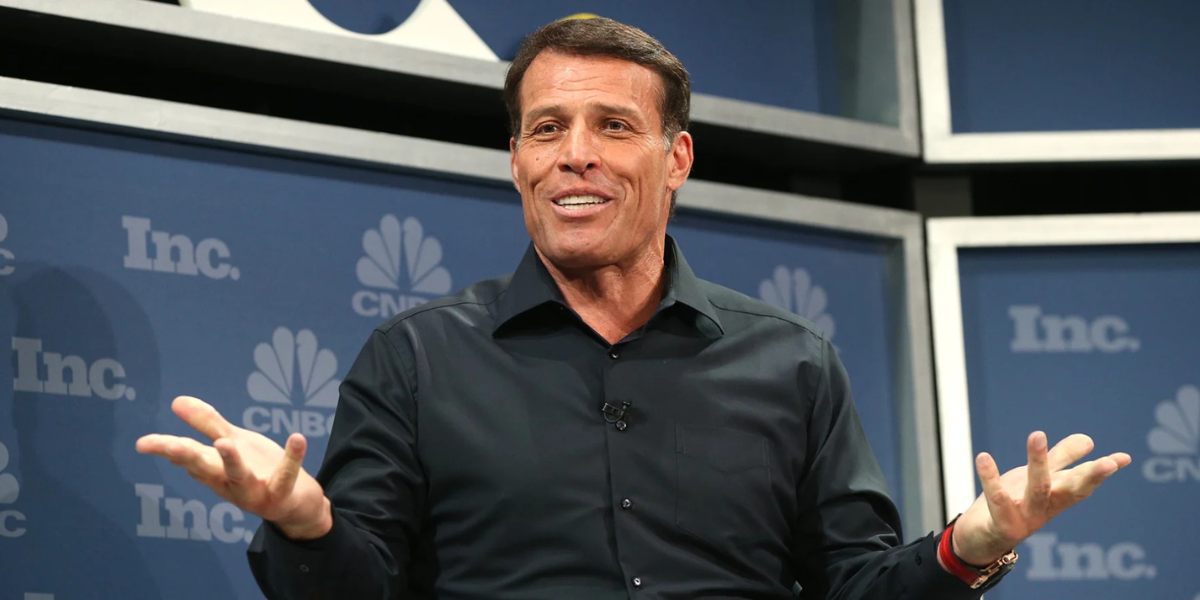
*In a powerful conversation about entrepreneurship, purpose, and personal growth, Tony Robbins challenged a belief many high performers quietly carry: that success alone should be enough.*
During a wide-ranging discussion with entrepreneur Alex Hormozi, Robbins revealed a deeper distinction that many founders eventually confront—the gap between achievement and fulfillment.
For entrepreneurs who have already “won” financially, this distinction can become the most important challenge of their lives.
The Two Skills Every Entrepreneur Must Master
Tony Robbins framed the problem with a deceptively simple idea:
“There are two skills in life: the science of achievement and the art of fulfillment.”
Most entrepreneurs master the first.
They learn how to:
- Build systems
- Scale companies
- Increase revenue
- Make smart decisions
- Execute relentlessly
But fulfillment is different. It doesn’t follow a formula.
According to Robbins, achievement is a science — repeatable, measurable, and teachable.
Fulfillment, however, is an art, deeply personal and unique to each individual.
And many founders who excel at the science of achievement struggle with the second.
Why Success Stops Feeling Exciting
Hormozi shared a common experience among entrepreneurs: early milestones feel magical, but eventually the emotional impact fades.
The first big win — the first $100k, the first successful business — feels life-changing. But after repeated successes, the emotional reward weakens.
Robbins explained this through what he calls the law of familiarity.
When something becomes familiar, the brain stops reacting to it.
This happens everywhere:
- The first client testimonial feels incredible
- The hundredth feels routine
- The thousandth barely registers
The same dynamic applies to money, business success, and recognition.
Without a deeper emotional connection to the impact of their work, entrepreneurs can become trapped in a cycle of achievement without meaning.
Push Motivation vs Pull Motivation
Robbins introduced another framework that resonates deeply with founders.
There are two types of motivation:
1. Push Motivation
This is driven by pressure.
Examples include:
- Obligation
- Fear of failure
- Anger
- Proving others wrong
- Survival
Many entrepreneurs build their careers using push motivation.
It works — but it has limits.
As Robbins explained:
“Willpower only goes so far.”
Eventually the emotional fuel that once powered success runs out.
2. Pull Motivation
Pull motivation is different.
It comes from being drawn toward something meaningful.
Instead of pushing yourself to perform, you feel pulled by a mission that matters more than you.
Robbins describes it this way:
When you serve something larger than yourself, your energy expands.
This kind of motivation doesn’t rely on discipline alone.
It creates natural endurance.
The Entrepreneur’s Hidden Trap: Living in Your Head
Another key insight from Robbins was about how analytical thinking can limit emotional fulfillment.
High-performing founders often rely heavily on logic and pattern recognition — the very skills that make them successful.
But constant analysis can disconnect them from emotional experience.
Robbins explained the problem bluntly:
“Your brain will never make you happy. It analyzes everything.”
The mind tends to reduce experiences into comparisons, metrics, and evaluations.
The heart, on the other hand, magnifies experiences.
For many entrepreneurs, learning to reconnect with emotional meaning is just as important as mastering business strategy.
Why Contribution Creates Real Fulfillment
Robbins’ personal story offers a powerful example.
At one point in his life, he already had:
- Global influence
- Multiple successful businesses
- Wealth
- Recognition
But he still felt the urge for something bigger.
That’s when he set an audacious goal:
Feed one billion people.
The scale forced him to think differently.
The mission energized him more than any business project.
Ultimately, he surpassed the goal ahead of schedule.
Today, his philanthropic initiatives have provided tens of billions of meals globally.
The lesson wasn’t about charity.
It was about finding a mission big enough to reignite passion.
The Power of a Personal Moonshot
Robbins encouraged entrepreneurs to pursue what he calls moonshot goals — ambitious missions that demand growth beyond traditional business success.
These goals have three qualities:
- Emotionally meaningful
- Large enough to require new thinking
- Focused on impact beyond personal gain
When founders pursue moonshots, work becomes exciting again.
Not because it’s easier.
But because it feels alive.
The Language That Shapes Your Reality
Another subtle but powerful idea Robbins emphasized was the role of language.
The words we use shape our emotional state.
For example:
- Saying “I have to do this” creates pressure.
- Saying “I get to do this” creates gratitude.
This is what Robbins calls transformational vocabulary.
Small shifts in language can reframe how we experience work, responsibility, and opportunity.
Over time, those shifts compound into entirely different emotional lives.
A Question Every Entrepreneur Should Ask
Near the end of the conversation, Robbins posed a powerful challenge.
Instead of asking:
“What business should I build next?”
Ask:
“What mission would make me feel fully alive?”
For some founders, that mission might involve:
- Mentoring young entrepreneurs
- Solving a large societal problem
- Creating economic opportunity
- Advancing technology
- Improving health or education
The specific mission doesn’t matter as much as the emotional connection behind it.
Because in the end, success alone rarely satisfies the deepest human needs.
As Robbins reminds us:
“Contribution is what we’re made for.”
✅ Key Takeaway for Entrepreneurs
Building a successful business requires mastering the science of achievement.
But building a fulfilling life requires learning the art of fulfillment.
And often, that journey begins not with another business goal — but with a mission big enough to change how you see your work.

How Jim McKelvey Beat Amazon And Built a $50 Billion Company