Why Airwallex’s Jack Zhang Turned Down Stripe’s $1.2 Billion Offer — and Built an $8 Billion Fintech Instead
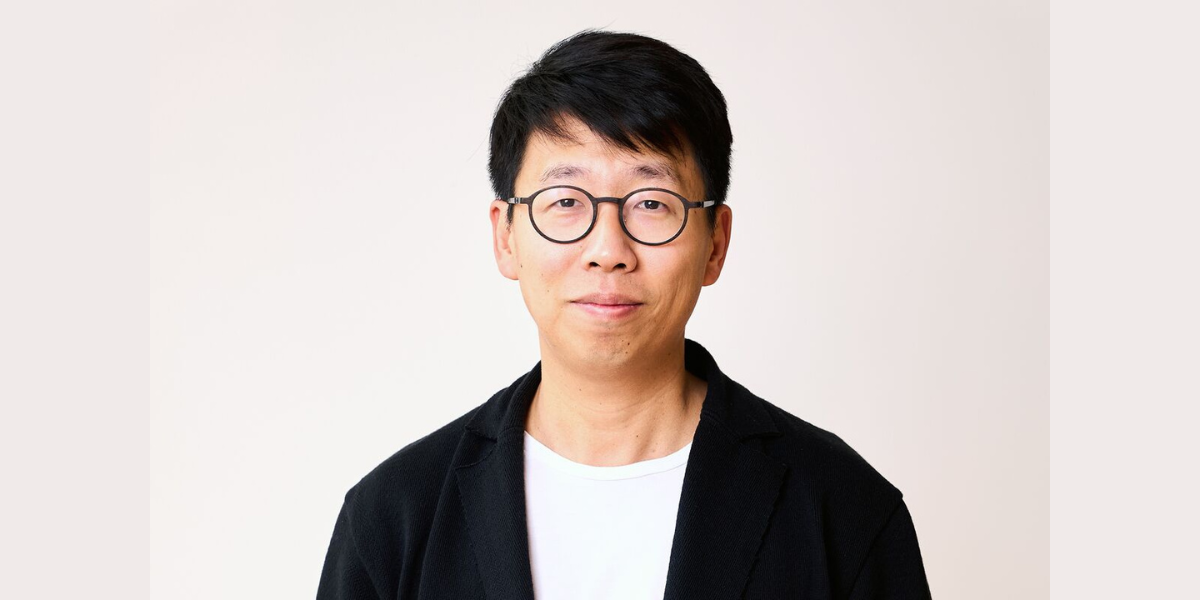
In 2018, Stripe offered to buy Airwallex for $1.2 billion.
The company was just three years old. Revenue was around $2 million. For most founders, that would have been the moment.
Jack Zhang said no.
As he shared on the Founder Effect podcast, that decision would become one of the defining inflection points in Airwallex’s story.
Seven years later, Airwallex is valued at $8 billion, processes over $200 billion annually, serves 200,000 businesses across 120 countries, and recently crossed $1 billion in annualized revenue.
But this isn’t just a story about valuation. It’s a story about conviction, hardship, costly mistakes—and the kind of long-term thinking most early-stage founders struggle to maintain.
Before the Billion-Dollar Offers: 16-Hour Days and Lemon Farms
Long before Airwallex, Jack Zhang was a 15-year-old immigrant who moved alone from Qingdao, China to Melbourne.
He barely spoke English. He stayed with an Australian host family. Then his family’s finances collapsed.
He had two options: go back to China or figure it out alone.
He chose the harder path.
That meant dishwashing, bartending, overnight petrol station shifts—and brutal farm labor during holidays.
“You end up working 15, 16 hours a day, five, six days a week… doing pretty intensive labor work during holidays and try to make up the differences in paying the tuition fees.”
He earned a computer science degree from the University of Melbourne. Entered banking. Built profitable side businesses—textile imports, wine exports, real estate development—making millions annually.
And still, he felt empty.
“I always sort of wanted to make money, but that always doesn’t give me the high order of happiness.”
The turning point came when he looked at his newborn daughter and realized he hadn’t built something that would make her proud.
So he walked away from comfort.
That decision mattered more than rejecting Stripe years later.
The Problem That Sparked Airwallex
Ironically, Airwallex began inside a coffee shop.
Jack and his co-founder Max Lee were running a café concept similar to Blue Bottle. But Max constantly struggled with international transfers—wiring money overseas for coffee beans and packaging.
Funds would disappear for months. FX fees were punishing.
Jack started digging into the infrastructure behind it all: SWIFT.
Built in the 1970s.
Slow. Expensive. Opaque.
The question that launched an $8 billion company was simple:
Why can’t we build a parallel payment system to fundamentally change how money moves around the world?
In 2015, Jack quit his banking job. He shut down lucrative side hustles. He went all in.
Within a week of meeting co-founder Lucy Liu, she invested $1 million and joined full-time.
By year two, Airwallex raised a $13 million Series A backed by Tencent and Sequoia China (now Hongshan).
Then came Stripe.
The $1.2 Billion Question
When Stripe made its $1.2 billion acquisition offer, Airwallex had minimal revenue and enormous upside risk.
Jack describes being “very intrigued” by the offer—but feeling they were “only just getting started.”
The decision came down to three things:
- They hadn’t achieved what they set out to build.
- They believed deeply in the company’s future.
- Financial outcomes alone wouldn’t bring fulfillment.
Then they did something even riskier.
After rejecting Stripe, they invested over 80% of the company’s cash into a new product line that wouldn’t generate revenue for three to four years.
Today, those products account for 60% of Airwallex’s revenue.
That’s the hidden layer of the story.
It wasn’t just about turning down an offer.
It was about doubling down on long-term vision.
The Brutal Middle: Fraud, COVID, and $200 Million Burn
It’s tempting to narrate this as a clean upward trajectory.
It wasn’t.
In 2019, Airwallex faced significant fraud issues because they hadn’t invested early enough in anti-fraud systems.
In 2020, COVID wiped out half their business in a month.
By 2022, they were burning nearly $200 million a year.
Fundraising dried up. Markets tightened.
And yes—the thought crossed their minds:
“In a very tough moment, we were like, ah, why didn’t we take the offer?”
That’s the part most founders won’t admit publicly.
Conviction isn’t constant. It wavers.
What matters is whether your mission survives the doubt.
The Expensive Mistakes No One Talks About
Jack is unusually candid about their errors:
- Delayed HR investment that damaged culture
- Hiring missteps
- Expanding internationally before product-market fit
- Underestimating fraud risk
He calls culture correction “the most expensive lesson” of the first five years.
For early-stage founders, this is gold.
Most startup content focuses on growth hacks. Very little discusses how premature scaling and weak infrastructure quietly compound risk.
Airwallex survived—but barely.
Velocity Over Perfection
One of Jack’s most revealing insights:
“More than 50 percent of the chance that the decision I make today is going to be wrong… I’d rather make the wrong decision and move on… rather than wait for the right moment.”
For wantrepreneurs stuck in research mode, that line should sting.
There is no perfect timing. No perfect decision.
Only iteration.
What $8 Billion Really Represents
Today, Airwallex:
- Processes payments in 120 countries
- Serves 200,000 businesses
- Moves over $200 billion annually
- Crossed $1 billion in annualized revenue, growing 90% year over year
Jack’s next target?
One million customers and $10 billion in revenue by 2030.
And yet, when asked about pride, he says:
“I very rarely feel proud of myself… I feel proud of the team.”
That mindset—mission over ego—may be the real reason Stripe’s offer didn’t end the story.
The Real Lesson for Wantrepreneurs
It’s easy to romanticize the headline: Founder rejects $1.2B, builds $8B company.
But here’s the deeper takeaway:
- Hardship built endurance.
- Money didn’t equal meaning.
- Vision required risk beyond acquisition.
- Mistakes were inevitable—and survivable.
- Long-term conviction compounds.
The $1.2 billion offer wasn’t the pivotal moment.
The pivotal moment was years earlier—when a young immigrant decided not to go home, and instead work 16-hour days to build optionality.
The Stripe decision was simply a continuation of that identity.
For founders building today, the question isn’t:
Would you turn down $1.2 billion?
It’s:
Are you building something you’d regret selling too early?
Because sometimes the biggest risk isn’t saying no.
It’s never betting fully on yourself in the first place.
The Fractional Founder: Jamie Henning’s Blueprint for Entrepreneurial Freedom