Airbnb CEO Brian Chesky: In the AI Era, Knowing What to Build Matters More Than Knowing How
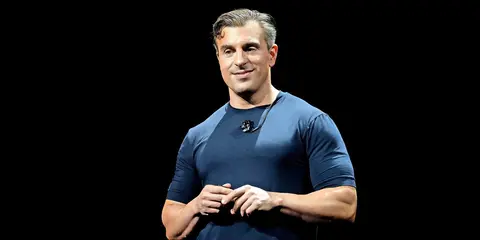
The Airbnb co-founder believes artificial intelligence is making it easier than ever to start a business. But the entrepreneurs who win won't necessarily be the ones using the most AI. They'll be the ones asking better questions.
For years, aspiring entrepreneurs faced an intimidating question: Can I actually build this?
You might have a brilliant business idea, understand your potential customers, and see an opportunity everyone else is overlooking. But without technical skills, a development team, or significant funding, turning that idea into something real could feel impossible.
According to Airbnb co-founder and CEO Brian Chesky, artificial intelligence is fundamentally changing that equation.
In a wide-ranging interview about Airbnb's AI transformation and the future of entrepreneurship, Chesky offered a perspective that should encourage anyone who's been sitting on a business idea.
The biggest opportunity in AI isn't simply learning how to use the technology. It's developing the judgment to know what deserves to be built.
And that shift could be especially powerful for first-time founders.
The New Competitive Advantage: Great Thinking, Not Just Technical Skills
When Chesky co-founded Airbnb, he was a designer, not a programmer.
He understood experiences, human behavior, and how design could solve problems. But he didn't have the technical capabilities to build everything he imagined.
Today, that limitation looks dramatically different.
"I'm a designer by training. I went to RISD. 19 years ago I started me, I couldn't code. And today I could code because I could prompt," Chesky explained in the interview.
His broader point is that AI is reducing the distance between an idea and a working product.
But here's where his perspective becomes particularly important.
"AI allows an idea to get out of your head into the world faster. But it doesn't necessarily give you better ideas."
That's the distinction many entrepreneurs are missing.
AI can help you prototype software, write marketing copy, analyze information, and automate repetitive work. But none of those capabilities automatically tells you which customer problem is worth solving.
That still requires curiosity, empathy, creativity, and judgment.
Chesky summarized the shift with three questions:
What do you build? Should you build it? Does it matter?
For aspiring entrepreneurs, those questions may be more valuable than mastering any single AI platform.
Why AI Could Make Small Businesses More Powerful Than Ever
Chesky remembers arriving in Silicon Valley during an extraordinary moment in technology.
The iPhone was emerging. Social media was expanding. Cloud computing was making it easier to launch technology companies without owning expensive infrastructure.
He believed he'd been fortunate to start Airbnb during one of the best periods in history to build a company.
Then generative AI arrived.
"If I was 26, I could probably do something just as cool because the tools now are so much more powerful," he reflected.
That statement isn't just about billion-dollar technology companies.
Chesky believes AI could enable enormous numbers of small businesses because one, two, or three people can now accomplish work that previously demanded much larger teams.
Imagine an entrepreneur who understands the challenges of managing a small restaurant but has never written a line of code.
AI-powered development tools may help that founder create a prototype for an inventory management product without first assembling an engineering department.
Or consider a consultant who knows exactly what a specialized industry needs. AI can help that person create tools, automate workflows, and serve customers without immediately hiring a large support team.
The opportunity isn't that AI guarantees business success.
It's that the cost of testing an idea is falling, making experimentation accessible to more people.
And that raises an important question: if more people can build things, how do you figure out what to build?
Brian Chesky's Surprisingly Simple System for Generating Better Business Ideas
One of the most revealing moments in the interview came when Chesky described his personal idea-generation process.
Rather than waiting for one perfect idea, he produces an extraordinary volume of them.
He estimates that he writes roughly 1,000 words daily, capturing observations, questions, and concepts in a notebook.
Most of those ideas never become anything.
And that's intentional.
"The best way to have a good idea is to have a lot of ideas," Chesky said.
His system is straightforward.
First, he captures thoughts without immediately judging whether they're useful.
At the end of each day, he highlights the handful that stand out.
Then, at the end of the month, he reviews those selections. AI now helps him surface recurring patterns and rediscover ideas he might otherwise overlook.
The most promising concepts move into deeper iteration.
His philosophy challenges the way many aspiring founders approach entrepreneurship.
They spend months searching for the idea.
Chesky focuses on generating enough ideas that the strongest ones become difficult to ignore.
"Good ideas don't die," he explained.
They return. They evolve. They continue demanding attention.
Try this: Spend 15 minutes every morning writing down business problems, customer frustrations, or opportunities you've noticed. Don't evaluate them immediately. Once a week, review your notes and identify patterns.
You don't need thousands of ideas to benefit from this approach. You need a habit that makes observation and experimentation part of your daily routine.
How Airbnb Tests New Opportunities Without Betting Everything
Chesky's approach to experimentation extends beyond personal creativity.
Airbnb is expanding from a marketplace primarily associated with accommodation into a platform offering services that travelers might need during their trips.
Think photography, personal chefs, laundry, airport transportation, baby equipment, and other services.
Behind that expansion is a simple observation: people renting homes often want conveniences that traditionally come with hotels.
Instead of treating every possible service as a massive new business initiative, Airbnb tests opportunities in individual markets before expanding them.
Chesky described experiments involving ski equipment rentals, where guests could potentially have appropriately sized gear waiting when they arrive.
The problem is easy to understand.
Travelers don't necessarily want to spend their first afternoon finding a rental shop, waiting in line, and arranging equipment.
They want to enjoy their trip.
For early-stage entrepreneurs, there's an important lesson here.
You don't need to launch everywhere. You need to prove that your solution matters somewhere.
You might begin with five customers, one neighborhood, or one narrowly defined customer problem.
Ask what people currently do, what frustrates them, and whether your proposed solution improves the experience enough that they'll choose it.
A small, focused test can provide more useful evidence than months spent building features nobody has requested.
The AI Trap: Confusing More Activity With More Progress
Airbnb's internal AI adoption offers another lesson.
According to Chesky, the company was shipping approximately 80% more features than a year earlier, partly because AI was accelerating development.
But he also described a problem emerging across technology companies: measuring AI adoption by how many tokens employees consume.
That might encourage experimentation initially, but it's a poor long-term measure of success.
Customers don't care how much AI a company uses.
They care whether the product gets better.
Chesky said Airbnb focuses on product velocity, quality, and whether newly shipped features actually succeed.
The distinction matters for small business owners, too.
Generating 100 social media posts isn't automatically better than publishing 10 that attract qualified customers.
Building five AI-powered features isn't necessarily progress if nobody needs them.
And automating a broken customer experience doesn't make it a great experience.
AI usage is an input. Customer value is the outcome.
As AI makes producing more work easier, entrepreneurs will need to become more disciplined about identifying which work actually moves their businesses forward.
Why the Best AI Entrepreneurs Might Be the Most Curious
Chesky sees AI as an amplifier of human capability.
"AI is like an amplifier. It makes the good people better."
The interesting implication is that access alone doesn't produce the same results for everyone.
Two founders might use identical tools and still create dramatically different businesses.
One asks AI to generate an app based on a vague concept.
Another spends weeks observing customers, identifying an expensive recurring problem, refining a potential solution, and using AI to test variations.
The technology may be similar. The quality of the underlying thinking isn't.
Chesky believes AI rewards deeply curious people because it enables rapid, repeated experimentation.
That means curiosity is no longer merely a personality trait that helps entrepreneurs.
It can become an operating advantage.
The more questions you ask, the more assumptions you test, and the more you refine your understanding of a problem, the better positioned you may be to use AI effectively.
Stop Watching Everyone Else Build. Start Practicing Your Craft.
Perhaps Chesky's most counterintuitive advice had little to do with technology.
He suggested entrepreneurs may be spending too much time watching what everyone else is doing.
New startups. New AI products. New announcements. New trends.
It's easy to confuse staying informed with making progress.
Chesky acknowledged that founders should understand competitors and technological developments. But he questioned whether that requires spending hours scrolling through social platforms.
His alternative is to dedicate a limited period to learning what's happening, then protect uninterrupted time for creating.
He also encouraged people to practice privately without constantly seeking public attention or validation.
This matters because entrepreneurship is increasingly becoming a game of iteration.
AI can accelerate the repetitions, but founders still need to put in the work.
Writing. Designing. Interviewing customers. Testing prototypes. Refining offers. Learning from what fails.
You don't become a capable founder by watching other founders build businesses.
You become one by building.
The Most Important Advice for Entrepreneurs Who Feel Behind on AI
Near the end of the conversation, Chesky was asked what someone should do to start experiencing the benefits of AI.
His answer wasn't a complicated framework or an advanced technical roadmap.
It was simple: start using it.
Chesky admitted that he initially felt intimidated by an AI coding tool and sought help from an employee who understood it.
His message was that people don't need to become experts before beginning.
Find someone who knows more than you. Watch tutorials. Experiment. Build something small.
The technology becomes less intimidating through experience.
And if you've already started exploring AI, keep going.
Because while the tools will continue evolving, the underlying entrepreneurial habits remain remarkably consistent.
Stay curious. Pay attention to customers. Generate ideas. Test your assumptions. Practice relentlessly.
And focus on creating something people actually want.
Final Takeaway: The Future Belongs to Entrepreneurs Who Know What Matters
Brian Chesky's perspective offers an encouraging message to anyone considering starting a business.
You don't necessarily need to be an engineer. You don't need a massive team. And you don't need to have mastered every new AI tool.
But you do need something technology cannot automatically provide: a meaningful understanding of a problem worth solving.
The entrepreneur who understands an underserved customer may have an advantage over someone who simply knows how to generate software faster.
The founder who tests ideas consistently may outperform someone waiting for the perfect opportunity.
And the person willing to practice, experiment, and learn could build something that previously seemed impossible.
AI is changing how businesses get built. But knowing why a business should exist still starts with the entrepreneur.
So instead of asking whether you're technical enough to build a company in the AI era, consider a more useful question:
What problem do you understand well enough that you could start solving it today?
That's where entrepreneurship begins.
Source: Brian Chesky's interview in the user-provided transcript, “Brian Chesky: People Who Know What to Build With AI Will Pull Ahead.” Quotes and examples are drawn from that conversation. The interviewer, publication channel, and episode URL were not identified in the transcript, so those details are intentionally omitted.
For more actionable insights on starting, growing, and scaling a business, explore The Wantrepreneur to Entrepreneur Podcast, where we turn entrepreneurial experiences into practical lessons for founders at every stage.
Junior Innovators: Micah Alexander's Bold Vision for High School Entrepreneurship