Allie Miller on AI Agents: Why Non-Technical Entrepreneurs Are About to Win Big
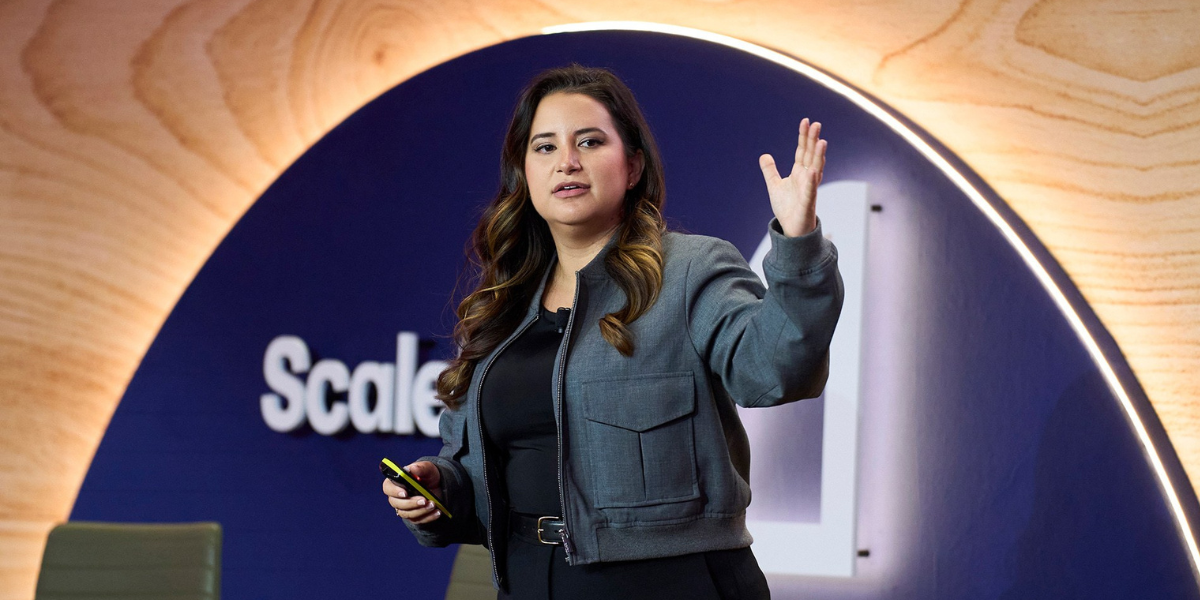
For years, the AI conversation has sounded like it belonged exclusively to engineers.
Algorithms. Infrastructure. Machine learning pipelines. Technical jargon that made the average entrepreneur feel like they were already behind.
But according to AI educator and advisor Allie Miller, that assumption is about to become one of the biggest missed opportunities of the next decade.
In a recent interview, Miller made a bold claim: the entrepreneurs who win in the AI era won’t necessarily be the best coders.
They’ll be the people who learn how to think differently.
And more specifically, the people who stop treating AI like a tool — and start treating it like an operating system.
“The shift is going from tool into operating system. It’s going from information gathering to action-oriented.” — Allie Miller
That distinction changes everything.
Because if she’s right, then AI isn’t just another productivity app.
It’s the beginning of a completely new way to build businesses, create leverage, and reclaim time.
The Biggest Misunderstanding About AI
Most people still use ChatGPT the same way they use Google.
They ask a question. They get an answer. They move on.
Miller believes that mindset is exactly what separates casual users from the entrepreneurs quietly transforming their businesses.
The power users aren’t succeeding because they’re technical geniuses.
They’re succeeding because they approach AI differently.
Instead of asking:
- “What can this tool do?”
They ask:
- “What problem in my life or business do I want solved?”
That sounds subtle.
It isn’t.
Miller explained that most entrepreneurs start “tool first.” They hear about a shiny new AI feature and immediately try to force it into their workflow.
But the people seeing real transformation start with goals.
What do they want more of?
Time? Revenue? Creativity? Freedom?
Once they define the outcome, AI becomes exponentially more useful.
Instead of asking ChatGPT where the best podcast studio is, an entrepreneur could upload years of podcast transcripts and ask AI to:
- Analyze how their interviewing style evolved
- Identify their strongest content themes
- Forecast future guests
- Simulate conversations with potential guests
- Draft outreach emails
- Manage follow-ups automatically
That’s not “using AI.”
That’s building an AI-powered workflow.
And according to Miller, that’s where the opportunity now lives.
The Rise of AI Agents
The biggest shift happening in AI right now isn’t better chatbots.
It’s agents.
AI systems capable of taking action.
Not just generating ideas. Not just summarizing documents. Actually doing work.
Miller describes this as the evolution from “assistant” to “chief of staff.”
Early AI tools could help write emails.
Now systems can:
- Reply to emails automatically
- Schedule tasks
- Research information
- Manage workflows
- Coordinate across software tools
- Execute repetitive operational work
And increasingly, they can do it without coding.
That’s the part most entrepreneurs still haven’t fully internalized.
Miller shared examples of non-technical executives building autonomous AI agents within 48 hours of learning the basics.
One person created a daily AI briefing tied to their calendar and tasks. Another built an AI system that reviewed their Notion to-do list every morning and completed tasks automatically. Another used AI to monitor a local food truck schedule.
The examples sound playful.
But the underlying shift is serious.
AI is moving from reactive to proactive.
And entrepreneurs who understand that transition early may gain an enormous advantage.
Why This Matters for Entrepreneurs
Historically, starting a business required one of three things:
- Capital
- Technical skills
- A team
AI is compressing all three.
Miller pointed to founders already using AI to scale businesses without adding headcount.
One consultant she worked with was capped at 12 clients because the intake process consumed too much time.
Using AI, she automated client qualification, onboarding, and information gathering.
The result?
She scaled to more than 35 clients and tripled revenue.
Another founder created an “AI twin” trained on her own expertise and content.
Clients could interact with the system 24/7 between coaching calls, increasing both perceived value and scalability.
This is where Miller sees the next entrepreneurial wave emerging.
Not necessarily billion-dollar AI startups.
But AI-first businesses.
Small operators. Lean teams. High leverage.
Businesses where one person can suddenly operate with the output capacity of ten.
The New Opportunity Most People Are Ignoring
One of the most practical ideas Miller discussed was surprisingly simple:
Become the person who helps small businesses adopt AI.
Not by pretending to be a world-class engineer.
But by learning a handful of AI workflows deeply enough to teach others.
Her argument is straightforward.
Most small and medium-sized businesses are massively underserved.
They know AI matters. They know they’re behind. But they don’t know where to begin.
That creates opportunity.
Miller believes someone could spend a few weeks learning platforms like Claude, Claude Cowork, or AI workflow systems — then package that knowledge into workshops and implementation services.
In her words:
“There are ways to make six figures right now just learning these things really deeply and teaching others about it.” — Allie Miller
The key insight isn’t that AI consulting is “easy.”
It’s that leverage exists wherever most people are unwilling to invest focused effort.
The internet often glamorizes entrepreneurship as instant.
Miller pushes back on that idea.
The opportunity isn’t in doing what takes five minutes.
It’s in learning what takes eight focused hours while everyone else stays overwhelmed.
The Real Battle Is Psychological
Interestingly, the most compelling part of Miller’s perspective wasn’t technological.
It was emotional.
Throughout the conversation, she repeatedly returned to one theme:
Agency.
Many people approach AI from fear.
Fear of replacement. Fear of irrelevance. Fear of falling behind.
Miller doesn’t dismiss those emotions.
She openly admits that even AI experts feel anxious.
But she believes the people who thrive won’t be the ones without fear.
They’ll be the people who act anyway.
“You’re allowed to be anxious and still take action.” — Allie Miller
That framing matters.
Because the entrepreneurs who benefit most from AI may not be the smartest or most technical.
They may simply be the ones willing to experiment before they feel fully ready.
The Entrepreneurs Who Win Next
Five years from now, Miller hopes the average entrepreneur won’t just use AI to work faster.
She hopes they’ll use it to rethink entire systems.
How businesses operate. How teams collaborate. How creative work gets distributed. How humans spend time.
And perhaps most importantly:
How much agency people believe they have over their own lives.
That may ultimately be the biggest shift AI creates.
Not replacing entrepreneurs.
But lowering the barriers that prevented millions of people from becoming one in the first place.

Oprah Winfrey on Finding Your Purpose: The Inner GPS That Can Change Your Life