How Connor McCormick is Empowering Solo Attorneys with AI Automation
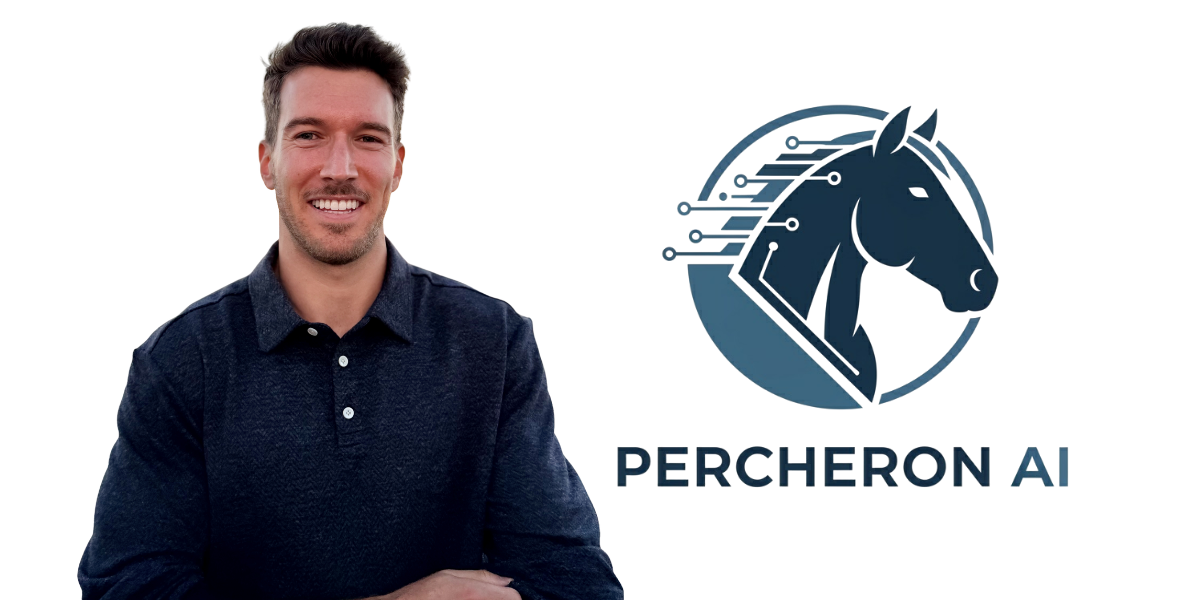
Connor McCormick's journey from wantrepreneur to entrepreneur is a tale of transformation and innovation. As the founder of Percheron, Connor revolutionizes legal work for solo and small-firm attorneys, making vital legal services more accessible. In this Wantrepreneur to Entrepreneur Spotlight, discover how Connor's shift from consulting to creating a SaaS product marked his entrepreneurial leap, and how his lack of a legal background became an unexpected advantage. By embracing AI and procedural automation, Connor empowers attorneys to serve more clients efficiently, proving that sometimes, asking the 'obvious' questions leads to extraordinary solutions.
Hi, Connor! Thanks for joining us today. Tell us about your business. Who do you serve, how do you serve them, and what's the impact that your business and work makes?
Percheron is a procedural automation platform for solo and small-firm attorneys — the kind of lawyer most people actually hire when they hit a real-life legal problem. Our focus is on the practice areas where ordinary people meet the legal system: probate, estate planning, elder law, and family law.
If you've ever helped a parent through an estate, or watched a family member go through a divorce, you've seen how much paperwork is involved. What you probably didn't see is that the attorney working on it was filling out the same court forms by hand, off the same software the firm bought a decade ago, hundreds of times a year. Repetitive court forms, demand letters, declarations, proofs of service — the procedural plumbing of the legal system — eats 30 to 50 percent of an attorney's day. That's an enormous amount of expensive, expert time spent on data entry.
Percheron is the AI copilot built for that work. Every matter — every case — gets its own dedicated workspace, where the attorney can ask questions across their case file, draft routine documents, and have court forms filled in directly from the underlying record. Every AI-generated output ships with a citation back to the source it came from, and the attorney reviews and approves everything before it leaves the firm.
The impact, when we get it right, is concrete: a solo attorney serves more clients without raising their fees, and a few more families end up with a lawyer they can actually afford during the moments in life they need one most.
Tell us about the moment you finally felt like you went from wantrepreneur to entrepreneur.
There are two times that could qualify as the transition moment:
First is when I made the decision to switch from a consulting gig to a full SaaS product. I actually started out as an AI Solutions Consultant when I quit my W-2 job. The idea was to consult in enough areas to eventually find a niche where I could find a repeatable problem and build a product around it. Once I found legal AI, I decided to switch from solutions consulting for law firms to building a product for the space.
The second is when I landed my first customer at Percheron. That was when it became way more real. I had built something that solved a problem for someone and they were willing to give it a try.
Describe the moment or period in your life/career that motivated you to make the entrepreneurial leap.
I'm actually very thankful for the part of my life that motivated me to make the entrepreneurial leap - my most recent job. I've always had a deep desire to start a company since I was about 20 years old, but I never knew when the right time would be. Then in my last year working at my previous company as a Principal Solutions Architect, I saw many product and leadership decisions that I did not agree with. I was constantly complaining to my friends and family about how I disagreed with the direction my company was moving and how they were operating. I also have a mantra in my life: "Complaining is not allowed unless you're willing to do something about it". I tried my best to speak up and influence these decisions, but at the end of the day, I did not have enough agency to do much at my level. So I decided to do something about it and start my own company where I would have all the agency I needed to take the company where I wanted... and here we are.
Describe a tool, service, or software that has been a game-changer for your business. How does it contribute to your success?
This one is probably pretty common, but Claude Code has been an absolute game changer. My background is in AI, so I try and stay as close as I can to the bleeding edge of AI tools and automations. Claude Code has been a game changer in many ways:
First and foremost it's a 10-15x development increase. I can knock out features so fast that I feel like I have a whole dev team under me.
It's helping me automate my GTM pipeline. I have a decently robust sales outreach pipeline that allows me to source leads and then it does the rest from research to custom outreach email generation and campaigning.
I'm planning on setting up other automations as well as new business functions are required to save me time as a current solo-preneur.
We know that success is very often a non-linear path. Tell us about a failure, pivot point, or lesson that changed your course or direction and helped to get you where you are today.
I hit a major pivot point just last week. Initially, I had positioned Percheron as a litigation co-pilot focused on document discovery and case building. However, after spending a full day with a seasoned attorney—someone who has seen everything from solo shops to big national firms—I realized my positioning was sub-optimal.
He helped me see that our most defensible 'moat'—our deep, inline document citations—is actually the perfect engine for procedural automation. It’s incredibly effective for form filling, document drafting, and matter-specific Q&A. Based on that insight, we’ve pivoted our roadmap to lean directly into solving those procedural bottlenecks.
What unconventional strategy did you employ that significantly impacted your business?
I'm not sure that it's unconventional, but the fact that I have no law background probably makes my journey into the legal tech space unconventional. The strategy that i'm employing to mitigate the downside is being ruthless with knowledge gathering. Pretty much any connection that gets thrown my way who has anything to offer, I accept. This way I am learning so much just by being in the space and learning how to position and build out Percheron for success.
What’s something you wish you knew sooner that you’d give as advice for aspiring or newer entrepreneurs?
I’m not sure if it counts as a strategy, but my path into legal tech is certainly unconventional since I don’t come from a legal background. To bridge that gap, I’ve been ruthless about knowledge gathering.
My approach is simple: I say yes to every relevant connection and soak up every bit of perspective offered. By treating every conversation as a masterclass, I’m learning exactly how to position Percheron and build a roadmap that actually solves the industry's most stubborn problems. Being an outsider has actually become my biggest advantage—it allows me to ask the 'obvious' questions that insiders often overlook.
Want to dive deeper into Connor's work? Check out the links below!
- Visit Percheron's website: percheronai.com/
- Follow Percheron on LinkedIn: Percheron

How Ben Goodwin Built OLIPOP by Turning a Personal Health Journey Into a Mission-Driven Brand