Atomic Habits Author James Clear Explains the Secret to Long-Term Success
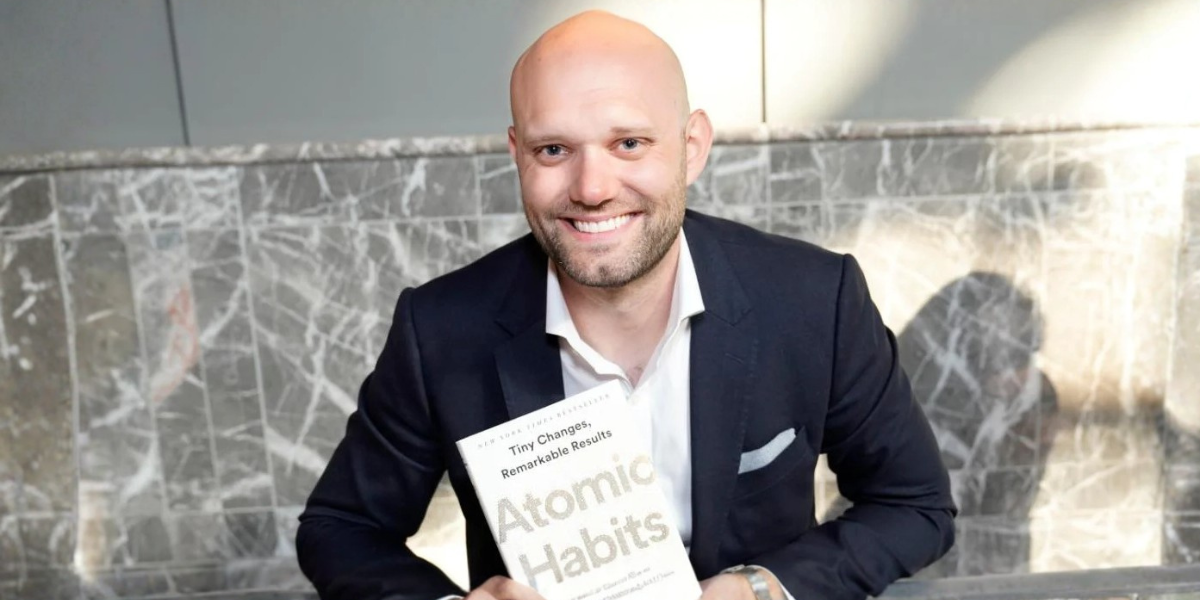
In an interview on The Aspire Podcast, James Clear shared a deceptively simple idea that cuts through almost every productivity hack, motivational speech, and self-improvement trend online today:
“The hardest step is the first one.”
For entrepreneurs, creators, and anyone trying to build a meaningful life, that insight matters more than ever.
We live in a culture obsessed with optimization. Everyone wants the perfect strategy, the perfect business idea, the perfect morning routine, the perfect launch plan. But according to Clear — the author of Atomic Habits, which has sold more than 25 million copies worldwide — most people fail long before optimization matters.
They fail because they never consistently start.
And that’s the real lesson behind habits.
Not discipline.
Not motivation.
Not hustle.
Starting.
The Real Problem Isn’t You — It’s Your System
One of the most important ideas Clear discussed is something many struggling entrepreneurs need to hear:
“If you’re struggling to improve, the problem isn’t you. The problem is your system.”
That statement completely reframes how we think about failure.
Most people assume they lack willpower when they can’t stick to a workout routine, launch a side business, write consistently, or stay focused on long-term goals.
Clear argues the opposite.
Human behavior is largely shaped by systems and environments.
The habits that dominate your life are usually the ones that are:
- Obvious
- Attractive
- Easy
- Satisfying
That’s why checking your phone feels effortless while writing your business plan feels exhausting.
Your phone constantly demands your attention. Notifications create instant rewards. The action itself is frictionless.
Meanwhile, meaningful work often requires uncertainty, delayed gratification, and emotional discomfort.
The entrepreneurs who win aren’t necessarily more motivated.
They simply design systems that make starting easier.
Master the Art of Showing Up
One of the most powerful stories Clear shared was about a man named Mitch who wanted to build a gym habit.
His strategy sounded ridiculous at first.
For weeks, he only allowed himself to stay at the gym for five minutes.
That was it.
Drive there. Walk inside. Do half an exercise. Leave.
From the outside, it looked ineffective.
But Clear says Mitch was actually mastering something far more important than fitness.
He was mastering identity.
He was becoming the kind of person who goes to the gym.
That distinction matters.
Most people focus on outcomes:
- Lose 20 pounds
- Make a million dollars
- Build a successful startup
- Grow an audience
But Clear believes lasting transformation starts with identity.
“Every action you take is like a vote for the type of person you wish to become.”
Every small action reinforces a story.
Write one page? You cast a vote for becoming a writer.
Make one sales call? You cast a vote for becoming a founder.
Go to the gym for five minutes? You cast a vote for becoming someone who doesn’t miss workouts.
That’s why starting small isn’t weakness.
It’s psychological architecture.
Reduce the Scope — But Stick to the Schedule
One of the invisible mistakes people make with habits is believing consistency only counts when the effort is “big enough.”
Clear strongly disagrees.
Instead, he follows a rule:
“Reduce the scope, but stick to the schedule.”
This idea is especially relevant for entrepreneurs.
There will always be difficult seasons:
- Investors pull out
- Revenue slows down
- Burnout hits
- Kids get sick
- Energy disappears
The temptation during those moments is to stop entirely.
But Clear argues that the “bad days” matter more than the good ones.
Why?
Because consistency compounds.
Missing occasionally isn’t fatal.
Breaking the identity is.
A founder who still writes one paragraph during chaos remains a writer.
A business owner who still works out for 15 minutes during a stressful launch remains someone who prioritizes health.
The key isn’t perfection.
It’s refusing to disappear.
The 10-Year Vision and the Next Hour
One of the most memorable frameworks from the conversation was Clear’s idea that the two most important time horizons in life are:
- Ten years
- One hour
Ten years represents the long-term vision.
The meaningful things.
Building a family. Creating a business. Writing books. Mastering a craft.
But the next hour represents execution.
“You never want a day to pass without doing something that will benefit you in a decade.”
That balance is where many entrepreneurs struggle.
Some become trapped in long-term dreaming without action.
Others become consumed by daily tasks with no larger vision.
Clear argues you need both.
Long-term vision. Short-term action.
That’s the essence of Atomic Habits itself:
Small actions repeated consistently become extraordinary outcomes.
What Most People Actually Lack
One of the sharpest insights from the interview wasn’t about motivation.
It was about clarity.
“Many people feel like what they lack is motivation, but what they really lack is clarity.”
That line cuts deep because it explains why so many people feel stuck.
When the future is blurry, action becomes emotionally expensive.
Clear shared a framework called “A-B-Z”:
- A = Your current reality
- Z = Your long-term vision
- B = The next step
The mistake people make is believing they need the entire roadmap before they begin.
But entrepreneurs rarely succeed that way.
Most successful businesses emerge through iteration.
Action creates information.
You don’t discover step C until you complete step B.
That’s why overthinking becomes dangerous.
It creates the illusion of progress while preventing movement.
Why Fun Matters More Than Discipline
One of the most underrated themes from the conversation was Clear’s focus on enjoyment.
He referenced a phrase from author David Epstein:
“Grit is fit.”
In other words, resilience often comes from alignment.
People stick with things longer when they genuinely enjoy the process.
That insight matters enormously for entrepreneurs.
The founders who survive difficult years are usually the ones energized by the game itself.
Not just the outcome.
Clear even suggested that if he could add one question to Atomic Habits, it would be this:
“What would this look like if it was fun?”
That question changes everything.
Because sustainable habits aren’t built purely through punishment.
They’re built through emotional reinforcement.
The Entrepreneurial Lesson Hidden Inside Atomic Habits
At its core, Atomic Habits isn’t really about routines.
It’s about momentum.
It’s about becoming the kind of person who keeps showing up.
That’s why James Clear’s message resonates so deeply with entrepreneurs.
Building anything meaningful takes longer than people expect.
The companies that matter. The careers that matter. The relationships that matter. The lives that matter.
All of them are built through accumulated action.
Not giant breakthroughs.
Tiny votes repeated consistently.
And maybe that’s the most powerful idea from the entire conversation:
You do not need to transform your entire life today.
You only need to win the next hour.

How Ben Goodwin Built OLIPOP by Turning a Personal Health Journey Into a Mission-Driven Brand