The Conviction Code: Rami Akeela on Building Before the Market is Ready
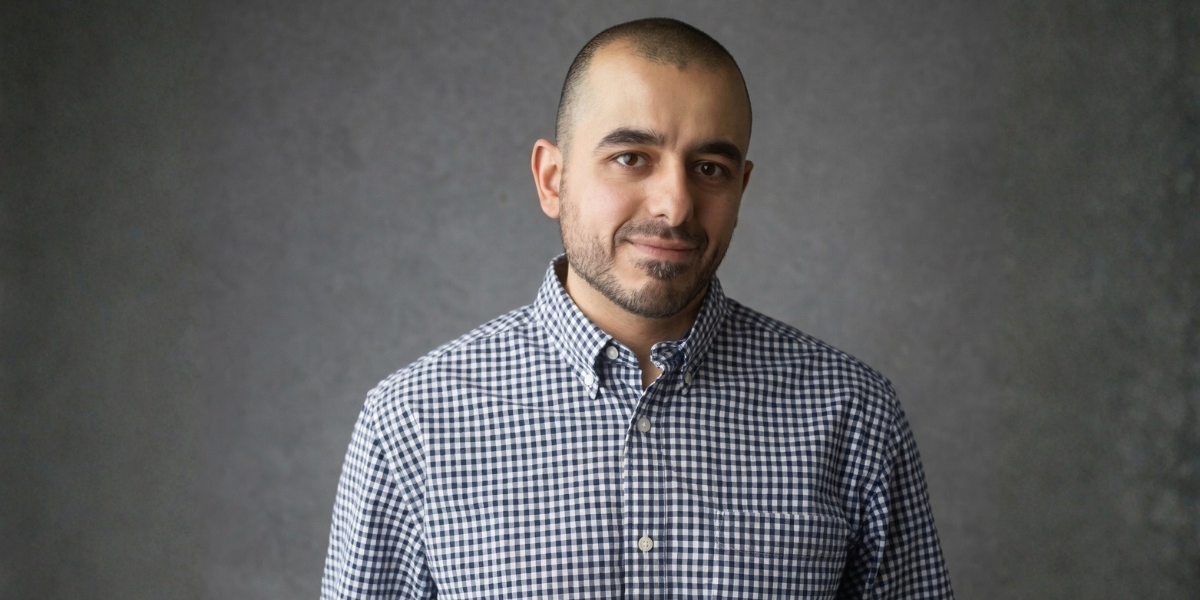
Rami Akeela's journey from wantrepreneur to entrepreneur is a testament to the power of conviction over confidence. As the founder of Nera Systems, Rami is revolutionizing how regulated enterprises handle AI with sensitive data, ensuring compliance without compromise. In this Wantrepreneur to Entrepreneur Spotlight, Rami shares how a pivotal moment in academia ignited his desire to impact the world beyond the lab, leading to a bold leap into entrepreneurship. His story highlights the importance of aligning vision with control, building ahead of the market, and finding purpose in solving structural problems that others overlook.
Hi, Rami! Thanks for joining us today. Tell us about your business. Who do you serve, how do you serve them, and what's the impact that your business and work makes?
Nera Systems helps regulated enterprises run AI on their most sensitive data without that data ever leaving their control. We serve Chief Data Officers, CISOs, COOs, CMOs, CROs, and heads of AI at companies in healthcare, financial services, pharma, and other industries where data privacy isn't optional. It's the whole game.
The problem we solve is structural. The best AI models in the world, ChatGPT, Claude, Gemini, require you to send your data to get the intelligence back. For most enterprises that's a non-starter. Legal kills it. Compliance kills it. So the data sits there, valuable and untouched, while competitors move faster.
Nera sits in the middle. The LLM gets the query. It never gets the data. The model generates the logic, the logic runs inside the client's environment, and they get the answer in seconds. Charts, tables, summaries. No exposure. No compliance problem. No workaround.
The impact is unlocking what I call the sensitive data backlog. Every regulated company is sitting on questions they can't answer because the data that would answer them is locked behind privacy walls. Clinical trial results. Trading models. Consumer behavior at the individual level. Trillions of dollars of insight sitting dormant. We built the infrastructure to activate it safely.
Tell us about the moment you finally felt like you went from wantrepreneur to entrepreneur.
It wasn't a moment. It was more of a weight that settled in.
At some point I stopped looking for someone else to solve the problems I kept seeing. Not out of arrogance, just out of recognition. If not me, who? I had the background, I had the clarity, and I understood the problem deeply enough to know that waiting around for someone else to fix it wasn't a real option.
It felt less like ambition and more like responsibility. Like the work chose me as much as I chose it.
That's when I knew I was an entrepreneur. Not when I launched something or raised money. When I stopped being able to look the other way.
Describe the moment or period in your life/career that motivated you to make the entrepreneurial leap.
It happened during my first PhD.
I was deep in the lab, doing work I found genuinely exciting. But at some point I looked up and realized the walls were too small. The research was real but the impact was contained. I didn't want to hand off ideas and watch someone else decide what happened to them. I wanted to own the whole thing, from the problem all the way to the solution landing in the real world.
That's when I understood that academia wasn't going to be enough for me. Not because I didn't love the work, but because I needed to see it matter outside the lab. And the only way to guarantee that was to build it myself.
That was the leap. Not a business plan or a market opportunity. Just the realization that I wasn't built to stay inside the walls.
Describe a tool, service, or software that has been a game-changer for your business. How does it contribute to your success?
Claude.
When you're a solo founder, you're doing everything. Strategy, content, operations, product, sales. There's no team to delegate to. So staying efficient isn't a nice-to-have, it's survival.
Claude handles a lot of the work that would otherwise eat my day. The mundane tasks. The things that need to get done but don't need me specifically to do them. That frees me up to focus on the work that actually requires my judgment.
For a bootstrapped founder trying to move fast with limited resources, that kind of leverage is everything.
We know that success is very often a non-linear path. Tell us about a failure, pivot point, or lesson that changed your course or direction and helped to get you where you are today.
Before Nera, I was building with cofounders who were talented people. But at some point it became clear we weren't aligned on the vision.
They wanted to build something with a faster, easier path. Optimizing for the near term, for what was convenient, for what would yield the quickest result. I understood the logic but I couldn't get behind it. What I wanted to build was something that actually mattered, something that would move the needle in a meaningful way. Not just for the business but for the people it would serve.
So I made the decision to go my own way.
That wasn't a failure. It was a clarifying moment. I realized that if I truly believed in what I was trying to build, I needed to control the process. Not out of ego, but because vision without control is just a suggestion. And I wasn't interested in building a watered-down version of what I knew was possible.
Nera came directly out of that realization. Solo founder, full ownership of the direction, no compromises on what we're building or why.
It's harder that way. But it's the only way I could do it honestly.
What unconventional strategy did you employ that significantly impacted your business?
Most founders wait for the signal before they start. They want validation, traction, proof that the demand is there. I went the other way. I started Nera in 2023 because I saw a structural problem that hadn't become loud yet. No customers asking for it. No category for it. Just a clear flaw in how AI was being used with sensitive data and the conviction that it needed to be fixed.
That's an uncomfortable place to build from. You're spending time and money on a problem most people haven't realized yet. You can't point to a market. You have to trust what you see.
But when the market arrived, and it did, we were already there. The infrastructure was built, the product was ready, and we weren't scrambling to catch up like everyone else.
Being early looks unconventional from the outside. From the inside it just feels like following the logic all the way to the end before anyone else does.
What’s something you wish you knew sooner that you’d give as advice for aspiring or newer entrepreneurs?
Conviction. Not confidence. Conviction.
Confidence is how you feel on a good day. Conviction is what's still there on the bad ones. When the fundraise doesn't close, when the timeline slips, and you're doing the math again and the math still doesn't work.
Nothing else carries you through that. Not excitement, not momentum, not a good pitch deck. Just the deep, quiet belief that what you're building matters and needs to exist.
Everything else you can figure out along the way. Skills, strategy, team, funding. But conviction you either have or you don't. And if you don't have it, the first real wave of difficulty will wash the whole thing away.
Find something you truly believe in. Then build that.
Want to dive deeper into Rami's work? Check out the links below!
- Visit Nera Systems' website: nera.systems/
- Connect with Rami Akeela on LinkedIn: Rami Akeela, Ph.D.
- Take Nera Systems' AI Readiness Assessment here.
Jennifer Garner on Rejection, Resilience, and Building Once Upon a Farm