Brian Armstrong on Building Coinbase: Why the Biggest Opportunities Belong to Long-Term Thinkers

Most entrepreneurs spend their lives trying to predict the next big thing.
Brian Armstrong has spent his building it.
As the co-founder and CEO of Coinbase, Armstrong transformed what was once considered an obscure internet experiment into one of the world's largest cryptocurrency companies. He launched Coinbase in 2012 when Bitcoin was worth only a few dollars, endured multiple crypto crashes, took the company public, and continues to bet on technologies many people still don't fully understand.
But listening to Armstrong speak, it's striking that he rarely talks about getting rich quickly.
Instead, he talks about playing long games.
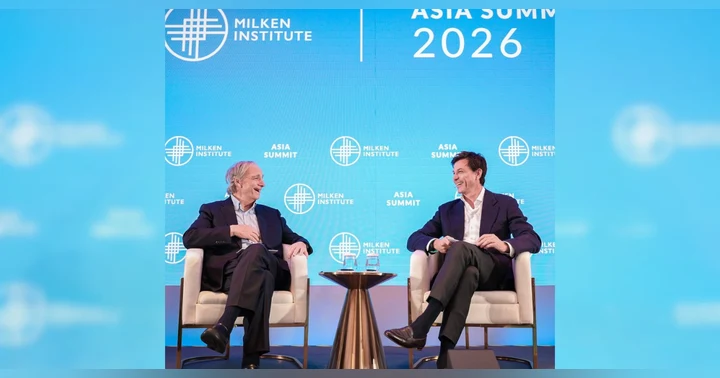
In a conversation with Nikhil Kamath, Armstrong shared lessons that extend far beyond cryptocurrency. His reflections reveal how founders should think about technological change, regulation, artificial intelligence, and why the biggest entrepreneurial opportunities often look irrational in the beginning.
The Best Founders Build Before the Market Is Ready
When Coinbase launched, crypto wasn't fashionable.
There were no institutional investors rushing into Bitcoin. Governments were skeptical. Mainstream consumers barely knew what blockchain meant.
Armstrong saw something different.
Rather than asking whether Bitcoin would replace existing financial systems overnight, he focused on a simpler question:
Could this become foundational internet infrastructure?
That mindset allowed Coinbase to build patiently while the rest of the market debated whether crypto would survive.
Many startups fail because founders optimize for today's demand instead of tomorrow's inevitability.
The companies that define industries usually arrive years before the market catches up.
Amazon believed e-commerce would dominate retail.
Tesla believed electric vehicles would eventually outperform combustion engines.
Coinbase believed digital assets would become part of global finance.
None of those bets looked obvious at the time.
Technology Doesn't Replace Systems Overnight—It Improves Them Gradually
One of Armstrong's recurring themes is that technological revolutions rarely happen all at once.
Instead of expecting blockchain to eliminate banks immediately, he describes a future where traditional finance and decentralized finance increasingly work together.
Stablecoins are one example.
Rather than replacing the U.S. dollar, they extend its utility by making money programmable, globally accessible, and available 24 hours a day.
This incremental view is important for founders.
Disruptive innovation isn't always about destroying incumbents.
Often it's about making existing systems dramatically more efficient.
That's how Stripe simplified payments.
It's how Shopify democratized commerce.
And it's increasingly how blockchain companies are approaching financial infrastructure.
Regulation Isn't the Enemy—Uncertainty Is
Many entrepreneurs view regulation as a barrier.
Armstrong takes a more nuanced position.
Clear rules create confidence.
Ambiguous rules create paralysis.
For years, crypto companies operated in uncertain regulatory environments, making it difficult to innovate confidently or attract institutional adoption.
The lesson extends well beyond cryptocurrency.
Healthcare.
Artificial intelligence.
Fintech.
Climate technology.
Every emerging industry eventually reaches a point where thoughtful regulation becomes a competitive advantage because it creates trust.
Founders shouldn't hope regulation disappears.
They should hope it becomes predictable.
AI Will Create an Entirely New Digital Economy
Perhaps the most fascinating part of Armstrong's conversation wasn't about crypto.
It was about artificial intelligence.
He predicts a future where AI agents don't simply answer questions—they transact.
Imagine autonomous software purchasing cloud services, negotiating contracts, paying subscription fees, or coordinating logistics without human intervention.
That world requires financial systems capable of operating at internet speed.
Traditional payment rails weren't designed for machines.
Blockchain networks were.
This intersection between AI and crypto represents a powerful entrepreneurial insight.
The next billion-dollar companies may not be AI companies or blockchain companies.
They may be companies that combine both.
Founders often search for opportunities inside individual industries.
The largest opportunities usually emerge where multiple technological shifts collide.
Ignore Market Cycles. Build Through Them.
Crypto has experienced extraordinary volatility.
Prices soar.
Prices collapse.
Public sentiment swings wildly.
Yet Coinbase continued building through every cycle.
This discipline reflects a broader entrepreneurial principle.
Markets are emotional.
Businesses shouldn't be.
Great founders separate temporary market sentiment from long-term technological adoption.
When markets crash, competitors disappear.
Talent becomes available.
Customer expectations change.
Infrastructure improves.
For patient entrepreneurs, downturns often become the best time to build.
As Armstrong's journey demonstrates, surviving multiple cycles can become a significant competitive advantage.
India Could Become One of the Biggest Startup Markets in the World
Armstrong also expressed optimism about India's future.
The combination of engineering talent, digital infrastructure, entrepreneurial ambition, and rapid technology adoption creates enormous potential.
India has already demonstrated what's possible through innovations like UPI and Aadhaar.
The next generation of startups may build on blockchain, AI, and global financial infrastructure in ways uniquely suited to emerging markets.
For Indian entrepreneurs, the opportunity isn't simply to copy Silicon Valley.
It's to solve problems that exist at a scale few other countries experience.
Historically, companies built for India have often found global relevance later.
Curiosity Is a Better Competitive Advantage Than Certainty
One subtle characteristic stands out throughout Armstrong's conversation.
He rarely presents himself as someone with all the answers.
Instead, he approaches new technologies with curiosity.
That matters.
Many founders become emotionally attached to their initial assumptions.
The best founders continuously update their thinking.
Bitcoin evolves.
Ethereum evolves.
Artificial intelligence evolves.
Markets evolve.
Founders must evolve too.
Intellectual flexibility isn't weakness.
It's survival.
Building for Decades, Not Headlines
Entrepreneurship often celebrates overnight success stories.
Coinbase reminds us that meaningful companies usually take decades.
The company weathered skepticism, regulatory challenges, market crashes, public scrutiny, and technological shifts.
None of that happened in a straight line.
What sustained the company wasn't perfect timing.
It was conviction paired with execution.
Armstrong consistently returns to long-term thinking because technological revolutions don't reward those chasing trends.
They reward those building patiently while everyone else argues about whether the future will arrive.
For entrepreneurs, that's perhaps the biggest takeaway.
The next transformative business probably won't emerge from copying today's winners.
It will emerge from identifying infrastructure the world will eventually need—and starting before everyone agrees.
Key Takeaways for Entrepreneurs
- Think in decades, not quarters. Lasting companies are built long before markets fully appreciate them.
- Look for infrastructure opportunities. Platforms that enable other businesses often create the greatest long-term value.
- Build through uncertainty. Market volatility is temporary; technological progress tends to be cumulative.
- Pay attention to technology intersections. AI, blockchain, fintech, and automation will increasingly reinforce one another.
- Embrace regulation that creates trust. Clear rules often accelerate adoption rather than hinder it.
- Stay intellectually flexible. The best founders adapt faster than the industries they're helping create.
Final Thoughts
Brian Armstrong's story isn't simply about cryptocurrency.
It's about recognizing foundational shifts before they're obvious.
Every generation experiences technologies that seem speculative until they become indispensable.
The internet.
Mobile computing.
Cloud software.
Artificial intelligence.
Blockchain may ultimately join that list—not because of hype, but because entrepreneurs continue solving real problems while public opinion fluctuates.
The founders who benefit most won't necessarily be those who predict the future perfectly.
They'll be the ones willing to build for it anyway.

Building Trust in a Tech-Driven World: Inside Leila Kaneda’s Revolutionary Approach