Chris Do Explains Why Your Personal Brand Isn't Working (And How to Fix It)
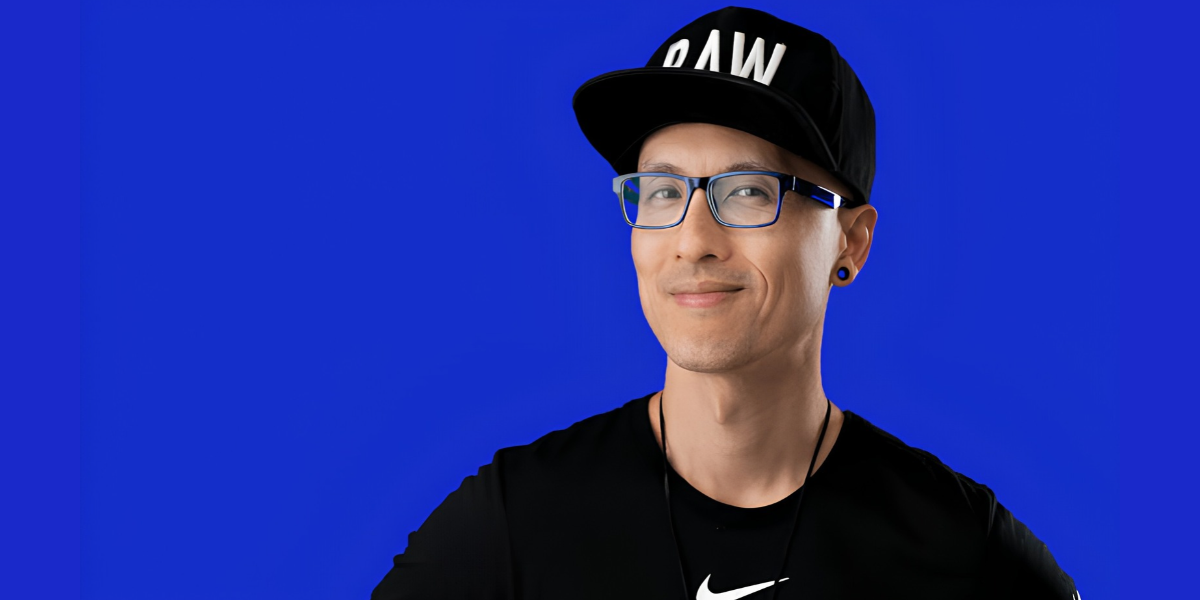
What if the reason your personal brand isn't growing has nothing to do with your content strategy—and everything to do with how well you know yourself?
Entrepreneurs spend countless hours optimizing LinkedIn profiles, scheduling social media posts, studying algorithms, and perfecting their messaging. Yet despite all that effort, many still struggle to stand out.
According to Emmy Award-winning designer and The Futur founder Chris Do, that's because most entrepreneurs are solving the wrong problem.
In a revealing conversation with Nathan Barry, founder of Kit, on an episode titled How to Build an Unforgettable Personal Brand, Chris challenged conventional thinking about personal branding, success, and authenticity.
His central argument? Your personal brand isn't something you manufacture. It's something you uncover.
And for entrepreneurs trying to build businesses that resonate with people, that distinction changes everything.
1. Stop Confusing Your Personal Brand With Your Marketing Funnel
Most personal branding advice starts with visibility.
Post consistently. Build an audience. Optimize your hooks. Convert followers into customers.
Chris Do believes that approach misses the point.
"They're working on their marketing funnel, calling it a personal brand."
It's an uncomfortable observation, especially for entrepreneurs who've spent years developing sophisticated content strategies.
But Chris isn't against marketing or sales. He's against confusing those activities with the deeper work of understanding who you are.
In his view, personal branding begins with identifying your values, voice, beliefs, and experiences—not figuring out how to sell more products.
And when every piece of content becomes a disguised sales pitch, audiences notice.
The entrepreneurial lesson: Your marketing strategy should communicate your identity, not replace it.
Before planning your next month of content, ask yourself:
- What do I believe about my industry that others might disagree with?
- What experiences shaped the way I approach my business?
- What would I still talk about if I had nothing to sell?
Your answers might reveal more about your brand than any content calendar ever could.
2. The Most Powerful Branding Strategy Is to "Un-Blend" Yourself
Chris shares an observation about modern branding: people are often so afraid of being different that they intentionally become interchangeable.
They copy successful creators, adopt familiar posting formats, and mimic the language of industry leaders.
The result is a sea of competent but forgettable personal brands.
Chris summarizes the challenge:
"We have to lean into what makes us different. We have to un-blend ourselves."
Consider the comparison he makes between Apple and Dell.
Both companies sell functional technology. But in Chris's analysis, Apple has built a powerful emotional association with identity, taste, and aspiration.
Customers aren't simply purchasing specifications. They're purchasing something that reflects how they see themselves.
Chris also points to Target's positioning around affordable design as an example of shifting the conversation beyond price.
The lesson for entrepreneurs is that differentiation isn't necessarily about being better. It's about being meaningfully different.
When customers cannot distinguish between competing businesses, purchasing decisions often collapse into price comparisons.
That's especially dangerous for freelancers, consultants, coaches, and service-based founders.
Instead of asking, "How can I sound more professional?" try asking:
"What makes my perspective impossible to confuse with someone else's?"
Your unusual background, contrarian beliefs, or unconventional approach could be your greatest competitive advantage.
3. Build Your Personal Brand Around Something You Stand For—and Against
One of the most actionable insights from Chris's conversation is his three-part personal branding framework.
A memorable personal brand needs three connected elements:
1. What you stand for. The idea, value, or concept you want people to associate with your name.
2. What you stand against. The problem, outdated belief, or harmful system you're determined to challenge.
3. Your rallying cry. A short, memorable statement that connects the first two elements.
Chris points to longevity entrepreneur Bryan Johnson as an example.
Johnson's public identity centers on longevity and combating death, with the memorable phrase "Don't Die."
Chris applies the same thinking to his own brand.
He stands for authentic self-expression and against the pressure to hide behind an artificial persona.
His rallying cry is simple: "Un-blend yourself."
Notice something important: the enemy doesn't have to be another entrepreneur or competitor.
It can be an idea.
A business coach might stand for sustainable entrepreneurship and against hustle culture.
A financial educator might stand for financial independence and against unnecessary financial confusion.
A creative agency might champion original thinking while challenging cookie-cutter design.
This approach gives audiences something more powerful than a service description: a shared mission.
Try this exercise: Complete three statements.
- I want to be known for __________.
- I'm determined to challenge __________.
- My message to the world is __________.
When those answers reinforce each other, your brand becomes easier to understand, remember, and communicate.
4. Your Identity Must Be Bigger Than Your Business
Midway through the conversation, something unexpected happens.
Chris turns the interview around and begins coaching Nathan Barry.
What begins as a discussion about personal branding becomes a deeply personal exploration of success, family, and self-worth.
Nathan shares how, at 24, he experienced shingles and a period when medication and illness prevented him from working effectively.
Before that experience, he had built much of his identity around productivity and financial success.
When he couldn't perform at his usual level, his sense of self collapsed. He describes experiencing months of depression and a much longer recovery.
The experience exposed a difficult question:
Who are you when you can no longer do the thing that makes you successful?
It's a question every entrepreneur should consider.
Founders frequently introduce themselves through their companies, revenue milestones, professional titles, and achievements.
But businesses can fail. Careers can change. Companies can be sold.
If your identity depends entirely on what you've built, what remains when those accomplishments disappear?
Chris believes that meaningful personal branding requires separating who you are from what you do.
His own journey illustrates that distinction.
After spending decades working in design and commercial production, Chris realized that creating beautiful work for clients was no longer enough.
He discovered a deeper sense of purpose in sharing ideas, teaching, and helping people express their authentic selves.
The entrepreneurial lesson: Build a business that reflects your identity, rather than allowing the business to define it.
The strongest personal brands can evolve across industries, business models, and career chapters because they're rooted in something more enduring than a job title.
5. Authenticity Builds Trust More Effectively Than Perfection
Social media rewards polished appearances.
Beautiful offices. Impressive revenue screenshots. Perfect morning routines. Carefully edited success stories.
But Chris challenges the assumption that appearing flawless makes entrepreneurs more credible.
Drawing on a trust framework discussed in Harvard Business Review, he explains three qualities that influence trust:
Authenticity: Are you who you say you are?
Empathy: Do people believe you genuinely care about their interests?
Logic: Can people follow and understand your thinking?
The challenge with excessive polish is that it can weaken the first two.
If someone's life looks suspiciously perfect, audiences may question whether they're seeing the real person.
And when every story leads toward a course, product, or sales funnel, audiences may begin to question the creator's intentions.
This doesn't mean entrepreneurs should share every private struggle or abandon professionalism.
It means that credibility grows when the person behind the business feels human.
An honest explanation of a failed launch can teach more than another celebration of record-breaking revenue.
A vulnerable reflection on a difficult decision can create stronger connections than a perfectly scripted motivational post.
For early-stage founders, authenticity can become a meaningful advantage.
You might not have the advertising budget of an established competitor. But you can share your real perspective, lessons, and decision-making process.
And those are much harder to replicate.
6. Find Your Unique Voice With Chris Do's Personal Branding Exercise
Perhaps the most practical takeaway comes near the end of the conversation.
Chris introduces a simple exercise for discovering what he calls your voice phrase.
It's a short statement that captures how you naturally communicate.
Here's how to develop yours.
Step 1: Describe your voice.
Write down every word that describes how you communicate with others.
Don't edit yourself.
Consider asking how your friends, colleagues, employees, or family members would describe you.
Step 2: Choose three distinct characteristics.
Select three words that genuinely represent you without simply repeating the same quality.
For example, "bold" and "brave" may be too similar.
Look for characteristics that reveal different dimensions of your personality.
Step 3: Create a two-to-five-word voice phrase.
Turn those characteristics into a memorable expression.
Chris describes himself as critical, direct, and caring.
His voice phrase?
"Hard truths, gently told."
It's more than a tagline.
It becomes a decision-making filter for how he communicates.
If his content avoids difficult truths, he isn't honoring the first part. If his message unnecessarily hurts people, he isn't honoring the second.
The phrase helps him remain consistent without following someone else's communication template.
For entrepreneurs, a voice phrase can guide everything from social media captions to sales conversations, keynote presentations, and customer interactions.
Your action step: Set aside 15 minutes to create your own voice phrase. Then review your most recent five posts and ask whether they actually sound like you.
7. The Personal Brands People Remember Are Built From the Inside Out
There's a deeper thread connecting all of Chris Do's lessons.
Entrepreneurs often approach personal branding as an external problem.
They assume they need better messaging, stronger visuals, more followers, or a more sophisticated content strategy.
Those tools can be useful.
But they cannot create a meaningful identity where one hasn't been explored.
Chris's philosophy reverses the process.
First, understand who you are.
Then identify what you believe, what you're challenging, and how you naturally communicate.
Only then should you focus on making those qualities visible to the world.
That doesn't mean your business stops needing marketing.
It means your marketing finally has something distinctive to communicate.
The Bottom Line: Don't Build a Brand That Looks Like Everyone Else's
For wantrepreneurs preparing to launch their first business, this conversation offers an important reminder: you don't need to become someone else to be taken seriously.
And for founders already building an audience, it offers an equally important challenge.
Stop measuring your brand only through impressions, engagement rates, and conversions.
Ask whether the people consuming your content understand what makes you different—and whether that difference reflects who you actually are.
Because the goal isn't simply to be seen.
It's to be remembered for something meaningful.
The question to take away from Chris Do's interview isn't "How do I build a bigger personal brand?"
It's this:
"What parts of myself have I been hiding that could make my personal brand unforgettable?"
Source: Chris Do's conversation with Nathan Barry in "How to Build an Unforgettable Personal Brand." This article is an editorial synthesis of the supplied interview transcript, with additional practical examples for early-stage entrepreneurs.
For more actionable ideas on building a business, developing your entrepreneurial identity, and turning your expertise into impact, explore The Wantrepreneur to Entrepreneur Podcast.

Building Trust in a Tech-Driven World: Inside Leila Kaneda’s Revolutionary Approach