Duolingo’s AI Playbook: How 2 People Built a Breakout Product and What It Means for Every Founder

In a recent interview on Silicon Valley Girl, Duolingo CEO Luis von Ahn shared a story that feels almost implausible—until you realize it’s already happening.
Two employees.
No engineering background.
No prior knowledge of the subject.
Six months later, they built Duolingo’s fastest-growing course, now reaching 7 million daily users.
This isn’t just a story about AI. It’s a story about leverage—and what happens when the barriers to building collapse.
The Shift: From Teams to Individuals With Leverage
Von Ahn puts it simply:
“AI is not going to take your job. Somebody using AI is going to take your job.”
That distinction reframes the entire conversation.
At Duolingo, AI hasn’t led to layoffs. In fact, they’re still hiring. But the expectation of what one person can do has fundamentally changed.
- Engineers are rewriting workflows with AI coding tools
- Product managers are building prototypes instead of writing docs
- Non-technical employees are creating dashboards and internal tools
The result? Not a 10x company-wide speedup—but pockets of massive productivity gains.
And those pockets are where the future is being built.
The Chess Course That Shouldn’t Have Worked
The most compelling example is Duolingo’s chess course.
It didn’t come from leadership. It wasn’t part of a strategic roadmap. It came from two employees who simply wanted to build it.
There was just one problem:
They didn’t know chess. And they couldn’t code.
So they used AI.
Here’s what their process looked like:
1. Start With Curiosity, Not Expertise
They began by learning chess themselves—scratching their own itch.
2. Study the Market
They analyzed existing chess-learning tools and found them lacking.
3. Prototype Fast With AI
Using tools like Cursor, they began “vibe coding” early versions.
4. Improve the Model
When AI-generated puzzles weren’t good enough, they trained it using existing chess datasets.
5. Iterate Relentlessly
They kept building prototypes until leadership could experience the product—not just read about it.
Six months later, they had:
- A full curriculum
- A working app prototype
- A product ready for millions of users
All before a traditional engineering team fully stepped in.
Why Prototypes Beat PowerPoints
One subtle but powerful shift emerged from this story:
Ideas are no longer pitched—they’re demonstrated.
Von Ahn explains that it’s hard to evaluate a written proposal for “a better way to teach Spanish.” But when someone shows a working prototype, decision-making becomes obvious.
This is a fundamental change in how organizations operate:
- Less time debating ideas
- More time interacting with real products
- Faster approval cycles
For founders, this is a massive unlock.
You don’t need permission to start anymore—you just need a prototype.
The Real Role of AI Inside Companies
Despite the hype, Duolingo’s internal use of AI is surprisingly grounded.
There’s no obsession with tracking AI usage. In fact, they tried tying it to performance reviews—and reversed course.
Why?
Because it led to the wrong behavior.
“Do you just want us to use AI for AI’s sake?” employees asked.
Instead, the company focuses on outcomes:
- Use AI when it improves your work
- Ignore it when it doesn’t
- Optimize for impact, not tools
This is a critical lesson for founders:
AI is not the goal. Better results are.
Where AI Still Falls Short
For all its promise, AI isn’t magic.
Von Ahn highlights two major limitations:
1. Debugging Is Still Hard
AI can generate code quickly—but when it breaks, fixing it can take longer than writing it from scratch.
2. Quality Isn’t Consistent
When generating content at scale:
- Some outputs are excellent
- Many are mediocre or unusable
This creates a new kind of bottleneck: human judgment.
At Duolingo, AI-generated content still goes through validation layers to ensure quality.
The takeaway?
AI accelerates creation—but humans still curate.
Why Duolingo Isn’t Afraid of AI Competition
In a world where anyone can “vibe code” an app, you’d expect Duolingo to be nervous.
They’re not.
Why?
Because building a good product is still hard.
Duolingo has:
- Hundreds of millions of users
- Billions of daily data points
- Years of behavioral insights
That data fuels personalization, motivation systems, and learning outcomes—things AI alone can’t replicate overnight.
As von Ahn puts it, there are already thousands of language apps. Soon there will be tens of thousands.
But distribution, data, and product quality still win.
The Bigger Bet: User Expectations Will Explode
If there’s one thing Duolingo is preparing for, it’s this:
Users will expect dramatically more.
A clear example: AI-powered conversation practice.
- Initially expensive → locked behind premium tiers
- Now becoming cheaper → moving toward free access
Why?
Because eventually, users will expect it everywhere.
This is the real impact of AI—not just new products, but new baselines.
The Founder Mindset Behind It All
Perhaps the most underrated insight from the interview isn’t about AI—it’s about decision-making.
When Duolingo shifted strategy to prioritize long-term growth over short-term monetization, it triggered a massive stock drop.
Von Ahn expected it. And did it anyway.
“I’m very convinced this is the right decision.”
That conviction comes from thinking long-term—a theme he applies even to daily stress:
“Will this matter in six months? The vast majority of things will not.”
For founders navigating AI uncertainty, that mindset might matter more than any tool.
What This Means for Wantrepreneurs
If there’s one lesson to take from Duolingo’s playbook, it’s this:
The barrier to building has never been lower—but the bar for quality remains high.
Here’s how to act on it:
- Start before you feel ready
- Prototype instead of planning
- Use AI to accelerate, not replace thinking
- Focus on problems worth solving—not just tools worth using
Because the future isn’t being built by AI.
It’s being built by people who know how to use it.
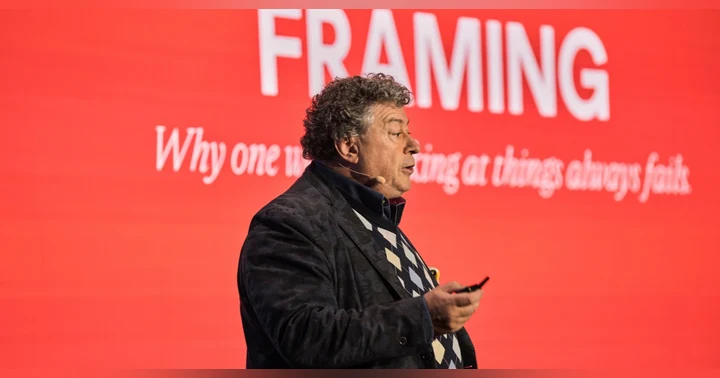
Rory Sutherland on Marketing Psychology: Why the Smallest Changes Create the Biggest Business Wins