Envisioning the Future: How Mark McSweeney Redefines Strategic Planning
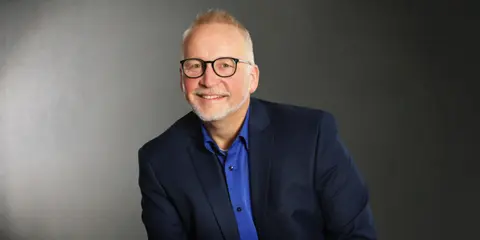
Mark McSweeney's journey from wantrepreneur to entrepreneur is a testament to the power of intentional leadership. With over 30 years as an association executive, Mark founded Envisioned Future to help nonprofits harness their collective talent through strategic governance and leadership. In this Wantrepreneur to Entrepreneur Spotlight, Mark shares how a pivotal client interaction validated his entrepreneurial leap and how tools like Miro enhance his collaborative approach. His story is a masterclass in leveraging experience and relationships to build a business that aligns with personal values and creates lasting impact for communities.
Hi, Mark McSweeney! Thanks for joining us today. Tell us about your business. Who do you serve, how do you serve them, and what's the impact that your business and work makes?
Through Envisioned Future, I help associations, professional societies, and other nonprofit organizations strengthen their governance, leadership, and strategic direction.
After more than 30 years as an association executive and advisor, I've learned that organizations rarely suffer from a shortage of talented, intelligent, or committed people. More often, they struggle to harness that collective talent effectively. Boards get consumed by operational details, leadership teams become focused on immediate challenges, and important conversations about the future get pushed aside.
My work centers on helping leaders change that dynamic. Through strategic planning, board development, governance consulting, and facilitation, I help organizations ask better questions, challenge assumptions, clarify responsibilities, and make more intentional decisions about their future.
I often say that my greatest value isn't necessarily providing answers. It's helping a group of capable people have the conversations that lead them to discover better answers together.
Ultimately, the impact isn't just a strategic plan or a more effective board meeting. It's helping organizations become better equipped to fulfill their missions, navigate change, and create lasting value for the people and communities they serve.
Tell us about the moment you finally felt like you went from wantrepreneur to entrepreneur.
I don't think there was a single dramatic moment when I suddenly felt like an entrepreneur. For me, the transition was more subtle.
I'd spent most of my career leading organizations, managing teams, working with boards, and being responsible for budgets, strategy, and organizational performance. In many respects, I'd been thinking and acting entrepreneurially for decades – but always within someone else's organizational structure.
Starting Envisioned Future changed that.
One experience early in building Envisioned Future helped validate my decision to go out on my own.
A client I'd previously worked with through my former employer reached out about doing additional work together. I was very intentional about not wanting to take clients or business away from my former colleagues, and I explained that concern to her.
Her response was both reassuring and affirming. She told me that I was the reason she'd engaged the company in the first place, and she wanted to continue working with me.
That conversation reinforced something important: the value I brought wasn't necessarily tied to the organization I worked for. It came from the expertise, relationships, and trust I'd developed over the years.
I think that's when the entrepreneurial transition began to feel more real. I wasn't simply creating a new business. I was building something around the professional reputation I'd spent my career earning.
And I was discovering that those relationships could become the foundation for a business of my own.
For me, becoming an entrepreneur wasn't about suddenly discovering that I could lead a business. It was about realizing that I could build one around my own vision of what meaningful, valuable work should look like.
Describe the moment or period in your life/career that motivated you to make the entrepreneurial leap.
Over the course of my career, I had the opportunity to experience association leadership from several perspectives – as an executive director/CEO, an association management company executive, a volunteer leader, and an advisor to organizations navigating complex challenges.
What I gradually discovered was that the work I found most rewarding wasn't necessarily the day-to-day responsibility of running an organization. It was helping its leaders think differently about where they wanted to go and how they could get there.
I loved facilitating strategic conversations, helping boards understand their responsibilities, challenging assumptions, and watching a group of people move from competing perspectives toward a shared understanding of what mattered most.
Eventually, I began asking myself a question I frequently encourage my clients to consider: What would the future look like if we were more intentional about creating it?
For me, that meant building a consulting practice focused on the aspects of leadership and organizational development that I most enjoyed and where I believed I could contribute the greatest value.
Envisioned Future grew out of that realization. Rather than continuing to build my career around a particular position or organization, I wanted to build a business around the work itself.
Describe a tool, service, or software that has been a game-changer for your business. How does it contribute to your success?
Admittedly there are several. I enjoy experimenting with technology that allows me to work smarter, not harder.
One of the valuable tools in my consulting practice has been Miro, a digital collaboration platform that allows groups to work visually and interactively.
Much of my work involves bringing together boards and leadership teams with different perspectives, experiences, and priorities. The challenge isn't simply getting people to share ideas. It's helping them see the connections between those ideas, identify patterns, challenge assumptions, and ultimately reach meaningful decisions.
Miro allows me to design facilitated exercises where participants can contribute ideas, organize them into themes, explore strategic choices, and collectively build a picture of their organization's future.
What makes it especially valuable is that it helps transform a conversation into something tangible. Rather than leaving a planning session with pages of disconnected notes, participants can see how their thinking evolved and how their contributions shaped the outcome.
For a solo consultant, tools like Miro also make it possible to deliver a highly interactive, collaborative experience without needing a large team or extensive infrastructure.
The technology doesn't replace good facilitation. It enhances it and helps me create an experience where participants are active contributors rather than passive attendees.
We know that success is very often a non-linear path. Tell us about a failure, pivot point, or lesson that changed your course or direction and helped to get you where you are today.
One of the most important leadership lessons of my career came when I was just 28 years old, serving in my first executive director position.
I had inherited responsibility for reestablishing a fraternity chapter at Washington State University. One of the alumni supporting the effort was Paul Allen, the cofounder of Microsoft and owner of both an NBA and NFL franchise, who was prepared to personally fund a new multimillion dollar fraternity house as well as related university tech infrastructure.
During my early involvement, I identified some significant concerns about the chapter's long-term sustainability. The undergraduate members weren't particularly receptive to my concerns, and I was warned that my predecessor hadn't raised similar objections and that no one was quite sure how Paul would react.
I was young, relatively inexperienced, and acutely aware of the stature of the people involved. But I also believed I had a responsibility to protect the organization's future, even if that meant jeopardizing a very significant investment.
So I stood my ground.
A couple of weeks later, I learned that Paul appreciated my candor. He invited me to Seattle to meet with him and his team and asked me to review the plans for the new house. I was intimidated, to say the least! But I identified a few risk-management concerns that his team ultimately incorporated into the design.
More importantly, the undergraduate members took the sustainability concerns seriously, made the necessary changes, and the chapter was ultimately chartered. Three decades later, it's still thriving.
That experience taught me something I've carried throughout my career: leadership isn't about being the most accomplished or powerful person in the room. It's about having the judgment and courage to fulfill your responsibilities, even when doing so is uncomfortable.
It's a lesson that continues to shape how I work with boards, executives, and clients today.
What unconventional strategy did you employ that significantly impacted your business?
One of the most valuable things I've learned is that sometimes the best way to help a client move forward is to resist the temptation to give them an answer.
That may seem like an unusual approach for a consultant. After all, clients hire consultants because they expect us to bring expertise and solutions to the table.
But I've found that when leaders become focused on solving an immediate problem, they can unintentionally limit their thinking to the problem as they've defined it.
My approach is to challenge that framing. I encourage leaders to "ask one level higher" – to step back and consider the bigger question behind the question they're trying to answer.
For example, a board might be debating whether to increase membership dues. That's a legitimate decision, but the more strategic question may be whether the organization's overall business model is sustainable and capable of supporting its future ambitions.
The second conversation can lead to very different – and potentially far more valuable – outcomes.
This approach has become central to how I differentiate my work. Rather than positioning myself as the expert who arrives with all the answers, I work to create the conditions in which leaders can challenge their own thinking, explore possibilities, and develop solutions they genuinely understand and own.
Sometimes the most valuable thing you can offer a client isn't a better answer. It's a better question.
What’s something you wish you knew sooner that you’d give as advice for aspiring or newer entrepreneurs?
I wish I'd recognized earlier that building a successful business doesn't necessarily mean building the biggest business possible – or building it the way someone else thinks you should.
Entrepreneurs are often encouraged to think about growth in terms of revenue, employees, locations, or market share. Those can certainly be important measures of success, but they're not the only ones.
One of the advantages of entrepreneurship is the opportunity to be intentional about what you're building and why.
For me, that has meant creating a business that allows me to concentrate on the work I find most meaningful, serve clients where I believe I can make a genuine difference, and leverage the experience I've accumulated throughout my career.
I've also learned the importance of building a business in a way that feels authentic. I've never particularly enjoyed the traditional sales process, so I've focused heavily on cultivating relationships, demonstrating value, and earning referrals rather than relying primarily on conventional sales tactics.
That doesn't mean business development takes care of itself. Relationships require attention, trust must be earned, and you have to be willing to communicate the value you bring. But I've found that those conversations are much more natural when they're grounded in a genuine desire to help rather than simply close a sale.
My advice to newer entrepreneurs would be to define success on your own terms and build a business that reflects both your strengths and your values.
And be willing to revisit that definition as your business and your life evolve.
Don't just build a business that can succeed. Build one that supports the future you actually want.
Want to dive deeper into Mark's work? Check out the links below!
- Visit Envisioned Future's website: envisionedfuture.co/
- Connect with Mark McSweeney on LinkedIn: Mark McSweeney
How John Lee Turns AI Content Into Income: His Social Media Monetization Strategy