Beyond the Glass: Jack Defay's Strategy for Interactive Museum Experiences
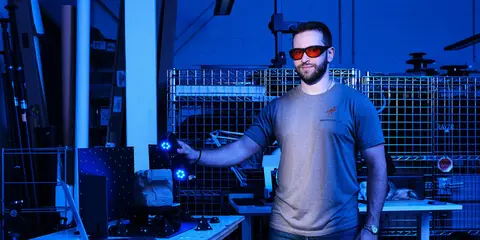
From scanning ancient artifacts to creating immersive museum experiences, Jack Defay's journey is a masterclass in innovation and accessibility. As the founder of Museum Scan, Jack transforms static exhibits into interactive, multisensory adventures. In this Wantrepreneur to Entrepreneur Spotlight, Jack reveals how a classroom project ignited his passion, leading to a thriving business that empowers museums to engage all visitors, including those with visual impairments. Discover how Jack's strategic pivots and open-source ethos turned challenges into opportunities, redefining how we experience history and culture.
Hi, Jack! Thanks for joining us today. Tell us about your business. Who do you serve, how do you serve them, and what's the impact that your business and work makes?
Museum Scan is a 3D scanning and fabrication studio serving museums, historic sites, and cultural institutions, mostly in the Northeast. We capture artifacts without touching them, then turn those scans into things visitors can use: cast replicas, tactile models and braille for blind and low-vision visitors, interactive 3D exhibits, and AR guided tours. At the Glenn H. Curtiss Museum, we scanned ten objects, from engine prototypes to full aircraft, for in-gallery and online viewing, and built a classroom virtual tour package around them. Most recently we digitally restored the faded engravings on a 250-year-old Revolutionary War powder horn, so researchers can study it without shipping the original around the country. The impact is agency. A museum object usually sits behind glass, and visitors look at it. Our work lets them turn it over, feel it, operate it, or take it apart, and that includes visitors who couldn’t see the original at all.
Tell us about the moment you finally felt like you went from wantrepreneur to entrepreneur.
Our third tactile painting session with blind and low-vision participants. The first two sessions had gone well as workshops and badly as a product: the paintings were difficult to tell apart, and each person needed one of us narrating by hand. For the third session we had rebuilt everything, with larger canvases, tuned depth and surface finish, a braille label on the frame, description panels, and paired audio. A participant put her hands on the canvas and, with minimal guidance, said it was Starry Night. She had never seen the painting. Then another did the same with the Bedroom, placing the bed and the nightstand by touch. That was the moment the work stopped needing me in the room. A demo that depends on the founder is a hobby. A product that works when you’re not there is a business, and that was the first time I had one.
Describe the moment or period in your life/career that motivated you to make the entrepreneurial leap.
As an electrical engineering student at Cornell, I worked with the archaeology department and a team of museum studies students to 3D scan a mummified sacred ibis. It became a multisensory exhibit, with a printed model, a hologram, and the sounds and smells of ancient Egypt. Later we scanned artifacts at the Johnson Museum so visitors could turn them over on a screen next to the real thing. The project got press, but it was a senior-year side project. I went on to a master’s in computer science at Princeton, focused on computer vision for robots, and then co-founded a digital marketing agency. After I sold my stake in the agency, I started playing with ideas for what came next. One thing had always bothered me: there was no good way to display and interact with the 3D models we had made. So I started building a virtual exhibit for the web and got completely absorbed. Once I had something I was happy with, something that let a visitor explore an object at their own pace with immersive context around it, I understood what had been missing. The scans were never the point. The experience around them was, and building that experience is still the center of everything Museum Scan does.
Describe a tool, service, or software that has been a game-changer for your business. How does it contribute to your success?
Blender. It’s the software I used on the Cornell mummy project, because it was free and open source and a student could afford it. Years later it’s still our go-to for all of the 3D work we do: cleaning scan data, preparing models for printing, building the animations we use in exhibits, and scripting the repetitive parts in Python. I had used it on and off for 3D printing tasks for a long time before I decided to take it seriously, and doing that was one of the biggest unlocks for the business and one of the accomplishments I’m proudest of. Blender is one of those tools where the more you learn, the more you realize how little you know. I still have a lot left to learn and I’m excited to see what else we can do with it. It’s also a great argument for open source software. A tool that cost nothing has carried this company from a student project to a studio serving museums.
We know that success is very often a non-linear path. Tell us about a failure, pivot point, or lesson that changed your course or direction and helped to get you where you are today.
For a long time I thought the 3D scan was the product. It was the technology, it unlocked everything else, and we got very good at it. I built the whole offer around solving the technical problems, so instead of a raw scan we delivered a complete model package with a version for every application: 3D printing, the web, game engines, video renders, even augmented reality. And nobody cared. The realization came in a passing conversation. We were doing all the heavy lifting to enable these exciting uses, and we had never once shown them. That was when I understood what problem we were actually solving. Museums don’t have a shortage of 3D models. They have engagement problems, storytelling problems, accessibility problems, education and marketing problems, and preservation problems. Those were the problems our clients were facing, so those were the problems we needed to solve. The 3D model turned out to be the magic under the hood that let us solve them in ways nobody else could. Our pitch, our packages, and our pricing all changed after that.
What unconventional strategy did you employ that significantly impacted your business?
We give away the tools we build for ourselves. After a session at the Carroll Center for the Blind, a participant asked for my business card and then pointed out that he couldn’t read it. Commercial braille cards come in bulk orders, so I designed a hand-cranked two-wheel embosser that prints on any desktop 3D printer and lets me make braille cards one at a time. Then I put a free generator on our website so anyone can enter their contact information and download their own. We did the same with a braille description panel generator. None of this is what we sell. The honest version of the strategy is this: I knew I had to spend time on marketing either way, and I’d rather spend it building something that helps other people. Someone who wants to hand a braille card to a client shouldn’t have to find a vendor and order a thousand. A small museum should be able to make a description panel without hiring anyone. The tools do bring people to our site, and a curator who finds something free and useful there tends to trust us before the first call. But that’s the side effect. The point is that the marketing hours produced something real.
What’s something you wish you knew sooner that you’d give as advice for aspiring or newer entrepreneurs?
Understand how your buyer is allowed to spend before you design what you sell. Museums don’t buy the way a tech company does. They avoid large subscriptions and prefer one-off projects. They keep operating budgets and grant-funded project budgets completely separate, and each bucket has its own requirements, timelines, and priorities. Our work can fit in either, and which one applies varies from institution to institution. Early on I pitched the same offer to everyone and wondered why good conversations didn’t turn into contracts. Once I started asking which budget a project would come from, and shaping the scope and timeline to match, the fit improved and so did the trust. Technical founders tend to obsess over the product. The product matters, but the sale is won or lost on whether you’ve understood the buyer’s perspective going in.
Want to dive deeper into Jack's work? Check out the links below!
- Visit Museum Scan's website: museumscan.com/
- Explore the Museum Scan's Braille Embosser
- Read the Braille Business Card Generator guide.
- Explore ContourCanvas: Tactile Paintings here.
Alexandr Wang on Building Meta’s Muse: 7 Lessons Every Entrepreneur Can Learn About AI, Leadership, and Growth