From Homeless to Billionaire: John Paul DeJoria’s Lessons on Rejection, Resilience, and Entrepreneurship
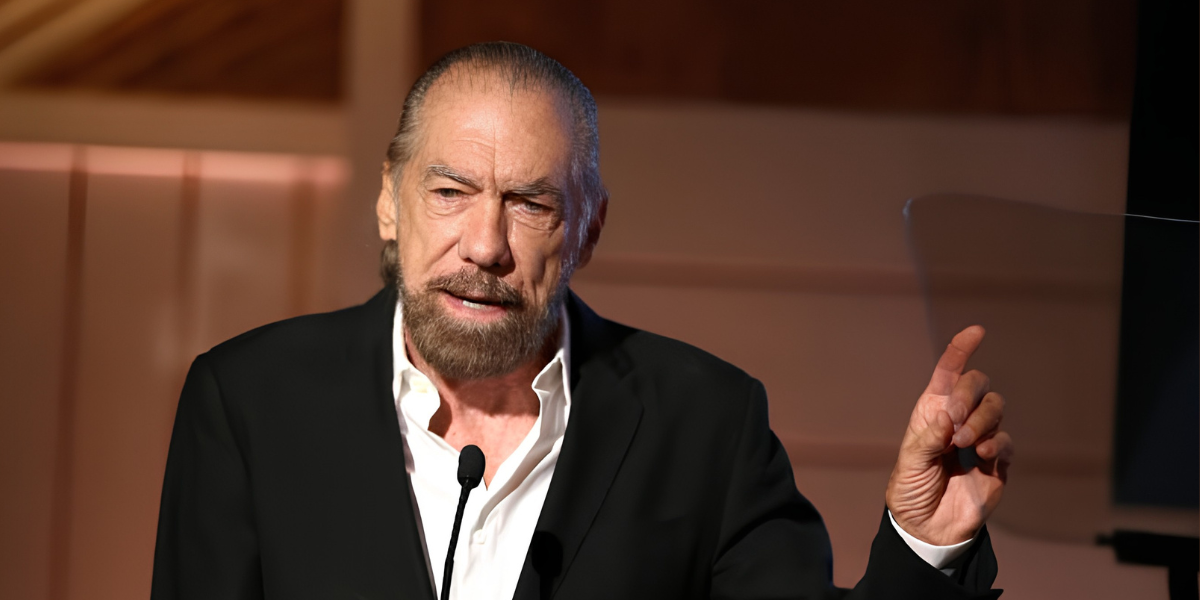
There’s a moment in John Paul DeJoria’s entrepreneurial story that says more about success than the billions that came later.
Paul Mitchell was two years old. DeJoria and his business partner had spent those first years fighting to keep the company alive. DeJoria had started the business after an expected investor pulled out, leaving him with only a few hundred dollars and, for a period, his car as his home.
Then, after two years of struggling, something remarkable happened.
They could pay their bills on time.
Not pay everything off. Not cash out. Not raise millions.
Just pay the bills when they were due—and have $2,000 each left over.
“I said, man, we made it now.”
Decades later, DeJoria would become the co-founder of two enormously successful consumer brands, John Paul Mitchell Systems and Patrón Tequila. But in a Forbes interview discussing his book Success Unshared Is Failure, he pointed back to that modest milestone as the moment he first felt like he had made it.
For early-stage entrepreneurs, there’s something important buried in that story: success looks very different when you’re building it than when everyone else is looking back at it.
Before the Billions Came Rejection
Long before Patrón commanded a multibillion-dollar valuation, DeJoria learned how to hear “no.”
He recalled selling encyclopedias door-to-door on commission with no leads. The job was straightforward and brutal: knock on doors and keep going when people rejected you.
His lesson from that experience eventually became one of his core principles for entrepreneurs:
“Be prepared in your life for a lot of rejection and don’t let it get you down.”
The important part wasn’t simply persistence. DeJoria said he tried to learn something each time a door closed or a presentation failed.
That distinction matters.
Entrepreneurial resilience shouldn’t mean blindly repeating something that isn’t working. It means surviving rejection long enough to learn from it.
Your first 10 prospects might say no. Your launch might underperform. An investor might walk away. A potential customer might tell you your product isn’t worth the price.
The founder who treats every rejection as a verdict eventually stops.
The founder who treats rejection as information can improve.
When the Money Disappears, the Business Still Has to Work
DeJoria had already experienced homelessness once in his early twenties when he found himself caring for his young son with little money and no stable home. He described collecting refundable soda bottles to generate some income before a friend eventually offered them somewhere to stay.
Years later, entrepreneurship brought him frighteningly close to the same circumstances.
When DeJoria started Paul Mitchell in 1980, he expected financial backing that never arrived. The investor pulled out, leaving the founders to figure out how to build the company without the capital they had expected.
The economic environment wasn’t exactly friendly either. DeJoria recalled high inflation, unemployment and interest rates during the period.
His response was not to wait for ideal conditions.
He started anyway.
That doesn’t mean founders should romanticize running out of money or sleeping in cars. It means the conditions surrounding a business will almost never be completely under the founder’s control.
The question becomes: What can you build with the resources you actually have—not the resources you expected to have?
Don’t Build a Selling Business. Build a Reorder Business.
Of all DeJoria’s advice in the interview, one idea may be especially useful for founders trying to find product-market fit:
“Do not go into the selling business. Go into the reorder business.”
It’s an unusually simple way to think about building a durable company.
Founders naturally obsess over acquisition: How do we get customers? What should the pitch say? Which marketing channel should we use?
DeJoria argues that the deeper question is what happens after somebody buys.
Is the product good enough that customers want it again?
For Paul Mitchell, he described creating products hairdressers liked enough to recommend to other people. The goal wasn’t simply completing the first transaction. It was creating enough value to generate another.
For an early-stage entrepreneur, that reframes the scoreboard.
Before obsessing over scaling acquisition, ask:
- Are customers returning?
- Are they recommending us?
- Would they notice if the product disappeared?
- Are we getting better at delivering what made them buy in the first place?
A brilliant funnel can create a first purchase. A great product creates the second.
Your Definition of “Making It” Will Keep Moving
Nine years after launching Paul Mitchell, DeJoria co-founded Patrón despite, as he described it, not knowing the tequila or alcohol industry.
Eventually, Patrón became valuable enough that a potential buyer asked what valuation would convince him to sell.
DeJoria said $5 billion.
They told him he was out of his mind.
So he declined.
According to DeJoria, they later returned with a valuation of $5.1 billion, and he agreed.
Yet after reaching a level of wealth that could have made retirement an easy decision, DeJoria kept building.
Why?
Because entrepreneurship itself mattered to him.
“I will never retire because I like what I do. I like who I do it with and the industry that I’m in.”
That’s a revealing lesson for entrepreneurs who imagine success primarily as an escape hatch.
If you hate the work required to reach your definition of success, the number in your bank account may not solve the underlying problem.
DeJoria repeatedly returned to happiness throughout the interview. His argument was straightforward: don’t choose a path solely because you believe it will make money. Find work you actually care about doing.
Success Isn’t Finished When You Win
DeJoria’s philosophy also challenges the traditional endpoint of the entrepreneurial story.
Build company. Make money. Exit.
For him, the next question is what you do with the success.
He discussed supporting programs for people experiencing homelessness, veterans, abused women and children, and people facing mental challenges. He also described helping create an entrepreneurship center where formerly homeless people could develop skills and sell what they made.
That philosophy sits behind the title of his book: Success Unshared Is Failure.
For a founder who hasn’t made millions—or even their first consistent $10,000 month—“giving back” can sound like a conversation for later.
DeJoria’s framing suggests otherwise.
Sharing success doesn’t have to begin with a giant check. It can mean sharing experience, opportunities, knowledge, connections or time.
The principle can exist before the fortune does.
The Door After “No”
John Paul DeJoria’s story is spectacular because of where it eventually went: Paul Mitchell, Patrón and billions of dollars in business success.
But those outcomes can obscure the part of his story that’s actually replicable.
He kept knocking.
He built products designed to earn another purchase.
He started despite losing expected funding.
He learned from rejection instead of allowing rejection to define him.
And even after reaching extraordinary financial success, he continued building because he enjoyed the work and believed success carried an obligation to help others.
DeJoria summed up the difference between people who succeed and those who don’t with a simple observation:
“Successful people do all the things unsuccessful people don’t want to do.”
For the wantrepreneur waiting for more money, a better economy, greater confidence or somebody else’s permission, that may be the most useful part of his story.
You don’t need to know whether your business will someday be worth billions.
You need to know whether you’re willing to knock on the next door after the first 50 close.
Manage for Good: Jeri Larsen’s Mission to Empower Scaling Businesses