How Brock Uses Claude AI to Run a Business With Just One Employee
The non-technical founder's blueprint for building an AI operating system instead of simply using another chatbot.
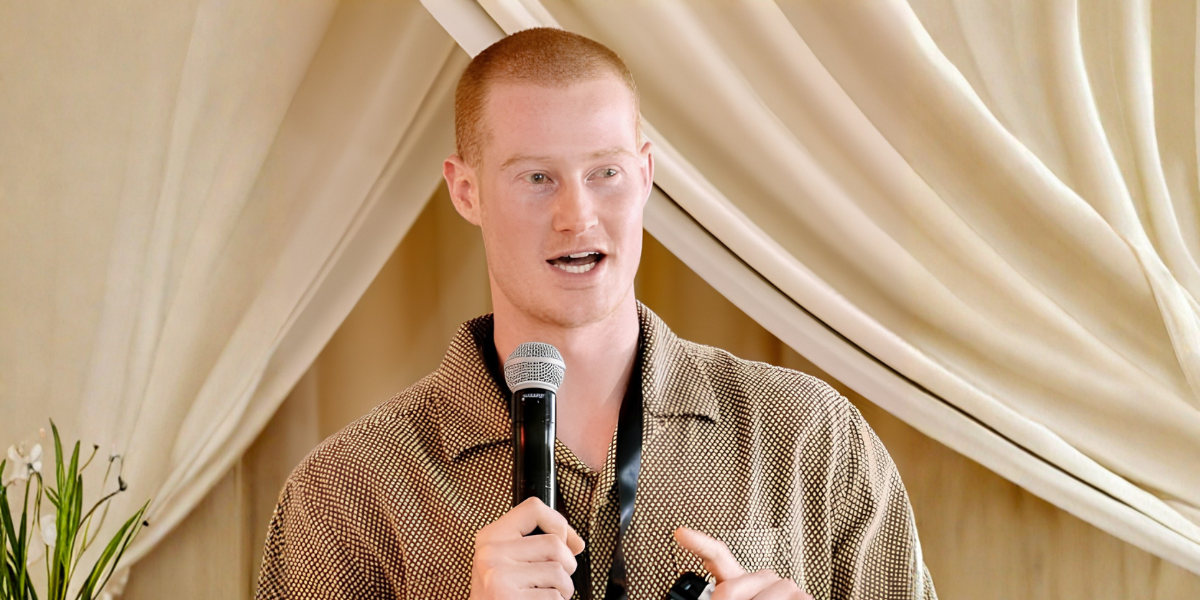
In an interview on The Callum Johnson Show, AI educator Brock shared how he transformed Claude from a simple chatbot into the operating system that powers nearly every aspect of his business. Despite having no software engineering background, Brock has built workflows that handle content creation, business operations, reporting, and daily planning—allowing him to run a profitable business with just one employee.
For many entrepreneurs, AI has become both the greatest opportunity and the biggest distraction.
Every week, there's another model, another feature, another "must-have" tool promising to transform your business. The result? Most founders spend more time learning AI than actually benefiting from it.
That was exactly where Brock found himself.
Despite running an online business teaching AI, he describes himself as "non-technical." He doesn't write code. He isn't a software engineer. And when terms like terminal, IDE, or MCP servers first appeared, they felt just as intimidating to him as they do to many entrepreneurs today.
Yet today, Brock runs nearly his entire business using Claude Co-Work—with just one human employee.
His story isn't really about mastering AI.
It's about building systems.
Being Non-Technical Became His Competitive Advantage
One of the most refreshing moments in the interview came when Brock explained why he intentionally teaches non-technical entrepreneurs.
"Being non-technical is kind of your superpower."
Instead of seeing technical knowledge as a requirement, he realized something important.
Most AI educators explain technology from an engineer's perspective.
Entrepreneurs don't need another engineer.
They need someone who understands business problems first.
That shift completely changed how Brock approached AI.
Rather than asking:
"What can Claude do?"
He started asking:
"What repetitive work can Claude eliminate?"
That subtle difference led him to build workflows instead of prompts.
Stop Chasing Better Prompts
Like many founders, Brock initially believed better prompting was the secret.
It wasn't.
Over time, he discovered that Claude became dramatically more useful when he stopped treating it like a chatbot and started treating it like a teammate.
Instead of writing long prompts every day, he built reusable systems.
Examples include:
- Instagram carousel creation
- PDF lead magnets
- Morning business briefings
- Competitive research
- Revenue dashboards
- Email prioritization
- Calendar summaries
- YouTube content workflows
The impressive part isn't simply that Claude performs these tasks.
It's that the instructions only need to be created once.
After that, they're reusable.
Build an AI Operating System, Not Random Conversations
Perhaps the biggest lesson from the interview is this:
Most entrepreneurs use AI conversationally.
Brock uses AI operationally.
Instead of opening Claude with a blank page every morning, he opens what he calls an operating system.
His dashboard automatically surfaces:
- Priority emails
- Calendar events
- Revenue progress
- Business goals
- Top three priorities
- Recent activity across connected apps
Rather than searching through Gmail, QuickBooks, Google Calendar, Stripe, Slack, and other software individually, Claude becomes the single interface for understanding the business.
That shift saves more than time.
It reduces mental clutter.
The Four Building Blocks of His Claude System
Throughout the interview, Brock repeatedly emphasizes that entrepreneurs don't need to learn everything at once.
His system builds layer by layer.
1. Claude MD: Teaching AI Who You Are
The first step is creating what Brock calls the "brain" of the workspace.
A Claude MD file stores:
- business context
- current projects
- communication preferences
- goals
- recurring instructions
Instead of repeating information every session, Claude gradually learns how you work.
Importantly, Brock doesn't expect it to be perfect immediately.
He continually updates it as his business evolves.
As he explains, the goal isn't perfection.
It's iteration.
2. Projects: Keep Context Organized
Rather than mixing everything together, Brock separates work into dedicated projects.
For example:
- YouTube
- Personal life
- Business
- Content creation
Each project develops its own memory and context.
That means Claude understands the audience, style, and objectives without needing to be reminded every conversation.
3. Skills: Repeat Great Work
This may be the most valuable idea from the interview.
A Skill is essentially a reusable workflow.
Instead of prompting Claude every time to create:
- Instagram carousels
- SOPs
- PDF guides
- Morning reports
- Meeting preparation
- Slide decks
...Brock simply types the Skill name.
Claude already knows exactly how the output should look.
One example he shared was particularly interesting.
He admired the design of The Almanack of Naval Ravikant.
Instead of copying it manually, he simply showed Claude the visual style and asked it to emulate that aesthetic in future PDF guides.
No complicated prompt engineering.
Just showing good examples.
As Brock explains:
"You don't need to be a prompt engineer anymore to get really good outputs."
4. Scheduled Tasks: Automation Without Complexity
Once Skills work reliably, Brock automates them.
His daily workflow includes:
- 7:00 AM morning briefing
- End-of-day summary
- Email scanning
- Calendar review
- Priority identification
Instead of configuring complicated automation software, Claude simply executes the Skill on schedule.
The workflow becomes:
Create → Refine → Automate
AI Isn't Replacing Employees. It's Replacing Friction.
Perhaps the most surprising moment came near the end of the conversation.
Brock revealed his business has only one employee:
A video editor.
Everything else—from lead magnets to dashboards to reporting—is handled by AI.
That's not because AI is perfect.
It's because repetitive work no longer requires constant human attention.
Instead of hiring additional people to manage operations, Brock built systems that eliminate unnecessary tasks altogether.
Don't Start With Automation
Many entrepreneurs make the same mistake.
They immediately try to automate everything.
Brock recommends the opposite.
His advice is surprisingly simple:
- Download the Claude desktop app.
- Create a workspace.
- Build a basic Claude MD file.
- Install one or two official Anthropic plugins.
- Create separate Projects.
- Build one simple Skill.
- Create one Live Artifact—perhaps a dashboard showing today's important emails.
Only after those pieces work should you begin scheduling automation.
It's a gradual process—not a weekend transformation.
The Hidden Lesson
Although the interview is framed around Claude Co-Work, the deeper lesson has very little to do with software.
Entrepreneurs often believe productivity comes from finding better tools.
Brock's experience suggests something different.
Productivity comes from reducing decisions.
When your priorities, emails, revenue, projects, and recurring workflows are surfaced automatically every morning, you spend less time deciding what to do next—and more time doing meaningful work.
As Brock put it near the end of the conversation, the biggest benefit isn't even the automation itself.
It's the clarity.
"I just feel so much more organized... I don't need to be working across all of my apps anymore."
For founders, that may be the greatest advantage AI can offer—not replacing creativity or judgment, but removing enough operational friction to let those qualities shine.
Key Takeaways for Entrepreneurs
If you're new to AI or feeling overwhelmed by the constant stream of new tools, Brock's approach offers a practical roadmap:
- Start with systems, not prompts.
- Teach AI about your business before expecting great results.
- Create reusable workflows instead of repeating instructions.
- Automate only after you've refined the process.
- Aim for clarity and consistency, not complexity.
In a world where new AI features appear almost daily, the entrepreneurs who gain the biggest advantage may not be those who try everything—they may simply be the ones who build a reliable operating system that quietly saves them hours every week.

Danny Meyer’s Entrepreneurial Playbook: Turn Mistakes Into an Advantage