How GT Dave Built GT’s Kombucha by Protecting the Soul of the Product
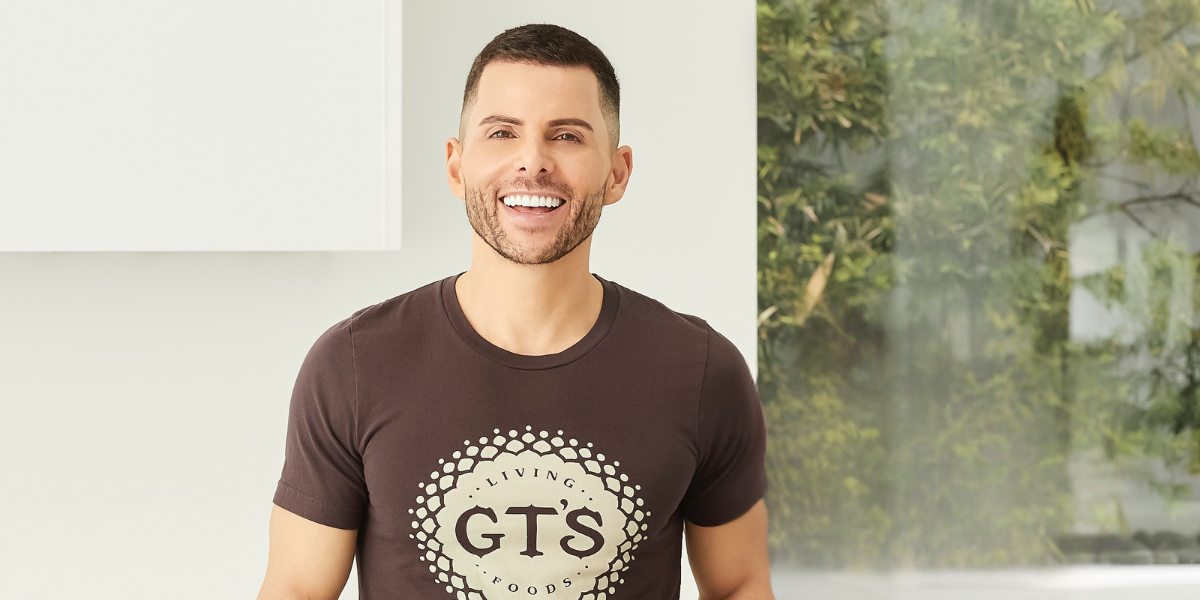
In today’s startup culture, founders are often told to move fast, scale aggressively, and optimize everything.
GT Dave did the opposite.
Long before kombucha became a wellness staple at Whole Foods or a refrigerator essential for health-conscious consumers, Dave was a teenager brewing fermented tea in his parents’ dining room in Los Angeles. There were no investors, no market research decks, and no startup accelerators guiding him.
There was only one belief:
“I want it to be life-changing. I want it to nourish and heal.”
That philosophy would eventually build GT’s Living Foods into one of the most recognizable kombucha brands in the world—without abandoning the principles that inspired it in the first place.
In a wide-ranging conversation on Tetragrammaton with Rick Rubin, GT Dave reflected on the emotional origins of GT’s Kombucha, the near-collapse of the category in 2010, and the tension every founder faces between growth and integrity.
The Moment That Changed Everything
GT Dave didn’t discover kombucha through a business opportunity.
He discovered it through his mother’s cancer diagnosis.
Raised by holistic, vegetarian parents in Los Angeles, Dave grew up surrounded by alternative wellness practices—from wheatgrass and tofu to aloe vera juice. But kombucha stood out because of what happened after his parents started drinking it regularly.
A few years later, Dave’s mother was diagnosed with an aggressive breast cancer tumor. Initially, doctors feared it had spread throughout her body.
Then came unexpected news: it hadn’t metastasized.
According to Dave, her doctors asked what she was doing differently. Her answer included exercise, vegetarianism, and the “pungent tasting tea” she’d been drinking for years.
For Dave, that became a defining entrepreneurial moment.
Not because he suddenly saw a business opportunity—but because he saw purpose.
At the same time, he was struggling personally as a gay teenager in 1990s Los Angeles, dealing with bullying and isolation. Kombucha became more than a beverage. It became a mission and a direction for his life.
That combination—personal pain mixed with meaning—is often where enduring companies are born.
GT Dave Didn’t Start With a Business Plan
One of the most striking parts of Dave’s story is how little traditional entrepreneurship thinking was involved in the beginning.
He admits he didn’t even know the word “entrepreneur.”
Instead of pitch decks and projections, he approached Erewhon (then a small natural foods store) with homemade bottles of kombucha and a simple conviction that people could benefit from it.
The store agreed to carry it almost immediately.
His first order?
Just 24 bottles.
Dave fermented them by hand in his parents’ dining room with blacked-out windows, warm temperatures, and total silence to protect the fermentation process.
He personally polished every bottle before placing them on shelves.
That level of care wasn’t branding theater. It reflected how he viewed the product itself.
“What you’re selling is the soul.”
That mindset shaped every decision that followed.
Why GT Dave Refused to “Scale Like Everyone Else”
As GT’s Kombucha grew, advisors pushed Dave toward more conventional business strategies:
- Use plastic instead of glass
- Shorten fermentation times
- Remove sediment from the bottles
- Pasteurize the product for stability
- Increase shelf life
- Simplify production
From a business standpoint, most of the advice made sense.
From Dave’s perspective, it would have destroyed the product.
He believed kombucha had to remain raw and alive to retain its benefits. Pasteurization, in his view, stripped away the very thing that made it meaningful.
This conviction became even stronger after watching juice pioneer Odwalla suffer a devastating contamination crisis in the 1990s. Dave saw how fear around raw foods pushed companies toward safer—but less authentic—products.
Rather than compromise, he doubled down on his philosophy.
That decision became one of GT’s greatest competitive advantages.
While competitors optimized for convenience and scale, GT’s became synonymous with authenticity.
The Hidden Cost of Staying Authentic
Entrepreneurs often romanticize “staying true to the mission.”
What’s less discussed is how expensive that choice can become.
Dave’s production process remains intentionally inefficient by modern beverage standards.
GT’s kombucha still ferments in small four-gallon batches. The company dedicates massive amounts of facility space purely to fermentation. Products require refrigeration throughout the supply chain. Shelf life is limited.
Those choices create operational friction everywhere:
- Higher shipping costs
- More complex logistics
- Retail inventory challenges
- Slower scaling
- Lower margins
But Dave believes convenience culture is pushing wellness products in the wrong direction.
He argues consumers increasingly prioritize:
- low sugar numbers,
- instant gratification,
- long shelf life,
- and portability,
while ignoring whether products are genuinely “alive.”
His philosophy is simple:
“Don’t underestimate the importance of living versus dead.”
That belief still guides GT’s product development three decades later.
The 2010 Crisis That Nearly Destroyed Kombucha
Every founder eventually faces a moment where the entire company feels at risk.
For GT Dave, that moment arrived in 2010.
As kombucha exploded in popularity, regulators began scrutinizing alcohol content in fermented beverages. Some kombucha products were testing above the legal non-alcoholic threshold of 0.5% ABV.
Retailers—including Whole Foods—pulled kombucha from shelves nationwide.
Suddenly, the entire category was under threat.
Dave initially considered walking away entirely rather than changing his process.
But then he watched competitors rush back to market with diluted, compromised versions of kombucha.
That changed his thinking.
Instead of abandoning the category, he adjusted shelf life and fermentation management while trying to preserve the integrity of the product itself.
It was a critical entrepreneurial lesson:
Sometimes protecting your mission requires adaptation—not stubbornness.
GT Dave’s Real Competitive Advantage Wasn’t Kombucha
It was conviction.
Over and over throughout the interview, Dave returns to the same core principle:
He never built the company around maximizing growth.
He built it around preserving meaning.
Ironically, that became the reason the business grew.
In an era where founders often optimize for valuation before product quality, GT’s success offers a different blueprint:
- Obsess over the product
- Stay emotionally connected to the mission
- Build slowly enough to maintain integrity
- Don’t outsource your standards
- Let authenticity become your marketing
That doesn’t mean growth doesn’t matter.
Today, GT’s Living Foods employs over 1,100 people and operates nationally.
But Dave still personally taste-tests batches and remains deeply involved in production.
Because for him, the company was never just about kombucha.
It was about protecting the original intention behind it.
And after 30 years, that intention still resonates.
The Aelos Advantage: Simplifying International Moves with AI