How Notion Became Patricia Ballivian’s Secret Weapon for Seamless Operations
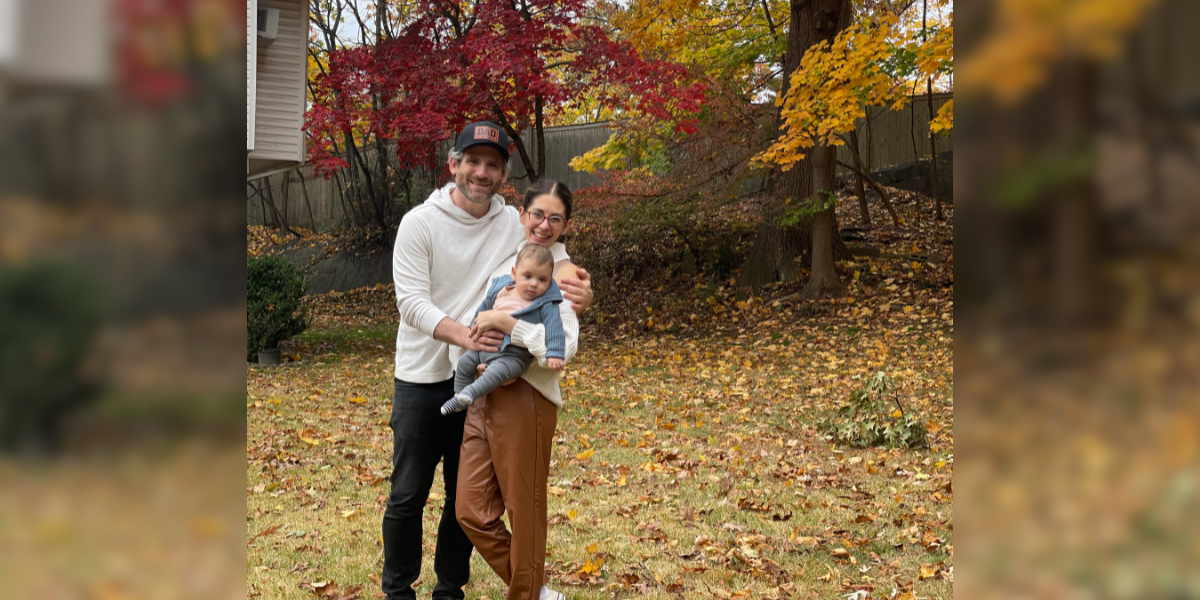
Navigating the complexities of entrepreneurship, Patricia Ballivian founded Altura Strategies to help businesses align their people, systems, and operations for sustainable growth. In this Wantrepreneur to Entrepreneur Spotlight, Patricia shares how her maternity leave became the unexpected catalyst for her entrepreneurial leap. Her journey from spotting red flags in corporate settings to building a people-centered consultancy highlights the power of alignment and adaptability. With tools like Notion and a commitment to continuous learning, Patricia’s story is a testament to building a business that supports both professional and personal aspirations.
Hi, Patricia! Thanks for joining us today. Tell us about your business. Who do you serve, how do you serve them, and what's the impact that your business and work makes?
I started Altura Strategies to help founders and their teams create alignment across the people, systems, and operations of their businesses.
I begin by understanding how the business actually operates day to day, identifying sources of friction, and designing & implement solutions around how that specific business and team work.
The impact is stronger foundations, clear processes and systems geared for sustainable growth, with people at the center as the key enablers of strategy.
Tell us about the moment you finally felt like you went from wantrepreneur to entrepreneur.
Altura Strategies started taking shape while I was on maternity leave. Raising a baby with my partner felt surprisingly familiar: we were a new team with different strengths and needs, working toward a common goal. I found myself doing what I had always loved most in my career—finding the connecting points, adapting our systems around the people using them, and seeing measurable improvements. At the time, those KPIs were mostly measured in hours of sleep.
Describe the moment or period in your life/career that motivated you to make the entrepreneurial leap.
The actual push came after a bad interview. I could see the red flags: overcomplicated systems, unrealistic goals, and growth plans that didn't seem to account for the people expected to execute them. I had seen versions of that throughout my career and knew there was a better way.
That was the moment I thought: I can do this better.I can help businesses build for results and growth without losing the people who make either possible. And that became Altura.
Describe a tool, service, or software that has been a game-changer for your business. How does it contribute to your success?
Notion has been a game-changer for me because it allows me to essentially download my brain into a flexible operating system. I can connect the different areas of my business—and even my creative and personal worlds—in one place, without overcomplicating my back-of-house operations.
I love that it can adapt and expand as my needs change. I need something that can hold my processes, databases, projects, ideas, resources, and external tools together while letting me build around how I actually work.
It's intuitive, budget-friendly, and flexible enough to grow with me—which is also something I fundamentally believe about good systems: they should adapt to the people using them, not the other way around.
We know that success is very often a non-linear path. Tell us about a failure, pivot point, or lesson that changed your course or direction and helped to get you where you are today.
One of the biggest lessons of my career has been realizing that you can't separate a KPI from the people responsible for achieving it and whether the team is truly enabled to do the work.
COVID exposed some of the uglier sides of large corporate environments for me. Later, working with startups helped me understand how businesses could get there in the first place. Growth, revenue and ambitious goals matter—I want those things too—but when they become disconnected from the people expected to execute the vision, the foundation starts to crack.
I also learned the opposite from some of the best leaders I've worked with. They shared knowledge freely, brought their teams into the bigger picture, and made sure people understood not just what they were doing, but why. I saw how much stronger teams and businesses became as a result.
That changed how I approach operations: systems should be designed around the people who use them. Strategy needs people to execute it, systems need people to use them, and businesses need alignment between these two.
What unconventional strategy did you employ that significantly impacted your business?
When planning my return from maternity leave, I saw two paths: One was familiar and safer; the other was riskier, unknown...and impossible to ignore.
The safer path was reasonable: find a stable job, secure the paycheck, and freelance on the side. I had very real, immediate reasons to do exactly that. But for the first time, I forced myself to zoom out and approach my own business with the same belief, strategy, and commitment I had spent years giving to other people's businesses.
Choosing Altura meant making decisions without losing sight of what I'm building for the long term—or allowing today's solution to undermine my most important project: my family.
I've also never pretended I could build it alone. I've shared iterations with friends and mentors, asked for advice, leaned heavily on my partner, and more recently started building publicly. I don't know everything, and becoming a founder means being willing to keep learning too.
So maybe the unconventional strategy is simple: I stopped treating my own vision like a side project.
What’s something you wish you knew sooner that you’d give as advice for aspiring or newer entrepreneurs?
Get the idea out of your head.
Find someone you trust and say, “I think I want to…” That first conversation is action. Once the idea exists outside of your head, it can start taking shape.
It will change. The first version might look nothing like what you eventually build—and that's okay. Listen, learn, ask for help, test things, change your mind. It's yours, so ultimately you get to make the final GO/NO-GO decision.
What's the worst that can happen? The alternative is letting the idea continue to live only in your head.
I wish I had taken that first step sooner (I needed the sleep!)
Want to dive deeper into Patricia's work? Check out the links below!
- Visit Altura Strategies' website: alturastrategies.net/
- Follow Altura Strategies on Instagram: @alturastrategies
- Connect with Patricia Ballivian on LinkedIn: Patricia Ballivian
Junior Innovators: Micah Alexander's Bold Vision for High School Entrepreneurship