Lovable Co-Founder Anton Osika: How to Build a Profitable AI Business Without Coding

What if the biggest obstacle to starting a business wasn't your technical ability anymore, but your ability to recognize a problem worth solving?
For decades, aspiring entrepreneurs faced an uncomfortable reality: having a great software idea was relatively easy. Building it was expensive, technically intimidating, and often required hiring developers before earning a single dollar.
That equation is changing.
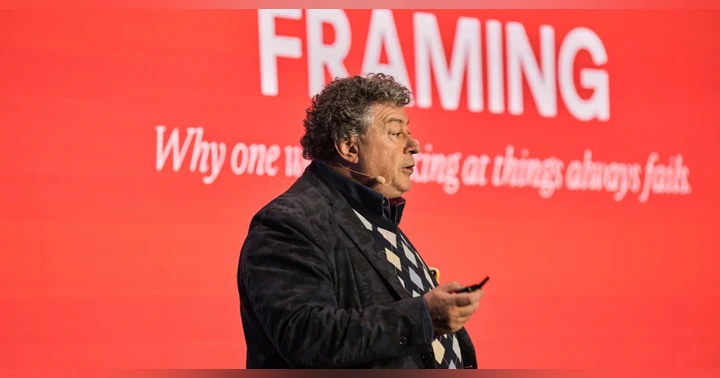
Anton Osika, co-founder of AI-powered app-building platform Lovable, believes we're entering an era where entrepreneurs can turn ideas into working products without traditional programming expertise.
In a conversation with Marina Mogilko on Silicon Valley Girl, Osika shared how AI is reshaping entrepreneurship, why the best business opportunities often come from everyday frustrations, and how founders can validate their ideas before investing significant resources.
With Lovable described in the interview as a $13 billion company, the conversation offers a compelling look at what happens when the technical barriers to building software begin to disappear.
But Osika's most important message wasn't about artificial intelligence. It was about what entrepreneurs must do with their newfound ability to build.
1. The Next Great Entrepreneur Might Be Someone Who Knows Nothing About Coding
One of Osika's most revealing observations came from Lovable's own customer data.
According to Osika, the platform's users have an average of 11 years of professional experience.
That detail challenges the popular image of startup founders as young programmers working late nights in Silicon Valley.
Instead, many emerging entrepreneurs are experienced professionals who have spent years encountering problems in their industries.
They understand inefficient workflows, underserved customers, and frustrating systems because they've lived with them.
Previously, their inability to develop software prevented them from addressing those problems independently.
Now, AI-powered development tools are changing that.
Osika explained:
"Now the person who's closest to the problem, they can actually go out and solve that problem."
The entrepreneurial opportunity: Your professional experience might be more valuable than learning to code.
If you've spent years managing customer complaints, coordinating schedules, preparing reports, or navigating inefficient business processes, you already possess something important: firsthand knowledge of problems people might pay to solve.
The next step is identifying which frustrations are painful enough to justify a solution.
2. Stop Trying to Invent Something Nobody Has Seen Before
Many wantrepreneurs become trapped by the belief that a successful startup must introduce something revolutionary.
Osika disagrees.
He argues that entrepreneurs don't necessarily need completely original inventions. Sometimes the better opportunity is improving an existing service or making it accessible to customers who haven't adopted current solutions.
Consider grocery delivery, household services, or personalized customer experiences.
These industries already exist. But that doesn't mean every customer is satisfied.
A founder who understands a particular audience may create a more compelling experience by combining existing technologies with better service.
One example from the conversation was Surrealism World, a business that transforms customers' dog photos into artwork.
Mogilko questioned why customers would pay for something potentially achievable through a simple AI image-generation prompt.
Osika's answer revealed an important distinction.
The founder, Damian, wasn't simply generating digital pictures. He combined AI-generated imagery with a website, payment processing, marketing, and the delivery of physical portraits.
The interview cited approximately $300,000 in monthly revenue for the business.
The lesson isn't that everyone should start an AI pet portrait company.
It's that customers often pay for a complete experience, not just the technology behind it.
3. Validate Your AI Business Idea with 10 Potential Customers
AI makes launching a prototype easier. Unfortunately, it doesn't automatically create demand.
Osika recommends a straightforward approach to discovering whether an idea has commercial potential: talk to 10 prospective customers.
Not 10 friends offering encouragement.
Ten people who genuinely experience the problem you're attempting to solve.
Ask what frustrates them, what they've tried, how they're currently managing the problem, and what would make a better solution valuable.
Then comes the critical test.
Can you convince at least one person to pay?
Osika emphasized:
"It's only if they actually pay that you know that this is something they really care about."
Free users can provide useful feedback, but payment offers stronger evidence that someone values your solution.
Osika also encourages founders to avoid making their products unnecessarily cheap merely to generate early adoption.
Actionable takeaway: Before polishing your landing page or creating dozens of features, have 10 customer conversations and attempt to secure your first paying customer.
That single transaction might teach you more than weeks of speculative product development.
4. Build Small, Test Quickly, and Resist Overengineering
During the interview, Osika demonstrated how Lovable could build a practical business application from conversational instructions.
The challenge was familiar to many entrepreneurs: managing an overwhelming number of inbound business opportunities.
Together, Osika and Mogilko outlined a system that could collect partnership inquiries, organize opportunities, use AI to assess their relevance, and propose responses.
Rather than attempt to automate every workflow immediately, Osika recommended beginning with a manageable version.
He explained:
"You want to iterate towards perfection."
His advice was to perform work manually first, understand the process, and then divide automation into smaller pieces that could be tested independently.
This approach matters because complicated automation can fail when even one small component behaves unexpectedly.
During the demonstration, they refined the application's appearance, tested its submission and email functions, and requested a security scan.
The larger principle applies far beyond Lovable.
Build the smallest solution that delivers genuine value, verify that it works, and improve it based on real usage.
An imperfect tool that solves a customer problem is more useful than an elaborate product nobody needs.
5. AI Is Making Creativity More Valuable, Not Less
For years, startup advice emphasized that execution mattered more than ideas.
After all, almost anyone could imagine a useful application. Relatively few people could build one successfully.
But what happens when AI dramatically reduces the difficulty of execution?
Osika believes the competitive equation begins to change.
"I think the creativity is the biggest differentiator as the execution becomes easier."
This doesn't mean execution has become irrelevant.
It means the ability to identify overlooked problems, combine existing technologies, and create experiences people genuinely want becomes increasingly important.
Importantly, Osika doesn't describe creativity as an exclusive talent possessed by visionary founders.
He believes creativity develops through experimentation.
Build something. Test it. Learn what doesn't work. Adjust your thinking. Try again.
Each iteration helps entrepreneurs sharpen their judgment.
For aspiring founders, that's encouraging news.
You don't need to wait for a once-in-a-lifetime idea.
You can become a better entrepreneur by repeatedly putting small ideas into the real world.
6. Don't Confuse Your First Sale with Product-Market Fit
Securing a paying customer is an important milestone.
But Osika warns that an initial purchase doesn't necessarily establish a sustainable business.
Customers might buy because they're curious, excited by something new, or personally enthusiastic about supporting the founder.
The more meaningful question is whether they continue receiving value.
Do they return? Do they keep paying? Do they recommend the product?
Osika outlined a progression: identify a problem, find people willing to pay for a solution, confirm they continue using and paying for it, and then determine how to reach more customers like them.
That repeat behavior can provide stronger evidence of product-market fit.
Only then should founders concentrate heavily on scaling distribution.
His advice also reframes marketing.
Instead of assuming every business needs to follow the latest social media trend, entrepreneurs should understand where their ideal customers discover products and what motivates their decisions.
The goal isn't simply to attract attention. It's to build something valuable enough that customers want to stay.
7. The Future Belongs to Entrepreneurs Who Understand Customers
Perhaps the most significant takeaway from Osika's conversation is that AI changes the economics of starting a business without changing the fundamental purpose of entrepreneurship.
Entrepreneurs still need to solve meaningful problems.
They still need customers.
They still need to communicate value, earn trust, and deliver results.
What changes is how quickly they can move from identifying an opportunity to testing a solution.
For wantrepreneurs who have delayed launching because they lack technical skills, substantial funding, or a development team, that creates a powerful opening.
Start with a frustration you understand. Speak with people who share it. Build a small solution. Charge for it. Learn from customers. Improve what works.
The hardest part of entrepreneurship may no longer be getting your first product built.
It may be having the curiosity to recognize an opportunity — and the courage to discover whether anyone will pay for it.
The bottom line: You don't need to become a software engineer to start exploring software-based entrepreneurship. But you do need to become exceptionally good at understanding the people you're trying to serve.
And that has always been the foundation of a great business.

Unlocking Leadership Potential: Rachel Honoway’s Blueprint for Transformative Success