The Secret to Engaging Lectures: Inside William McCumber’s Innovative Approach
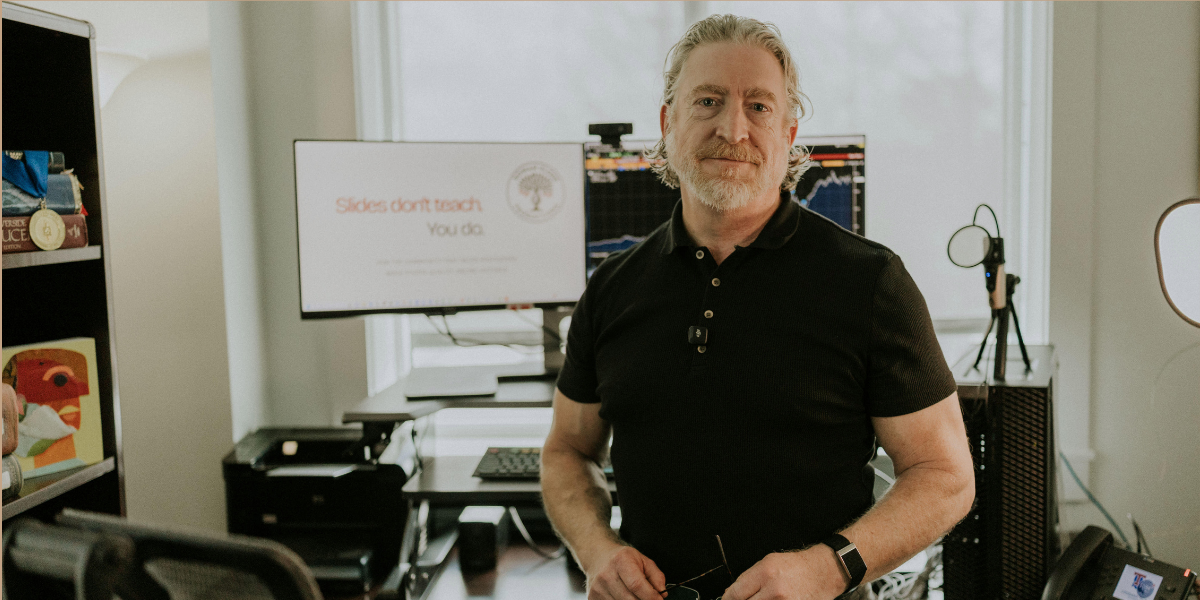
In the evolving landscape of online education, William McCumber saw a pressing need and turned it into Rowan Elder Productions, empowering educators to transform their lectures with studio-quality finesse. This Wantrepreneur to Entrepreneur Spotlight highlights William's journey from academic curiosity to entrepreneurial action, driven by the chaos of COVID and the digital revolution. His candid reflections on embracing failure and defying conventional norms offer profound lessons. Discover how William's vision is reshaping education—moving it from mere information delivery to a dynamic, knowledge-building experience that truly engages students and faculty alike.
Hi, William! Thanks for joining us today. Tell us about your business. Who do you serve, how do you serve them, and what's the impact that your business and work makes?
Rowan Elder Productions helps professors, lecturers, adjuncts, and PhD candidates create studio-quality online lectures that allow them to really shine online, deliver their cutting-edge knowledge in an engaging manner, and dramatically improve the student (and professorial!) experience. Our programs are asynchronous, allowing faculty to progress as their schedules allow, using tools and software they already have. The impact is enormous - faculty expertise is brought to the fore, professors build a workflow that is reusable and saves many hours of prep time, and the output they create is reused across courses and sections over time. Most importantly, the entire classroom (and educational) experience changes. When foundational concepts are moved and taught online, classroom time changes from introducing basic material to building on that material. In other words, education moves from "information delivery" to the formation of true, applicable, complex, human-enhanced knowledge.
Tell us about the moment you finally felt like you went from wantrepreneur to entrepreneur.
Which time? With regard to Rowan Elder, I think it was an accumulation of student testimonials, thanks, and measurable outcomes that finally made me think, "Wait. Other professors will want this, too." I'd already wrestled with the why and "how-to" for years to create my workflow. Rowan Elder spares other willing faculty from the time, pain, and repeated failures of the "figure it out" process.
Describe the moment or period in your life/career that motivated you to make the entrepreneurial leap.
I think many faculty members are inherently entrepreneurial. We try new things in the classroom. We build new tools, processes, and materials. By definition, our research is cutting edge (or it won't be published, which means we're not professors anymore). That said, I think only a subset of these good people have the wiring to look beyond the relatively safe and comfortable world of academia and to take risks outside of our immediate domains. The fear of failure is ubiquitous, but at the same time, who cares? No one builds anything without constant failure. If you can get comfortable with failure and use it as data, you improve. Entrepreneurs simply fail more and better than those who either never try or stop trying.
Describe a tool, service, or software that has been a game-changer for your business. How does it contribute to your success?
I don't have a specific tool or software recommendation per se. I mean, without things like OBS, Premiere Pro (or similar), etc. I wouldn't be doing this, exactly, but these tools have been around for decades. I will say, however, that AI has made it possible to accelerate the building processes exponentially. If used properly, AI (broadly speaking) helps by collapsing the "I don't know what I don't know" problem that all of us face, allows us to focus where we are providing real societal value (our core competencies that are uniquely human), and automate some processes that used to require a team. The old joke of running a business is that you are CEO and head janitor. Yep. But AI can fill in some of the gaps of knowledge and processes that would have slowed us down. That keeps costs lower during startup, at least until we get to the point where we need to hand off non-core processes to people who know those things better.
We know that success is very often a non-linear path. Tell us about a failure, pivot point, or lesson that changed your course or direction and helped to get you where you are today.
I had been teaching online and creating online lectures for in-person classes (usually as review material or supplements) for years. It was (and is) enormously fun, creative, and gratifying work. In the back of my head were things like, "I should start a podcast. That looks fun." Or, "what if we filmed and put our TTRPG games online?" (That second one seemed crazy, but Critical Role is proof otherwise.) And then two things happened. COVID hit and we were all driven online. Literally overnight. No support. No training. No direction. The results - for teachers and for students - were predicable and terrible. While still dealing with COVID overhang, AI came to the classroom. Panic ensued (and continues). The punch in the face with those two things moved me from "something studio-related someday" to NO. WE NEED THIS. NOW. Not three years from now. Three years AGO.
What unconventional strategy did you employ that significantly impacted your business?
I'm not sure this is terribly unconventional, but a strategy of (respectfully, and patiently) calling out what higher education knows to be broken drove the process that led me to provide some partial solution to a much larger problem. So, broadly - admitting there was a problem was the first step to finding solutions. Being able to assess your own mess clinically, with dry eyes, is not something most people are willing and able to do. It's uncomfortable, but necessary.
What’s something you wish you knew sooner that you’d give as advice for aspiring or newer entrepreneurs?
I wish I knew that we are all so beholden to others' programming and biases, and that's possible to break from those thought patterns and expectations. The "YOU SHOULD" or "YOU NEED TO..." is about them, not you. And the "YEAH, BUT..." pushback shows the limits of their thinking, not what is possible beyond it. Smile, say thank you, and do it anyway.
Want to dive deeper into William's work? Check out the links below!
- Visit Rowan Elder Productions's website: rowanelder.com/
- Learn more about Rowan Elder Production here.
- Connect with William on LinkedIn: William McCumber
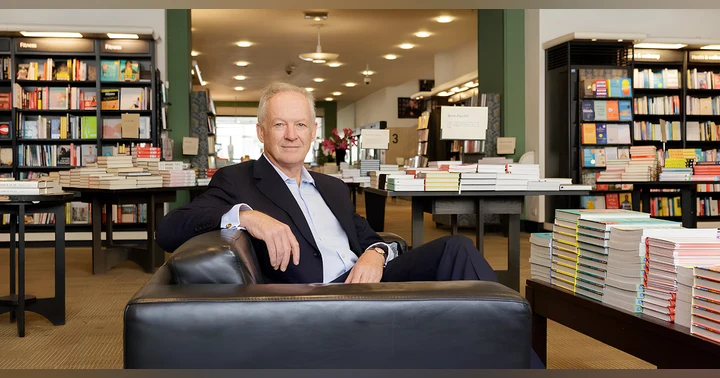
How James Daunt Turned Around Barnes & Noble by Giving Up Control