Alexandr Wang on Building Meta’s Muse: 7 Lessons Every Entrepreneur Can Learn About AI, Leadership, and Growth
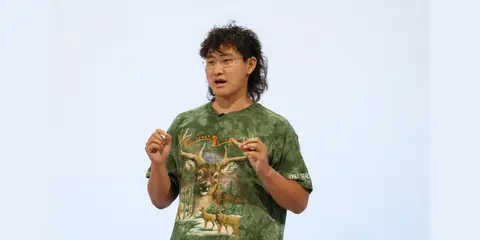
What happens when a founder who spent nine years building an AI company walks away from the business he considered his life's work to help Mark Zuckerberg reinvent Meta's future?
For Alexandr Wang, the transition from Scale AI to Meta wasn't simply a career move. It was an opportunity to rethink how great products are built, how exceptional teams operate, and what artificial intelligence could ultimately make possible for billions of people.
In a wide-ranging interview on The Peter C. Ceterra Show, Wang discussed the creation of Meta's personal AI agent, Muse, his evolving relationship with Mark Zuckerberg, and the leadership lessons he learned moving from startup founder to leader of a major AI research organization.
Behind the ambitious technology is a collection of surprisingly practical lessons for entrepreneurs at every stage.
Here are seven worth paying attention to.
1. Great Products Start With a Clear Conviction, Not a Trend
When Meta began developing what would become Muse, the AI industry's attention was largely focused on coding agents.
Competitors were racing to build increasingly sophisticated tools for software developers. Wang and his colleagues saw a different opportunity: personal AI agents that could help everyday people accomplish meaningful things.
The inspiration came partly from experimenting with OpenClaw, an early agent platform that produced moments of remarkable capability alongside frustrating unreliability.
Wang and Nat Friedman became convinced that personal agents represented something much bigger than another productivity tool.
They quickly developed a prototype and presented it to Meta's board within approximately one to two weeks.
But the conviction behind Muse wasn't based on following competitors. It came from a belief that Meta's history of connecting people and helping them pursue their interests made personal AI a natural direction.
The entrepreneurial lesson: Don't confuse market excitement with market opportunity.
When everyone is competing to solve the same problem, ask whether your company has an advantage in solving a different one.
Your strongest business opportunity may emerge where your unique capabilities intersect with an overlooked customer need.
2. The Difference Between an Impressive Prototype and a Great Product Is Relentless Execution
Muse's initial prototype came together in weeks.
Turning it into a reliable consumer product took approximately seven months.
That difference reveals one of the most important realities of entrepreneurship: building something impressive once is very different from building something that works consistently for customers.
Wang described how the team created a detailed spreadsheet containing more than 100 specific capabilities the AI model needed to demonstrate.
Each capability had measurable performance thresholds.
The team repeatedly tested, evaluated, and improved the system until its performance met their requirements.
At times, a model performed well on 80 capabilities while falling short on 20. That wasn't good enough.
The team continued refining the experience until it reached the quality level they believed was necessary for launch.
"We really like took quite a bit of time to sweat all the details before ultimately coming out the product."
For startup founders, this distinction is critical.
Early customer excitement can validate potential, but long-term adoption depends on consistency.
Try this in your business: Identify the five customer experiences that most directly determine whether someone continues using your product. Define what success looks like for each, measure them, and improve them systematically.
Great products aren't built exclusively through inspiration. They're built through disciplined iteration.
3. Small, Exceptional Teams Can Outperform Large Organizations
Perhaps one of the most surprising details from Wang's interview was the size of the Muse development team.
Despite Meta's enormous resources, fewer than 200 people worked across the product and model development efforts.
Wang explained that keeping the team focused was intentional.
He believed Muse needed to feel like a cohesive product rather than a collection of disconnected features contributed by different departments.
Large organizations can unintentionally create products shaped by competing priorities. Every team wants its ideas included, and the result can become confusing for customers.
Muse's development emphasized a unified perspective.
Wang credited Nat Friedman's product judgment as particularly influential in shaping that experience.
For entrepreneurs, the takeaway isn't that every company needs a tiny team.
It's that adding people doesn't automatically add clarity, creativity, or speed.
Sometimes a smaller group of highly capable people with a shared vision can execute more effectively than a much larger organization.
Before making your next hire, ask whether the role will remove a genuine bottleneck or simply introduce another layer of coordination.
4. Mark Zuckerberg's Leadership Offers a Lesson in Patience and Calculated Risk
Wang's account of working with Mark Zuckerberg reveals an interesting combination of seemingly contradictory leadership traits.
Zuckerberg is willing to take enormous strategic risks, yet he's also prepared to spend months refining a product before releasing it.
According to Wang, Meta faced considerable skepticism about its AI investments while Muse was being developed.
Nevertheless, Zuckerberg supported the team's approach.
Wang also emphasized Zuckerberg's willingness to seek advice from other entrepreneurs, even after achieving extraordinary success.
One of Wang's observations stood out:
"I think he really has internalized that failure doesn't matter. It matters like when you win, how big you win."
That philosophy changes how entrepreneurs evaluate decisions.
Instead of trying to avoid every possible failure, leaders can consider whether the potential upside justifies a thoughtful risk.
Of course, Meta's financial resources give it room to make bets that most startups cannot afford.
But the underlying principle remains valuable.
Be selective about the risks you take, then commit enough time and attention to give your best ideas a meaningful chance of succeeding.
The goal isn't reckless ambition. It's conviction backed by disciplined execution.
5. Your Customers Don't Care About Your Technology. They Care About What It Does for Them.
When Muse launched, Wang became unusually active on social media, sharing memes, user stories, and examples of what people could accomplish with the product.
His approach wasn't built around technical specifications or elaborate explanations of Meta's AI research.
Instead, he focused on outcomes.
Wang repeatedly returned to one simple question:
"Why would someone care?"
It's a question every entrepreneur should ask before publishing a marketing campaign, writing a sales page, or launching a new feature.
Customers rarely buy something because its creator worked exceptionally hard on it.
They buy because it makes their lives better.
The interview included an example of someone reportedly using Muse to coordinate the retrieval of an identification document left on an aircraft.
The story illustrated a capability far more effectively than a list of technical features could.
Wang also emphasized how screenshots of useful product experiences could spread naturally through group chats and online communities.
The lesson: Show the transformation, not just the technology.
If you're marketing an AI product, don't lead with how advanced its model is. Show the frustrating task it eliminates, the valuable outcome it creates, or the time it gives back.
And if you're building any other kind of business, the same principle applies.
Your strongest marketing often begins with a customer saying, "Look what this helped me do."
6. The Best Leaders Eventually Stop Trying to Do Everything Themselves
One of Wang's most revealing reflections concerned how his leadership style changed between Scale AI and Meta.
At Scale AI, he believed an effective founder needed to understand and participate in virtually every part of the organization.
That approach helped shape the company around his vision.
But it also created a significant limitation: Wang himself became a bottleneck.
At Meta, his responsibilities demanded a different approach.
He couldn't personally perform every role within a frontier AI research organization. Instead, his focus shifted toward recruiting exceptional talent, establishing direction, and creating the conditions for people to do their best work.
He described himself more as a coach than the author of every decision.
His organizational philosophy emphasized minimal bureaucracy, technical autonomy, and high talent density.
At the time of the interview, Wang said he had more than 200 direct reports, with technical leaders coordinating work across specialized teams.
It's an unconventional structure, and certainly not a model every startup should copy.
But the broader leadership principle matters.
Early-stage founders often win through personal involvement. Scaling founders must learn to win through other people's capabilities.
Ask yourself: What decisions am I still making that someone on my team could make better?
The answer may reveal your company's next opportunity for growth.
7. AI Could Make Entrepreneurship Accessible to Far More People
Perhaps the most inspiring part of Wang's interview wasn't about Meta, Muse, or business strategy.
It was about human ambition.
Wang believes personal AI agents could fundamentally change the relationship between what people dream of accomplishing and what they can realistically execute.
He argued that people begin life with enormous aspirations but gradually become constrained by obligations, administrative work, and the practical friction of everyday life.
Personal agents, in his vision, could remove some of those barriers.
"I think Muse can give everyone the adulthood they dreamed of in childhood."
For wantrepreneurs, this possibility is especially significant.
Historically, turning an idea into a business has required overcoming a long list of obstacles: researching markets, developing products, organizing operations, coordinating vendors, and learning unfamiliar skills.
AI won't eliminate the need for judgment, creativity, or persistence.
But increasingly capable tools could reduce the amount of time founders spend on routine execution.
That creates an interesting possibility.
The competitive advantage of future entrepreneurs may depend less on how many tasks they can personally complete and more on how effectively they identify opportunities, direct intelligent tools, and turn ideas into meaningful outcomes.
The opportunity isn't simply to work faster. It's to attempt something you previously believed was beyond your reach.
The Bigger Lesson: Build With Conviction, Execute With Discipline, and Keep Dreaming Bigger
Alexandr Wang's journey from Scale AI to Meta illustrates the evolution of entrepreneurial leadership.
At Scale AI, he learned how much determination and personal involvement it takes to build a company from scratch.
At Meta, he's learning how to create an environment where exceptional people can pursue ambitious ideas at enormous scale.
And through Muse, he's pursuing a vision in which AI doesn't merely answer questions but helps people take action.
Three ideas connect his experiences: develop conviction about the future, relentlessly improve the customer experience, and empower talented people to do work you could never accomplish alone.
For aspiring entrepreneurs, there's an additional message.
You don't need Meta's resources to benefit from these principles.
You can build a focused team. You can listen more closely to customers. You can create a better product by improving the details others overlook. And you can begin using AI to tackle work that once seemed impossible.
The future of entrepreneurship may belong not simply to those with the most resources, but to those who are willing to imagine bigger possibilities and find smarter ways to pursue them.
The question is no longer just what you can build with the skills and resources you currently possess. It's what you might build when those limitations begin to change.
Chris Do Explains Why Your Personal Brand Isn't Working (And How to Fix It)