Anthropic Founders Dario and Daniela Amodei on AI’s Biggest Promise and Its Greatest Risk
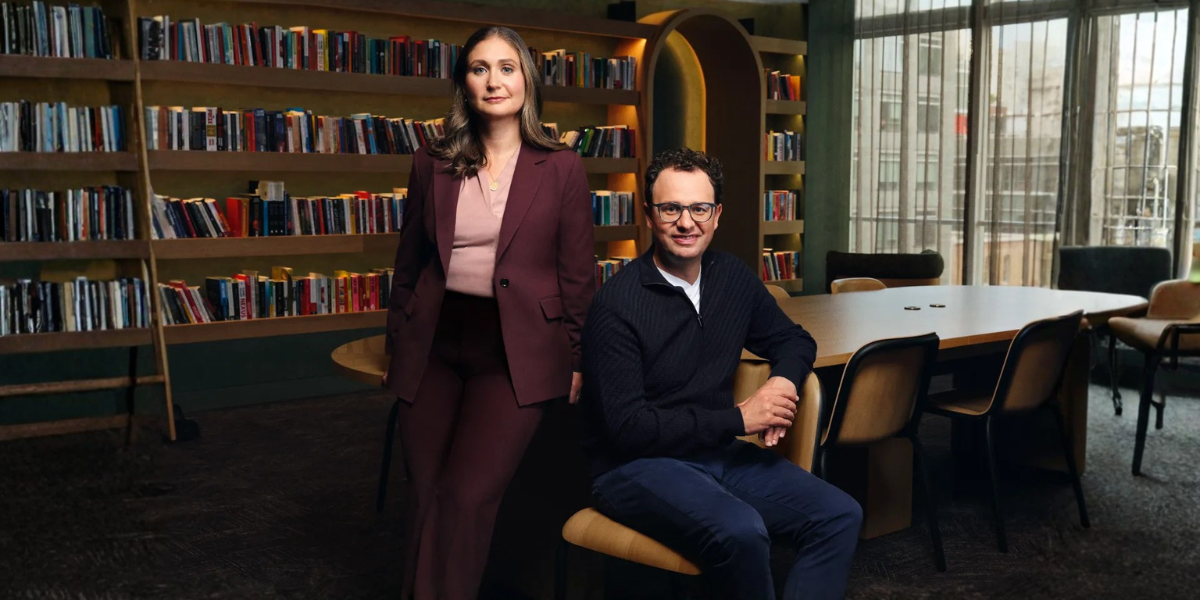
In a wide-ranging conversation with Oprah Winfrey, Anthropic co-founders Dario and Daniela Amodei offered something surprisingly rare in today’s AI debate: nuance.
Not blind optimism.
Not doom-and-gloom predictions.
Instead, they presented a vision built around a simple idea: artificial intelligence will become one of the most transformative forces humanity has ever created—but whether it improves our lives or undermines them depends on the choices we make right now.
For entrepreneurs, founders, and aspiring builders, that message carries an important lesson. The future isn't determined by technology alone. It's determined by the values behind it.
A Bigger Shift Than the Internet
When Oprah challenged Dario Amodei with a question generated by Claude itself—asking how he could justify building technology that he believes carries existential risks—his answer revealed how he sees AI.
He compared the moment to humanity's adoption of fire, the Industrial Revolution, and other civilization-defining breakthroughs.
The train, he argued, has already left the station.
The question is no longer whether AI should exist.
The question is who will help steer it.
For entrepreneurs, this framing matters. Every generation gets a handful of technologies that fundamentally reshape opportunity. The internet did it. Mobile did it. AI may do it at an even greater scale.
The winners won't simply be those who adopt AI fastest.
They'll be the ones who learn how to use it responsibly.
Why Anthropic Says "No" to Addiction
One of the most revealing moments came when Oprah asked about people becoming emotionally attached to AI.
Dario's answer was immediate:
"I think that's a bad idea."
In an era where many technology platforms compete for attention, Anthropic claims it has structured its business differently. Rather than relying on advertising, the company relies on subscriptions and enterprise customers.
That distinction matters.
Advertising rewards engagement.
Subscriptions reward usefulness.
It's a subtle but powerful lesson for founders. Business models shape behavior. Incentives shape products. Products shape society.
Too often entrepreneurs focus on what they're building without asking what their revenue model encourages them to become.
Anthropic's founders argue that AI should help people live their lives—not replace them.
The Real Fear Isn't AI. It's Human Dependency.
One of the strongest themes throughout the interview was the distinction between empowerment and dependence.
The optimistic vision looks like this:
- AI helps someone learn a new skill.
- AI helps a writer gain confidence.
- AI helps a doctor spend more time with patients.
- AI helps scientists cure diseases faster.
The darker vision looks very different:
- People outsource critical thinking.
- Relationships are replaced by chatbot companionship.
- Human growth is sacrificed for convenience.
- Users become emotionally dependent on machines.
The technology itself isn't the determining factor.
Human behavior is.
For entrepreneurs, this raises a question worth asking about every product:
Does this make customers stronger or weaker?
The best businesses don't create dependency.
They create capability.
The Hidden Entrepreneurial Lesson: Values Matter Most Under Pressure
One of the most compelling parts of the conversation had nothing to do with artificial intelligence.
It had everything to do with leadership.
The Amodeis described a moment when Anthropic refused to remove certain safety guardrails requested by government stakeholders.
The decision carried enormous business risk.
According to the founders, there was legitimate concern that taking a stand could threaten the future of the company itself. Yet they chose to maintain their position because they believed it aligned with their principles.
Every founder loves talking about values when things are easy.
Values become meaningful when they cost something.
Entrepreneurship eventually presents everyone with a moment where revenue, growth, influence, or survival conflicts with conviction.
Those moments define companies far more than funding rounds ever will.
As Oprah observed during the interview, large decisions are rarely isolated events. They're usually the culmination of dozens of smaller choices made long before anyone is paying attention.
The Future of Work Is More Human Than Most People Think
Perhaps the most debated AI topic today is jobs.
The Amodeis didn't dismiss concerns about disruption. In fact, Dario openly acknowledged scenarios where entry-level jobs could be significantly affected if society fails to adapt properly.
But Daniela offered a more nuanced perspective.
Her argument wasn't that jobs disappear.
It's that the skills we value within those jobs evolve.
She used doctors as an example.
Today, we often value physicians primarily for diagnostic expertise.
Tomorrow, AI may handle much of the diagnostic analysis.
That doesn't eliminate the need for doctors.
Instead, it elevates qualities that machines struggle to replicate:
- Empathy
- Trust
- Human connection
- Judgment
- Presence
In other words, AI may make human skills more valuable—not less.
Entrepreneurs should pay close attention to that possibility.
As technology automates technical capabilities, emotional intelligence may become one of the highest-leverage skills in business.
Trust Is the Real Competitive Advantage
Near the end of the conversation, Oprah referenced a statement Dario had made previously:
"We can only diffuse this at the speed of trust."
That may be the single most important takeaway from the entire interview.
Most discussions about AI focus on intelligence.
Anthropic's founders repeatedly returned to trust.
Trust from users.
Trust from governments.
Trust from employees.
Trust from society.
The same principle applies to entrepreneurship.
Markets move quickly.
Technology evolves quickly.
Trust compounds slowly.
And once lost, it's incredibly difficult to rebuild.
The founders' willingness to discuss both the opportunities and risks of AI reflects a broader truth: credibility comes from acknowledging complexity, not pretending it doesn't exist.
The Bigger Question Every Founder Should Ask
The interview concluded with Oprah asking what constitutes a well-lived life.
The answers weren't about technology.
They were about agency, integrity, responsibility, and purpose.
That's notable.
The people building some of the world's most advanced AI systems ultimately framed success not in terms of algorithms or valuation, but in terms of character.
For entrepreneurs, that may be the most valuable insight of all.
The future will belong to builders.
But not just builders of products.
Builders of trust.
Builders of institutions.
Builders of cultures.
Builders of a future people actually want to live in.
As AI continues to reshape the world, the most important question isn't what technology can do.
It's whether the people creating it can remain grounded enough to remember why they're building it in the first place.
Unlocking Leadership Potential: Rachel Honoway’s Blueprint for Transformative Success